Let's be honest, your wedding backdrop is way more than just a pretty background for pictures. It's the visual anchor for your entire ceremony. It’s the first thing your guests see, it frames the moment you say "I do," and it lives on forever in your photos. Think of it as the main stage for the first scene of your new life together.
Why Your Wedding Backdrop Is More Than Just Decor
Back in the day, the backdrop for a wedding ceremony might have been a simple church altar or an archway. Now, it's a huge opportunity to tell your story and transform a venue from just a room into your room. It’s a powerful piece of decor that sets the entire tone.
This one element can completely change the feel of your wedding. Are you picturing yourselves surrounded by a wall of lush, romantic flowers? Or maybe a sleek, minimalist arch is more your style? Each choice whispers something different about you as a couple, creating a specific vibe that everyone in the room can feel. It’s what makes a rustic barn feel intentionally charming instead of just, well, empty.
Setting the Scene for Your Story
A great backdrop isn't just there to look good in the background. It plays a few really important roles that make your wedding day feel special and look incredible.
- It Creates a Focal Point: It’s a visual magnet, drawing everyone’s attention right to where it should be—the two of you.
- It Makes Your Photos Pop: Ask any photographer. A well-designed backdrop adds depth, texture, and color that turns a good photo into a great one. It gives your images that professional, polished look.
- It Screams Your Theme: Whether you're going for bohemian, classic elegance, or full-on glam, the backdrop is your biggest and best chance to really drive that theme home.
- It Defines the Space: In a big, open venue or a non-traditional location, a backdrop can carve out an intimate ceremony spot, making a large area feel cozy and purposeful.
Your wedding backdrop isn’t just about covering a blank wall. It's about creating an atmosphere that feels like you, ensuring every photo from your ceremony looks deliberate, beautiful, and full of emotion.
Ultimately, your backdrop is a silent storyteller. It communicates the essence of your wedding before anyone even says a word. It’s a true investment in the mood of the day and the memories you'll treasure for a lifetime.
What Kinds of Wedding Backdrops Can You Choose From?
Think of your wedding backdrop as the main stage for your big day. It’s not just a decoration; it’s the centerpiece of your ceremony, the frame for your "I do's," and the background for countless photos you’ll cherish forever. The right one sets the entire mood and pulls your whole wedding theme together.
Let's walk through some of the most popular styles couples are falling in love with, from timeless classics to modern showstoppers. Each one tells a different story.
Timeless Romance with Floral Walls
You really can't go wrong with a classic floral wall. It's the ultimate romantic statement. Picture a lush, dense wall of roses, peonies, and hydrangeas creating a scene straight out of a fairy tale. The texture and depth are simply stunning, and photographers adore them for capturing those soft, dreamy portraits.
Whether you go for fresh, fragrant flowers or incredibly realistic silk ones, the effect is pure magic. This style is a perfect match for elegant venues like ballrooms, manicured gardens, or grand estates. It instantly elevates the space and screams classic romance.
Soft Elegance of Fabric Draping
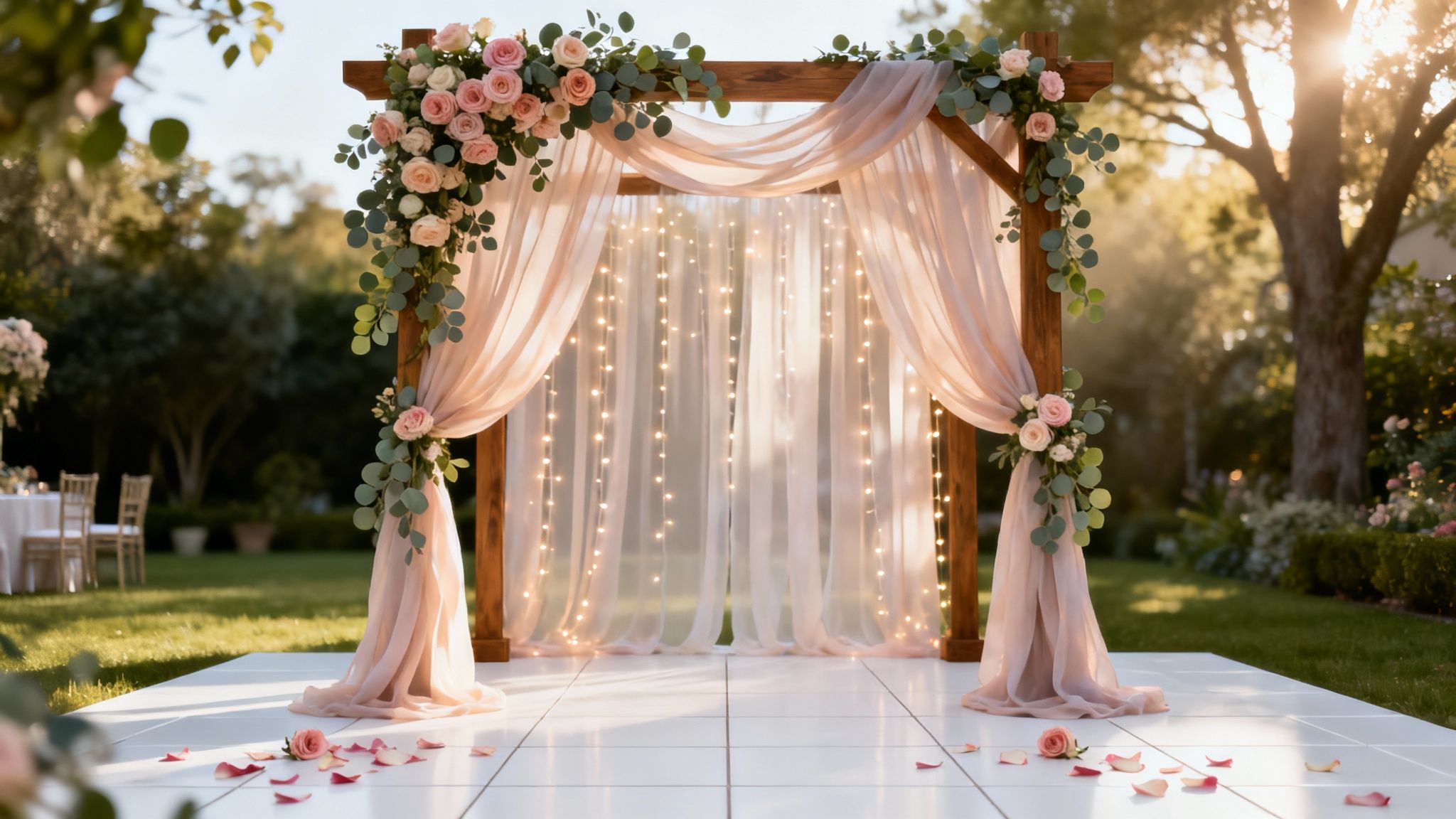
For a more ethereal, graceful vibe, draped fabric is the way to go. Soft, flowing materials like chiffon, tulle, or organza catch the light in the most beautiful way. You can hang them in simple, clean panels for a minimalist look or swag and layer them for something a bit more dramatic.
The best part? Fabric is incredibly versatile. It can soften up an industrial loft, add a touch of class to a rustic barn, or create a dreamy, billowy canopy for an outdoor ceremony. Add a few strands of fairy lights or some simple greenery, and you've got an instantly warm and inviting atmosphere.
This diagram really breaks down how a backdrop becomes the heart of your event's style, mood, and photos.
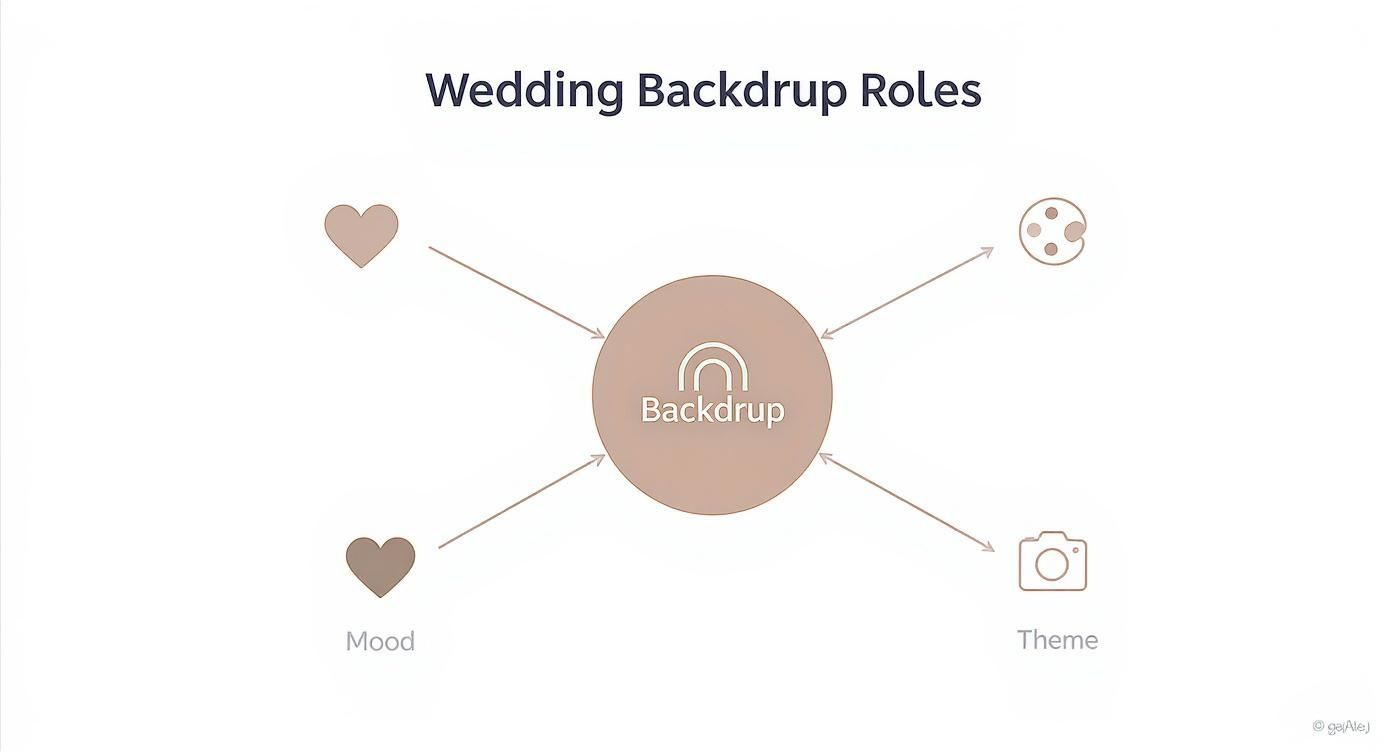
As you can see, your backdrop choice directly shapes these key elements, making it a powerful tool in your design arsenal.
Rustic Charm with Greenery and Wood
If you're drawn to a more natural, down-to-earth aesthetic, a greenery and wood backdrop is a fantastic choice. It’s perfect for rustic, bohemian, or eco-chic weddings. Imagine climbing ivy, garlands of fragrant eucalyptus, or delicate ferns arranged over a simple wooden arch or a modern copper frame. It feels organic and fresh.
This style is a natural fit for outdoor weddings, as it blends right in with the surroundings. But it's also a great way to bring the outdoors in, creating a vibrant focal point in any indoor space. It's not just beautiful; it can also be a more sustainable and budget-friendly option compared to a full-on floral installation. You can find more inspiration for weaving nature into your day with these wedding theme ideas.
Modern Statements with Arches and Signs
For couples with a more contemporary style, it’s all about clean lines, unique shapes, and personal touches. Geometric arches—think hexagons, circles, and even triangles—have become a huge trend. You can dress them up with a few asymmetrical floral arrangements, drape them with a single piece of fabric, or just leave them bare for a bold, minimalist look.
Personalization is everything right now. Couples want their wedding to feel completely theirs, and a custom backdrop is one of the most visible ways to do that. It's about creating a unique, shareable moment that screams 'us'.
This push for personalization has made backdrops a central part of modern wedding design, especially with the rise of "Instagrammable" moments. With the average wedding cost projected to hit $36,000 globally, a good chunk of that budget often goes toward high-impact décor like this. Neon signs, for instance, have seen a massive surge, with some reports showing that around 87% of engaged couples are incorporating them.
Adding custom neon signs is a surefire way to make a statement. A glowing sign with your new last name, a favorite quote, or a fun phrase adds an edgy, personal vibe that looks incredible in photos, especially once the sun goes down.
To help you visualize which style might be right for you, here’s a quick breakdown of these popular options.
Wedding Backdrop Style Comparison
| Backdrop Type | Common Materials | Creates Aesthetic | Best For Venues Like |
|---|---|---|---|
| Floral Wall | Roses, Peonies, Hydrangeas (Fresh or Silk) | Romantic, Luxurious, Classic | Ballrooms, Estates, Gardens |
| Fabric Draping | Chiffon, Tulle, Organza, Voile | Ethereal, Soft, Elegant | Lofts, Barns, Tents, Ballrooms |
| Greenery & Wood | Eucalyptus, Ivy, Ferns, Wooden Arches | Rustic, Bohemian, Natural | Barns, Forests, Wineries, Gardens |
| Modern Arch | Metal, Wood, Acrylic (Geometric Shapes) | Minimalist, Contemporary, Chic | Industrial Spaces, Art Galleries, Rooftops |
Ultimately, the best backdrop is one that feels authentic to you as a couple and fits seamlessly into the space where you’ll be making your vows.
Matching Your Backdrop to Your Venue and Photos
You can have the most gorgeous wedding backdrop in the world, but if it clashes with your venue or photographs poorly, all that effort goes to waste. Think of it like a perfectly tailored suit—it only looks amazing if it fits the person and the occasion. The real goal is to find a backdrop that doesn't just show off your style, but actually enhances its surroundings and looks incredible on camera.
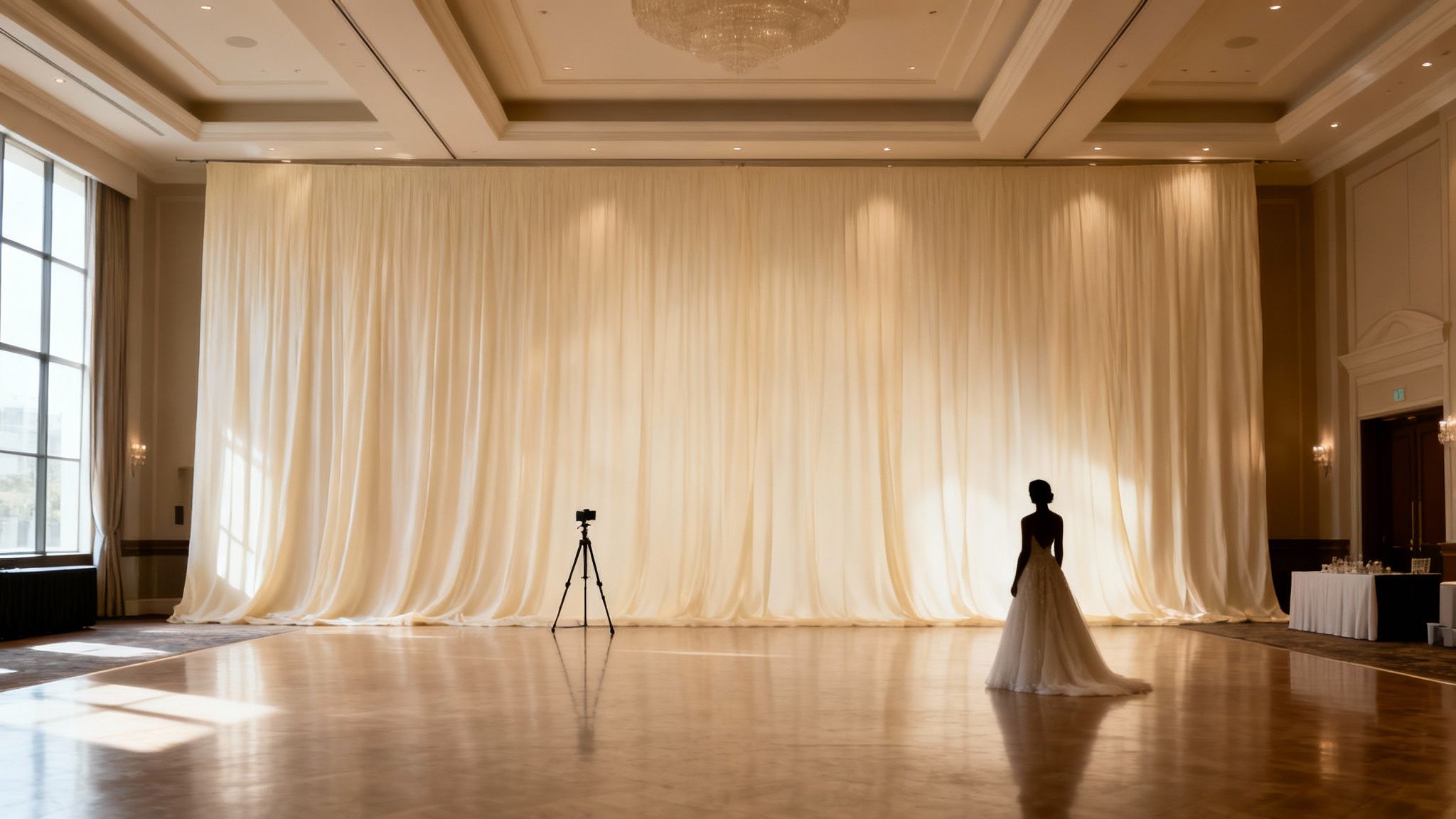
Choosing the right design means taking a good, hard look at your venue's built-in features. You’re not just plopping down a piece of decor; you're creating a cohesive, harmonious scene. Whether you're saying "I do" in a grand ballroom with sky-high ceilings or an intimate garden, the backdrop should feel like it truly belongs there.
Working With Your Venue, Not Against It
First things first: assess your space. A great backdrop should either complement the existing architecture or cleverly hide any features you're not so fond of.
For instance, if your venue has dramatic, high ceilings, a tall, vertical backdrop—like sweeping fabric drapes or a towering floral arch—can draw the eye upward and make the space feel even more majestic. On the flip side, a massive installation in a cozy, intimate setting will just feel overwhelming. Something more delicate, like a simple frame or a greenery wall, is probably a better fit.
Keep these key venue characteristics in mind:
- Indoor Venues: Ballrooms and historic buildings often come with their own strong personalities. A simple, elegant backdrop can highlight ornate details without competing, while a more minimalist "blank canvas" space can handle a bold, elaborate design.
- Outdoor Venues: Mother Nature often provides the best scenery. An arch that frames a stunning mountain view or a simple floral arrangement that blends into a garden is far more effective than something that tries to steal the show.
This "less is more" approach is a huge reason why destination weddings have become so popular. The global destination wedding market has swelled to an estimated $36.22 billion, largely because couples are choosing scenic spots that serve as their own natural backdrops. You can learn more about the growing destination wedding market and its trends online.
Designing for the Camera Lens
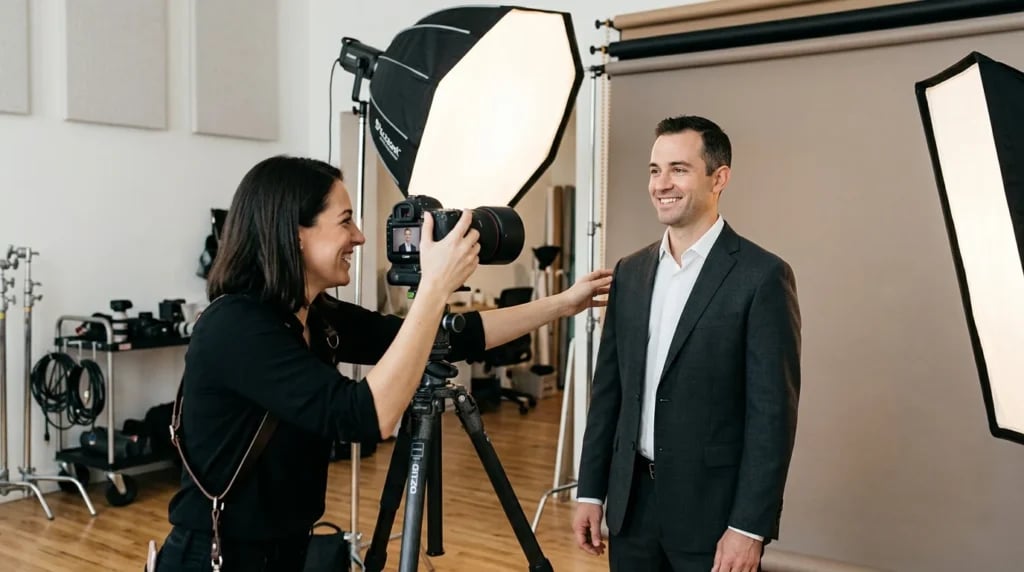
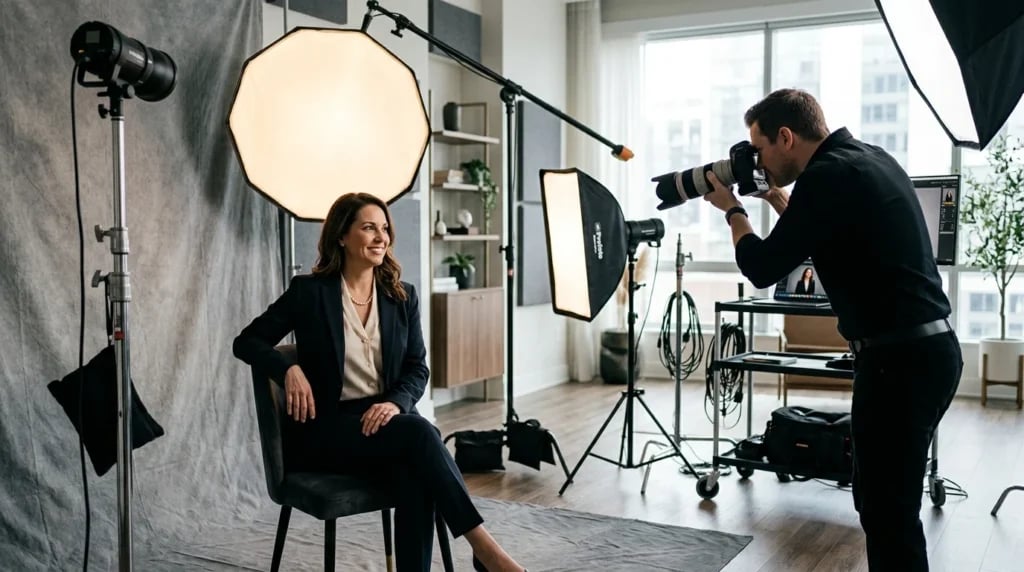
Let’s be honest: your backdrop is going to be a star player in hundreds of photos. That means you have to start thinking like a photographer. Lighting, color, and texture all behave differently on camera than they do to the naked eye.
A classic mistake is picking materials that are too shiny. Sequins, high-gloss acrylic, or certain metallic fabrics can create a nasty glare when hit with a camera flash, leaving you with blown-out white spots in your photos. Matte finishes are almost always a safer, more flattering bet.
Key Takeaway: The best backdrop for wedding photography adds depth and interest without causing technical headaches like glare or distracting patterns. If you're unsure, do a quick test—snap a flash photo of a material sample with your phone.
In the same vein, super busy patterns or overly complex designs can sometimes pull focus away from the main event: you! A backdrop should frame the couple, not overpower them. A solid color, a gentle floral pattern, or a simple texture often results in a more timeless and elegant portrait.
Considering Light, Color, and Texture
Lighting is probably the single most important factor. For an outdoor ceremony, the sun's position is going to run the show. Placing your backdrop in direct, harsh sunlight is a recipe for unflattering shadows across your faces. To get a better handle on this, check out our guide on the best time of day for outdoor photography.
The color palette is equally crucial. Your backdrop’s colors need to complement your wedding attire, not fight with it. A soft, neutral color scheme is often the safest bet, as it allows the couple's outfits to pop.
Finally, don't forget about texture. Materials like raw wood, woven macrame, or lush greenery add a wonderful sense of depth that translates beautifully in photos. They catch the light in interesting ways and keep the background from looking flat or one-dimensional. Mixing a few textures together is a fantastic way to create a rich, dynamic look that will make your entire photo gallery shine.
Getting Sizing, Placement, and Safety Just Right
It's easy to get lost in the beautiful design of your wedding backdrop, but the technical details—the nitty-gritty of size, placement, and safety—are what make it truly flawless. Get these logistics right, and you're guaranteed a picture-perfect result that's also completely safe for everyone.
Think of it like framing a masterpiece. The frame’s job is to make the art pop, not to overwhelm it or feel out of place. The same goes for your backdrop; its size should perfectly complement you, your venue, and your photographer’s vision.
Choosing the Perfect Backdrop Dimensions
Before you set your heart on a specific design, it’s time to pull out the measuring tape. The right dimensions are all about striking a balance. A backdrop that's too small can look dinky and get lost in the room, while one that's too big might just swallow the space whole.
Here are a few pointers from the field:
- Height: You'll want your backdrop to be at least 8 to 10 feet tall. This gives it enough height to soar above the couple and officiant, creating a clean background in photos without awkwardly cutting anyone off at the shoulders.
- Width: The goal here is to comfortably frame everyone at the altar. If it's just the two of you and an officiant, 8 feet wide usually does the trick. But if your wedding party will be standing with you, you’ll want to look at something closer to 10 or 12 feet wide.
Your photographer is your secret weapon here. They know exactly how different sizes and shapes will look through the lens and can help you sidestep common logistical mistakes before they happen.
Getting these details locked in early is a huge win. For more on this, check out our guide on mastering wedding day logistics with your photographer to make sure every visual element is on point.
Strategic Placement for Maximum Impact
Where you put the backdrop is just as important as how big it is. You want to create a breathtaking focal point without giving your guests or photo team a headache. Think about the flow of the ceremony, where the light is coming from, and any cool architectural features you can work with.
Position it so guests have a clear view, but also leave enough room for the wedding party to move around without feeling cramped. And please, do a quick scan of what’s behind it. The last thing you want is a fire exit sign or a messy doorway photobombing your "I do's."
Prioritizing Installation and Safety
Okay, let's talk about the serious stuff. Safety is non-negotiable, especially when you're dealing with heavy floral walls, big arches, or anything hanging from the ceiling. A gorgeous backdrop isn't worth a thing if it's a hazard.
Key Safety Considerations:
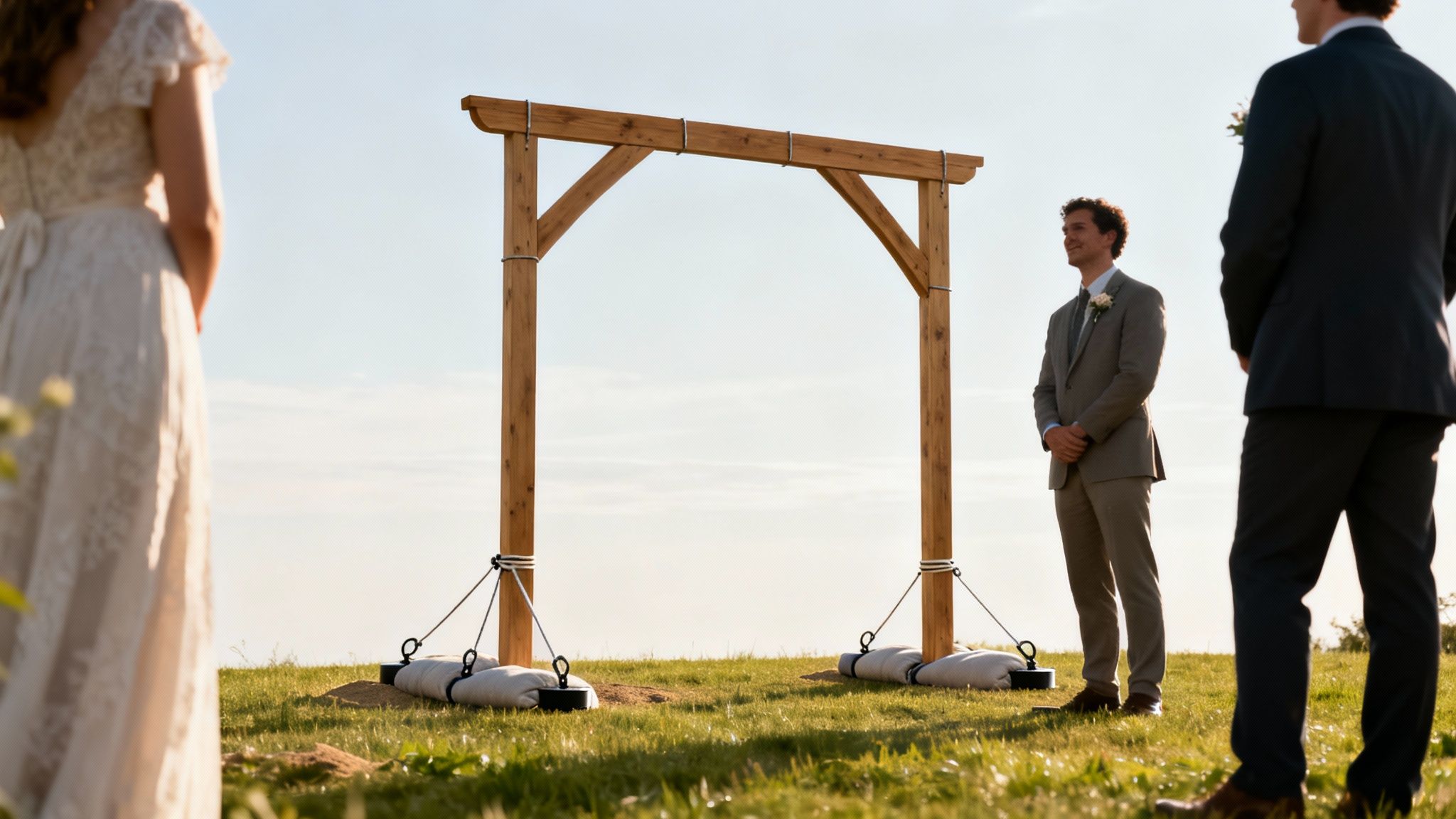
- Secure Anchoring: Every structure needs to be properly weighted or anchored down. Think heavy sandbags for indoor setups, stakes for anything on grass, and always, always professional-grade stands.
- Wind-Proofing for Outdoors: Getting married outside? Wind is your new enemy. A lightweight fabric backdrop can turn into a giant sail in a heartbeat. Stick to heavier structures or make sure you have a solid Plan B.
- Professional Installation: Honestly, for anything complex, just hire a professional. It’s the safest move. They have the right insurance, the right gear, and the experience to build it securely, so you can relax and enjoy your day without a worry.
DIY, Rental, or Custom Design: How to Choose
So, you’ve got a fantastic vision for your wedding backdrop. Now comes the big question: how are you going to make it happen? You’re standing at a crossroads with three main paths ahead—doing it yourself, renting, or commissioning a custom design.
Each route has its own perks and potential headaches. This decision is really a balancing act between your budget, your timeline, and how much creative energy you want to pour into the project. Let’s figure out which path is the right one for you.
The DIY Wedding Backdrop
Are you the creative type who loves a good project? If so, a DIY backdrop might be calling your name. This is the ultimate way to inject your unique personality into your wedding day décor.
The biggest win here is the potential for major cost savings and, of course, complete personalization. You get to control every last detail, from the exact shade of blush to the type of greenery you use. The trade-off? This path demands a real commitment of time, skill, and a whole lot of patience. A project that looks simple on Pinterest can quickly turn into a complicated puzzle.
If you're going the DIY route and want to add a little sparkle, a detailed guide on applying rhinestones to fabric can be a huge help.
The Rental Option
For many couples, renting a backdrop is the sweet spot between creativity and convenience. Rental companies have a treasure trove of professional-grade options, from lush floral walls and dramatic arches to soft, elegant fabric draping.
This is by far the most stress-free option. Your vendor handles everything—delivery, professional setup, and teardown after the party’s over. You won't have to lift a finger on your wedding day. While it costs more than DIY, it's typically much more affordable than a fully custom piece. The only real downside is that you’re limited to what the company has in its inventory.
Expert Insight: Think of renting a backdrop like renting a designer gown for a black-tie event. You get all the glamour and high-end style without the hefty price tag or the challenge of creating it yourself. It’s a shortcut to a polished, professional look.
The Custom Design Experience
When your vision is something truly unique—a piece of art that no one has ever seen before—then commissioning a custom design is the way to go. You'll collaborate with a talented floral designer, event stylist, or specialized fabricator to bring a completely bespoke backdrop to life.
This route gives you limitless creative freedom and results in a jaw-dropping focal point for your ceremony or reception. It's the perfect choice for couples with a generous budget who want to make a serious statement. The process itself is exciting and collaborative, but it's also the most expensive option and you’ll need to book your designer well in advance.
Backdrop Sourcing Options At a Glance
Feeling a bit stuck? Seeing the options side-by-side can make the decision much clearer. Here’s a quick breakdown to help you weigh the pros and cons of each approach.
| Option | Best For | Average Cost | Pros | Cons |
|---|---|---|---|---|
| DIY | Creative couples on a budget with ample time. | Low | Total personalization, significant cost savings. | Time-consuming, requires specific skills, potential for stress. |
| Rental | Couples who want convenience and a professional look without the hassle. | Medium | Stress-free, wide variety of styles, professional installation included. | Customization is limited, popular items can be booked up. |
| Custom | Couples with a larger budget who want a truly unique statement piece. | High | A completely one-of-a-kind design, expert execution from start to finish. | The most expensive option, requires a long lead time for design and booking. |
In the end, the right choice really boils down to your priorities. If you thrive on hands-on projects and have the time, DIY can be an incredibly rewarding experience. If you’d rather have a team of pros handle it all, a rental is your best bet. And if you’re dreaming of a true showstopper that will have guests talking for years, a custom design is worth every penny.
By the way, if you're leaning toward DIY, our guide on how to make your own engagement photo props has some great ideas that could easily inspire your backdrop design
How to Budget and Find the Right Vendor
Let’s get down to the nitty-gritty: money and people. Figuring out a realistic budget for your backdrop is the very first step. It’s what separates a dream idea from a doable one, ensuring you get a stunning focal point without any financial surprises.
The cost of a wedding backdrop can swing wildly. It’s a lot like buying a car—a simple, reliable sedan gets the job done beautifully, while a custom-built luxury sports car comes with a totally different price tag. Both are great, but they serve different needs and budgets. The final look is just one piece of the puzzle; the real cost is a mix of materials, labor, and creative complexity.
Deconstructing Backdrop Costs
So, what exactly goes into the price? When you get a quote for a wedding backdrop, it’s not just one number. It’s a combination of a few key things, and understanding them helps you see where your money is going and where you might have some wiggle room.
- Materials: This is a big one. Fresh flowers are almost always the most expensive option. On the other hand, high-quality silk florals, elegant fabrics, or lush greenery can give you a similar vibe for a fraction of the cost.
- Labor and Complexity: Think about the work involved. A simple, beautiful arch with a few floral sprays takes way less time to build than a 10-foot floral wall where every single bloom has to be placed by hand. If you’re going custom, you’re also paying for the designer’s time to sketch out your unique vision.
- Delivery and Setup: This isn't just a delivery fee. It covers the team's travel, the hours they spend building the installation on-site, and their return trip—often late at night—to take it all down.
- Size: It’s simple math, really. The bigger and more intricate the backdrop, the more it will cost in both materials and the time it takes to construct.
Knowing where the backdrop fits into your total wedding spend is key. For a complete look at planning your finances, our guide on how much you should spend on a wedding is a fantastic place to start.
Finding and Vetting Your Vendor
Once you’ve got a budget in mind, it's time to find the right pro to bring your vision to life. A great vendor isn’t just a supplier; they’re a creative partner who gets your style and can deliver a flawless result. Start by browsing the portfolios of local event designers, florists, and specialty rental companies.
When you've found a few whose work makes your heart skip a beat, it’s time to reach out. But this isn't just about getting a price. You're feeling them out to make sure they're a reliable and professional partner for one of the biggest days of your life.
A vendor's portfolio shows you what they can do, but their answers to your questions tell you what they will do for you. Pay close attention to their communication style, professionalism, and transparency.
Before you sign on the dotted line, you should feel completely at ease. A true professional will be more than happy to answer every question and make you feel confident they can nail it.
Your Vendor Checklist Questions
Use this checklist to steer your conversations with potential vendors. Their answers will tell you everything you really need to know.
- Can I see a portfolio of similar backdrops you've created? This confirms they have hands-on experience with the specific look you’re going for.
- Are you licensed and insured? This is a non-negotiable. It’s a safety net that protects you, them, and your venue.
- What is included in the total cost? Always ask for an itemized breakdown. You want to see the costs for materials, labor, delivery, setup, and teardown so there are no hidden fees.
- What is your process for setup and teardown? You need to know their timeline so you can coordinate everything seamlessly with your venue manager and wedding planner.
- What is your contingency plan for bad weather (for outdoor setups)? Any seasoned pro will have a solid Plan B for wind or rain. If they don’t, that's a red flag.
Your Top Wedding Backdrop Questions, Answered
As you start to map out the look and feel of your wedding day, you'll inevitably run into a few questions about the backdrop. It’s a big visual piece of the puzzle, and figuring out the logistics can feel a little daunting. Let's tackle some of the most common questions we hear from couples.
Getting these details ironed out early on is a huge relief and makes the whole process feel much smoother.
How Far in Advance Should I Book?
In the wedding world, timing really is everything. If you have your heart set on a custom-designed backdrop or a popular rental piece, you’ll want to book your vendor 6 to 9 months ahead of time. This is especially true if you’re getting married during peak season, which typically runs from late spring through early fall.
Think about it: the best floral designers and rental companies get snapped up fast. For a simpler rental, you might get away with booking 3-4 months out, but why add the stress? Locking it in early means you get your first choice and can check one more major item off your list.
Can I Repurpose My Backdrop?
Yes, and you absolutely should! Repurposing your backdrop is one of the savviest moves you can make. It stretches your budget further and creates a beautifully consistent look from the ceremony to the reception.
A go-to strategy we see all the time is moving the ceremony backdrop to the reception. It’s brilliant—you get double the impact from a single, stunning piece.
For instance, that gorgeous floral arch where you say "I do" can be moved to frame your sweetheart table during dinner. Or, it could become the star of your photo booth, giving guests an amazing, on-theme spot for their selfies. Just make sure to chat with your wedding coordinator and the vendor about the logistics and any moving fees. A little planning ensures the transition is completely seamless.
What Are the Best Outdoor Options?
When you’re taking the party outside, your backdrop needs to be more than just pretty—it has to be sturdy. The best outdoor backdrops either enhance the natural beauty around you or create a striking focal point that pops against it.
A few reliable choices include:
- Wooden Arches: They're a classic for a reason. You can dress them up with flowers or fabric to fit any vibe, from rustic to romantic.
- Geometric Frames: Modern and eye-catching, metal or wood frames in shapes like circles or hexagons offer a cool contrast to a natural landscape.
- Greenery Walls: These are a fantastic option because their weight and stability make them less likely to argue with a windy day.
A word of caution: try to avoid lightweight fabric backdrops if you're in a wide-open, windy space. They can be a nightmare to keep in place. Stick with heavier structures that can be securely anchored and won't give you any trouble.
At Candid Studios, we know that every single detail—especially your backdrop—helps tell the story of your day. We specialize in capturing these beautiful settings and all the incredible moments that unfold in front of them. You can learn more about our wedding photography and videography services on our site.