
10 Best Family Portrait Poses for 2026
Family portraits are more than just images; they are heirlooms, frozen moments of connection that tell your unique story. But how do you move past the stiff, traditional lineup and capture the genuine laughter and love that define your family? The secret lies in intentional, authentic posing. At Candid Studios, we believe the best portraits feel effortless, reflecting the true dynamics and emotions of your relationships. Forget awkward smiles and rigid stances. This guide is your definitive resource for mastering family portrait photography.
This listicle provides a curated collection of the 10 best poses for family portraits, designed to help you create cinematic, timeless images that feel as real and beautiful as the moments themselves. We will break down each pose with specific, actionable instructions and professional insights, ensuring everyone from toddlers to grandparents feels comfortable and looks their best. Our goal is to move beyond the generic and equip you with a concrete framework for capturing authentic interactions.
Inside, you will find detailed positioning cues for photographers, simple directions for families to follow, and variations to suit different group sizes and dynamics. We will cover classic arrangements like "The Embrace" and dynamic concepts like "The Walking Pose," each with tips on styling, lighting, and prompting natural expressions. Whether you're a family preparing for a photoshoot or a photographer aiming to elevate your portfolio, these techniques will transform your approach, enabling you to craft portraits that are not just seen, but felt.
1. The Embrace Pose
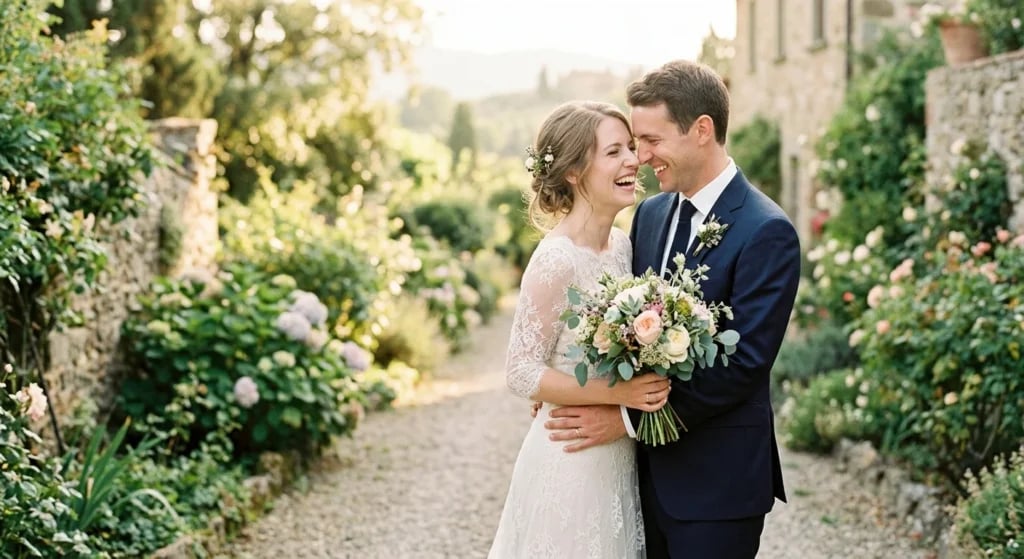
The Embrace is a foundational and timeless choice, making it one of the best poses for family portraits because it physically represents the emotional connection of a family unit. This pose involves family members standing closely together, with arms wrapped around each other's waists or resting gently on shoulders. The goal is to minimize empty space between individuals, creating a single, cohesive group filled with warmth and intimacy.
It's a versatile pose that works beautifully for both small, immediate families and larger, multi-generational groups. The inherent closeness tells a story of unity and love, which is why it’s a go-to for holiday cards and wall art that will be cherished for years.
How to Achieve The Classic Embrace
Directing this pose is about creating natural-looking intimacy, not just a static lineup. Start by positioning the tallest members, typically parents, in the center to create an anchor. Have them wrap their arms around each other. Then, bring the children in, tucking them into the spaces in front of or between the parents.
Photographer’s Cues:
- "Lean In Gently:" Ask everyone to tilt their heads slightly toward the center of the group. This simple adjustment enhances the feeling of closeness.
- "Take a Deep Breath Together:" Right before you press the shutter, ask the family to take a collective deep breath in and then exhale with a smile. This synchronizes them and often produces genuine, relaxed expressions.
- "Squeeze In Tight:" Encourage a gentle squeeze. This action prompts natural laughter and authentic interactions that translate beautifully on camera.
Pro Tip: Shoot from a slightly elevated angle. This vantage point helps define each person's face, prevents distortion, and is universally flattering for group dynamics, ensuring everyone looks their best.
This pose serves as an excellent starting point for any session. From this base, you can easily transition into candid variations by asking family members to whisper a secret or share a quick laugh, capturing a spectrum of emotions without a major reset. For more inspiration on building upon this classic setup, explore our comprehensive guide on family portrait posing ideas.
2. The Staggered Heights Pose
The Staggered Heights Pose is a dynamic and visually compelling arrangement that moves beyond a simple straight line. This technique strategically positions family members at different vertical levels and depths to create a more engaging composition. By using props like chairs, steps, or even the natural landscape, this pose adds dimension and solves the common challenge of accommodating significant height differences in a group.
This approach is one of the best poses for family portraits, especially for large, multi-generational groups or blended families. It ensures everyone is visible and gives the portrait a natural, unforced flow. The varying heights draw the viewer's eye through the image, creating a sense of connection and individual presence within the larger family unit.
How to Achieve The Staggered Heights Pose
Building this pose is like creating a living sculpture; it’s about balancing layers. Start by identifying the natural or available levels in your environment, such as a staircase, a gentle slope, or some sturdy chairs. Place the tallest individuals toward the back or sides, using the elevation to your advantage. Then, fill in the middle and foreground with others, having some sit while others stand.
Photographer’s Cues:
- "Create a Gentle Zig-Zag:" Instead of a rigid pyramid, ask family members to position their heads in a soft zig-zag pattern. This creates a more modern and fluid aesthetic.
- "Find Your Natural Spot:" Encourage family members to find a comfortable position, whether sitting on the ground, leaning against a parent, or perching on a step. This promotes authentic posture.
- "Look Towards the Person Next to You:" Briefly ask adjacent family members to glance at each other. This captures candid micro-interactions and strengthens the layered connections within the frame.
Pro Tip: When shooting outdoors, use the environment to your advantage. A fallen log, a set of boulders, or a small hill are perfect natural props for staggering heights. This not only solves posing challenges but also integrates the family beautifully into their surroundings.
The Staggered Heights Pose is incredibly adaptable and prevents the portrait from looking static or overly formal. It allows each person’s personality to shine through while maintaining a cohesive group dynamic. To find the perfect setting for this layered approach, explore our guide on choosing the right family photo location.
3. The Sitting Poses Variation
Introducing sitting elements is one of the most effective ways to add depth and visual interest, making it one of the best poses for family portraits. This variation involves having some family members sit while others stand, kneel, or lean, breaking up uniform heights and creating beautiful, layered compositions. The use of different levels creates a dynamic, editorial feel that looks both professional and relaxed.
This approach is incredibly accommodating and practical. It’s perfect for families with members who have physical limitations, such as elderly grandparents, or for sessions with babies and toddlers who are more comfortable and secure when seated. Whether you use a formal chair, a rustic bench, or a simple blanket on the grass, sitting poses provide structure and comfort, leading to more natural interactions.
How to Achieve The Sitting Poses Variation
The key to this pose is creating natural-looking levels and connection points. Start by positioning your seated members first, as they will be the anchor of the composition. Then, build the rest of the family around them, using their shoulders and the space beside them to frame the shot and establish connections.
Photographer’s Cues:
- "Standers, Place a Hand on a Shoulder:" This simple direction creates an immediate physical and emotional link between those standing and those sitting.
- "Lean Forward, Just a Little:" Ask seated subjects to lean slightly from their hips toward the camera. This improves posture, eliminates double chins, and makes them appear more engaged.
- "Create a Triangle:" Instruct standing members to flank the seated person or group, forming a subtle triangular shape. This is a classic composition technique that is pleasing to the eye.
Pro Tip: Shoot from an angle that is slightly above the eye level of the seated subjects. This perspective ensures you can clearly see everyone’s face without distortion and helps create a more flattering and intimate portrait.
The Sitting Poses Variation is a fantastic method for managing larger groups and diverse age ranges. It provides a stable foundation from which you can easily direct smaller interactions, such as a standing child whispering to a seated grandparent, capturing genuine moments effortlessly. For more ideas on incorporating different levels, check out our guide on creative family photography techniques.
4. The Walking/Moving Poses
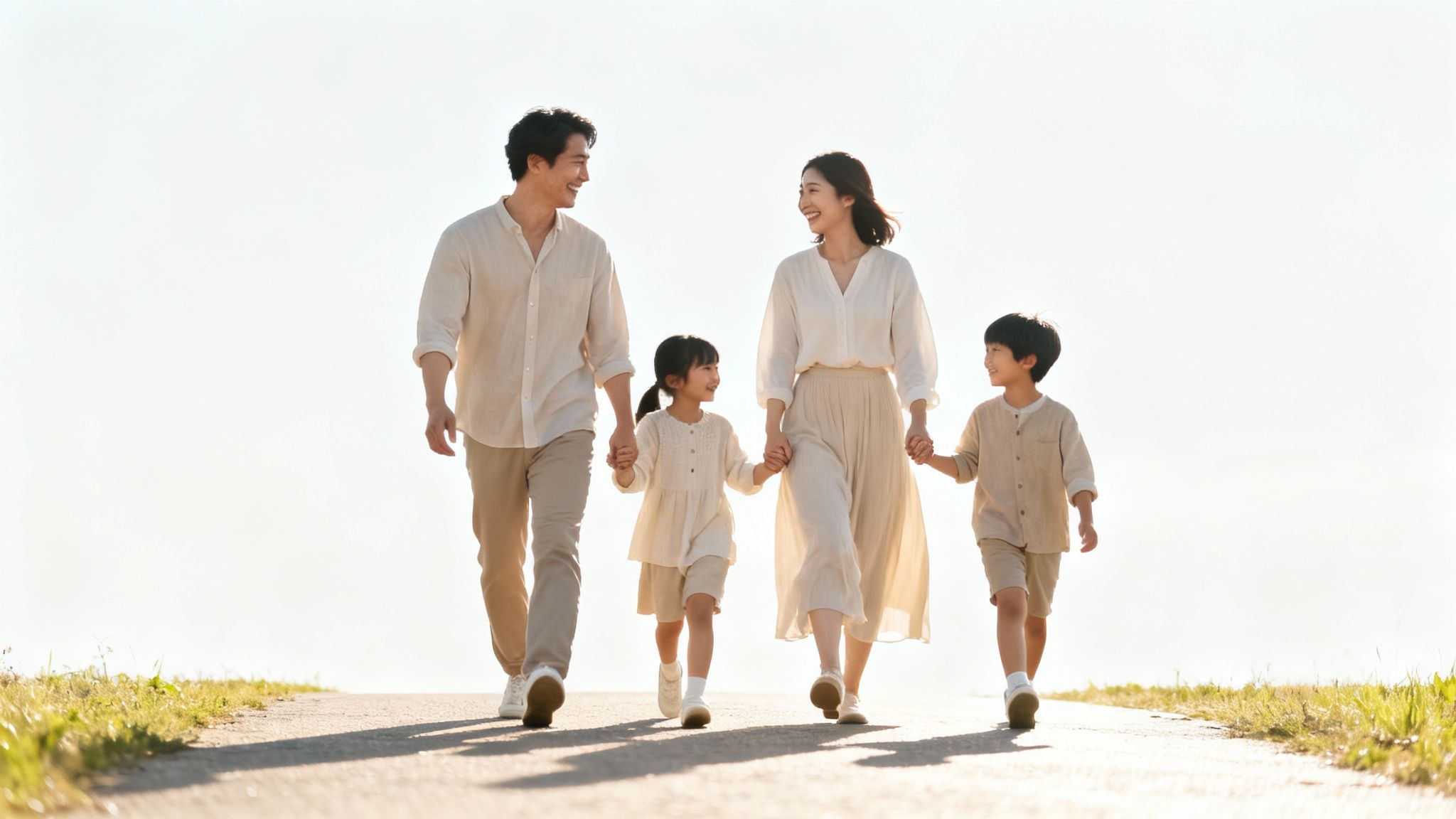
Introducing motion is a transformative technique, making walking poses some of the best for family portraits because they inject life and authenticity into the frame. This dynamic approach involves capturing the family as they walk together, interact, and move naturally. The result is imagery that feels less like a static portrait and more like a captured moment from a cherished memory, full of genuine connection.
This style is exceptionally effective in outdoor settings like a park, beach, or forest path, where the environment itself encourages movement. It tells a story of a family’s journey together, creating lifestyle-oriented photographs that are both beautiful and meaningful.
How to Achieve Dynamic Walking Poses
Directing movement requires a different approach than static posing, focusing on creating a scenario rather than a fixed position. Start by choosing a location with a clear path and an uncluttered background. Ask the family to hold hands and simply walk from one point to another at a relaxed, natural pace.
Photographer’s Cues:
- "Walk Toward Me, But Look at Each Other:" This is the key direction. It prevents the stiff, direct-to-camera march and encourages authentic glances, smiles, and interactions between family members.
- "Let the Kids Set the Pace:" For families with young children, telling them to "race to that tree" or "chase mom" can produce incredible, high-energy shots filled with pure joy and laughter.
- "Share a Funny Story as You Walk:" This prompt gives the family something to focus on besides the camera, leading to unguarded expressions and real emotional responses.
Pro Tip: Use your camera's continuous shooting mode (burst mode) and a fast shutter speed (1/500s or higher) to freeze the motion. You will capture a sequence of frames, giving you multiple options to find that one perfect, candid moment where everyone looks their best.
These moving portraits often feel more like a fun activity than a photoshoot, which is perfect for keeping children engaged and capturing the true spirit of a family. This approach is a cornerstone of our work, and you can see more examples in our guide to documentary-style family photography.
5. The Back-to-Camera Pose
The Back-to-Camera is an artistic and sophisticated choice that shifts the focus from traditional smiling faces to the shared experience and environment. This pose positions the family with their backs to the camera, gazing toward a meaningful landscape, sunset, or scenic vista. It’s one of the best poses for family portraits when you want to create an image that feels aspirational, introspective, and deeply connected to a specific place.
This approach transforms a simple portrait into a storytelling moment, emphasizing togetherness and a shared journey. It’s particularly powerful for destination sessions, capturing the grandeur of a location like a mountain range or an ocean, and making the scenery an integral part of the family's narrative. The result is less of a formal portrait and more of a cinematic, editorial-style photograph.
How to Achieve The Back-to-Camera Pose
Executing this pose requires a stunning backdrop and careful direction to evoke emotion without relying on facial expressions. Start by identifying a location with a compelling view. Position the family so they can comfortably and naturally take in the scene, which will serve as the focal point of the image.
Photographer’s Cues:
- "Find a Point on the Horizon:" Ask everyone to fix their gaze on the same distant point. This synchronizes their eyeline and creates a sense of shared focus and wonder.
- "Wrap an Arm Around Your Neighbor:" Encourage physical connection, such as holding hands, placing a hand on a shoulder, or wrapping arms around waists. This physical touch reinforces their bond.
- "Point Out Something You See:" Prompt one person to point toward something in the distance. This simple action introduces a natural, candid interaction that tells a story of discovery and connection.
Pro Tip: Use the golden hour to your advantage. Placing the setting sun behind your subjects creates a beautiful silhouette or a warm, glowing rim light around their figures. This dramatically enhances the mood and visual impact of the photograph.
This pose is an excellent way to add variety and an artistic touch to a gallery. It should complement, not replace, traditional forward-facing portraits. For more ideas on how to integrate unique perspectives into your session, check out our guide on creative family photography techniques.
6. The Playful Interaction Pose
The Playful Interaction Pose shifts the focus from static positioning to capturing genuine, unscripted moments between family members. It is one of the best poses for family portraits because it immortalizes the authentic connections, inside jokes, and unique dynamics that define a family. Instead of asking for smiles, this approach directs families to engage with one another, resulting in images that feel alive and full of personality.
This technique is perfect for families with young children or anyone who feels stiff in front of the camera. It transforms a photoshoot from a formal event into a fun activity, creating a gallery of images that tell a story of love, laughter, and real-life joy.
How to Achieve The Playful Interaction
Success with this pose relies on creating prompts that spark natural reactions. The key is to direct an activity, not an emotion. To inspire truly natural and dynamic shots, consider poses that encourage genuine interaction. Engaging in gross motor skills activities for infants can lead to spontaneous, joyful moments perfect for capturing playful interaction poses.
Photographer’s Cues:
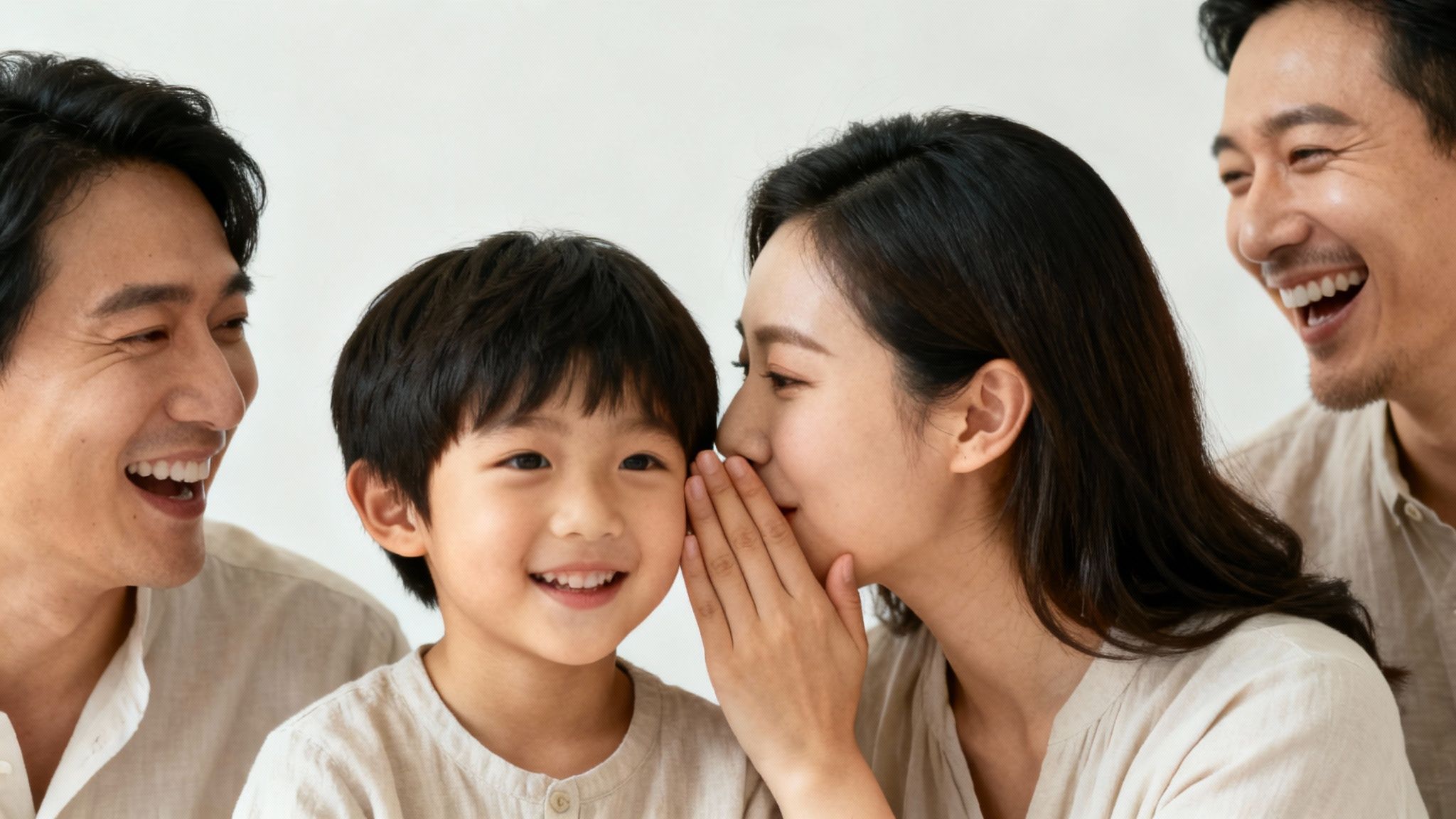
- "Tell Dad Your Funniest Secret:" This prompt almost guarantees authentic smiles and laughter from both the child whispering and the parent listening.
- "Everyone Tickle the Smallest Person:" A classic for a reason. This action creates an explosion of energy, movement, and genuine happiness. Be ready with a fast shutter speed.
- "Let's Play a Quick Game of Telephone:" Start a silly phrase with one family member and have them pass it down the line. Capturing each person’s reaction as they hear and whisper the phrase yields a series of emotive, candid shots.
Pro Tip: Use continuous shooting mode (burst mode) to capture the full range of an interaction. The perfect moment often happens in a split second between initial setup and the final laugh, and this ensures you won't miss it.
This approach is highly effective for breaking the ice at the start of a session and making everyone feel comfortable. Discover more ways to bring out natural expressions by exploring our guide on how to make family portraits fun and relaxed.
7. The Forehead-to-Forehead Pose
The Forehead-to-Forehead pose is an incredibly intimate and tender choice, perfect for highlighting the profound emotional bonds within a family. This pose involves two or more family members gently touching foreheads, creating a closed, secure circle that symbolizes trust and deep connection. It strips away distractions, focusing the viewer's attention entirely on the quiet, powerful relationship being shared.
This is one of the best poses for family portraits when you want to capture the gentle side of love, making it ideal for new parents with their baby, a couple within a larger family group, or a parent connecting with a young child. The resulting images are often soft, emotional, and feel like a private moment the viewer is privileged to witness.
How to Achieve The Forehead-to-Forehead Pose
Guiding this pose is about fostering a genuine feeling of peace and affection. Unlike more energetic poses, this one requires a calm and gentle approach. Start by positioning the subjects facing each other, ensuring they are at a comfortable height. For parents and small children, this might mean the parent is kneeling or sitting.
Photographer’s Cues:
- "Gently Bring Your Foreheads Together:" Emphasize a soft touch, not a firm press. The contact should be light and natural.
- "Close Your Eyes and Think About This Moment:" Encouraging subjects to close their eyes removes any self-consciousness and often brings serene smiles to their faces. It enhances the feeling of intimacy.
- "Breathe In the Scent of Your Baby's Hair:" For a parent and child, specific sensory cues like this can evoke powerful, authentic emotions that translate beautifully into the portrait.
Pro Tip: Use soft, diffused light from the side or front to sculpt their faces gently. This type of lighting complements the tender mood of the pose, avoiding harsh shadows and highlighting the soft contours of their expressions.
From this base, you can create variations by asking one person to open their eyes and look at the other, or by having a parent gently kiss their child's nose. This pose is a powerful tool for creating emotionally resonant images that speak volumes about family love. For more guidance on capturing these delicate moments, see our portfolio at Candid Studios.
8. The Piggyback/Shoulder Ride Pose
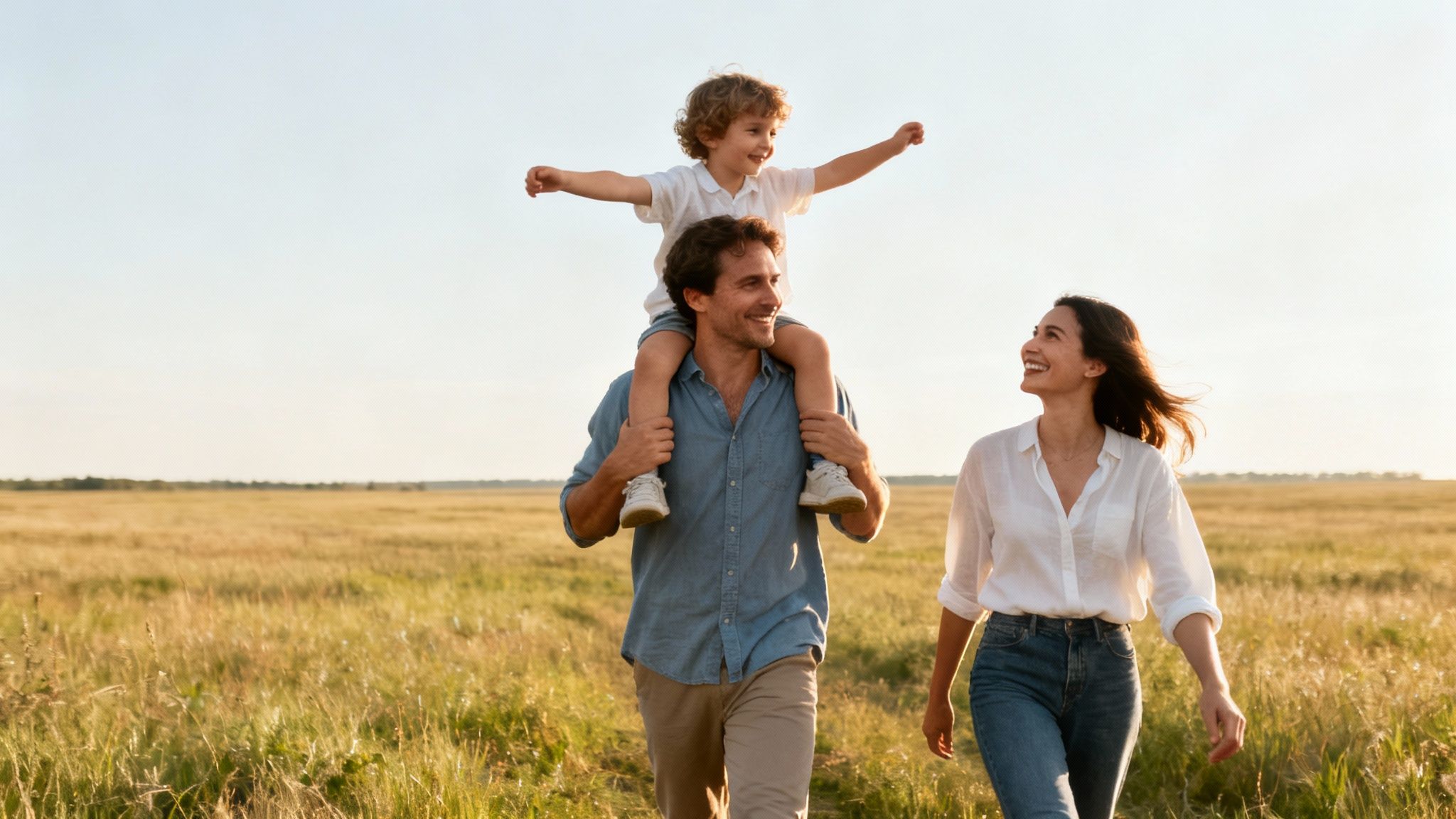
The Piggyback or Shoulder Ride is an energetic and joyful pose that injects motion and authentic emotion into a photoshoot. This dynamic option is one of the best poses for family portraits because it highlights the playful side of family relationships and naturally elicits genuine smiles, especially from younger children. By having a parent lift a child onto their back or shoulders, you create vertical layers, energy, and a beautiful narrative of care and fun.
This pose is incredibly effective for capturing a specific, fleeting stage of life when children are small enough to be lifted. The resulting images feel candid and full of life, telling a story of connection, strength, and happiness that static poses sometimes miss.
How to Achieve The Playful Lift
Safety and comfort are paramount for this pose, so always check in with the parents first. Start by having the parent plant their feet firmly for a stable base. Then, have them lift the child carefully onto their shoulders or back. The other family members can gather closely around, looking up at the child or smiling toward the camera to create a balanced composition.
Photographer’s Cues:
- "Show Me Your Best Giggle:" Direct this specifically to the child being held. Their genuine laughter is contagious and will inspire natural smiles from the rest of the family.
- "Hold On Tight and Look at Mom/Dad:" Encouraging the child to interact with their parent creates a beautiful, intimate moment between them. The parent can look up at the child as well for an even more connected feel.
- "Okay, Give a Little Wiggle:" A small, controlled wiggle can produce candid expressions and a sense of movement. Be ready to shoot in a quick burst to capture the perfect split-second of joy.
Pro Tip: Keep this pose short and sweet. It can be physically demanding for the parent and the novelty can wear off quickly for the child. Capture the shots you need within a minute or two, then transition to a more relaxed pose on the ground.
This action-oriented pose is perfect for breaking up a session filled with more traditional, stationary setups. It re-energizes everyone and creates memorable images that truly capture the spirit of childhood. To see how these dynamic moments fit into a full session, check out our portfolio of family photography stories.
9. The Diagonal Line Pose
Breaking away from traditional horizontal arrangements, the Diagonal Line is a powerful compositional technique that makes our list of best poses for family portraits. This pose arranges family members along a diagonal axis across the frame, creating a dynamic visual path that guides the viewer's eye through the image. It injects energy and movement into a static shot, resulting in a more engaging and professionally composed portrait.
This approach is particularly effective for larger, multi-generational families or groups in an expansive outdoor setting. By using natural terrain or deliberate staging, the diagonal line adds depth and visual interest, turning a simple group photo into a compelling piece of art that feels both organized and full of life.
How to Achieve The Diagonal Line
Successfully creating a diagonal composition requires thoughtful placement and an eye for balance. Start by identifying the natural lines in your environment, such as a sloping hill, a winding path, or a staircase. Position the family along this line, staggering their heights and stances to create a flowing, connected arrangement.
Photographer’s Cues:
- "Find Your Spot on the Line:" Guide each family member to their position, often placing the tallest person at the highest point of the diagonal and the smallest at the lowest to enhance the effect.
- "Connect with a Look or Touch:" Ask adjacent family members to look toward one another or place a hand on the shoulder of the person next to them. This creates smaller points of connection along the main visual line.
- "Angle Your Bodies Toward Me:" Direct them to turn their bodies slightly toward the camera, ensuring their faces are well-lit and clearly visible. This prevents anyone from being lost in profile.
Pro Tip: Position the main diagonal to flow from the lower-left to the upper-right corner of the frame. Western audiences naturally read images in this direction, making the composition feel intuitive and harmonious.
This pose is an excellent choice for adding a touch of sophistication and dynamic flair to your family session. It works beautifully in scenic landscapes where you can leverage the environment to reinforce the composition, creating a portrait that is both grand and intimately connected. To see how we use composition to elevate our work, browse our family portrait portfolio.
10. The Seated Group with Props Pose
The Seated Group with Props pose introduces a styled, intentional element to a family portrait, making it one of the best poses for family portraits that aim for a curated, editorial feel. By using items like benches, heirloom quilts, or rustic hay bales, you create a cohesive scene that provides comfortable seating and enhances visual interest. This approach anchors the family in the environment, allowing for natural interactions within a thoughtfully composed frame.
This technique is especially powerful for outdoor sessions, where a simple prop can transform a beautiful landscape into a personalized setting. It helps ground the subjects, gives them something to interact with, and offers a practical solution for arranging large groups or families with small children who may not want to stand still for long.
How to Achieve The Seated Group with Props
Success with this pose lies in selecting props that match the session's aesthetic and using them to create dynamic levels. Start by placing your prop, such as a vintage sofa or a wide blanket, in a location with a clean, compelling background. Arrange the family in and around the prop to build a multi-layered composition.
Photographer’s Cues:
- "Find Your Natural Spot:" Instead of assigning rigid positions, invite family members to find a comfortable spot on or around the prop. This encourages organic placement and relaxed body language.
- "Connect with a Touch:" Direct family members to create connection points. Ask someone to rest a hand on another's shoulder, or have children lean back against a parent.
- "Look Towards the Prettiest Light:" Use the light source as a focal point. Asking the group to turn their faces toward the light together creates beautiful, soft shadows and synchronized expressions.
Pro Tip: Create visual triangles by staggering heights. Have some family members sit on the prop, others sit on the ground in front, and perhaps have a teen lean against the side. This avoids a flat, lineup-style photo and adds professional-level dimension.
This pose is also an excellent opportunity to highlight coordinated outfits that complement the prop's texture and color. For more guidance on choosing the perfect wardrobe, explore our detailed guide on what to wear for your family photoshoot.
Top 10 Family Portrait Poses Comparison
| Pose | 🔄 Complexity | ⚡ Resources & efficiency | ⭐ Expected outcome | 📊 Ideal use cases | 💡 Quick tip |
|---|---|---|---|---|---|
| The Embrace Pose | Low — easy to direct | Minimal props; works indoors/outdoors | High emotional warmth; timeless look ⭐⭐⭐ | Immediate families, multi‑gen portraits | Tilt heads together; shoot slightly elevated |
| The Staggered Heights Pose | Medium–High — planning required | Props/terrain (steps, chairs); location scout | Strong depth and visibility; editorial quality ⭐⭐⭐ | Blended families, large multi‑gen groups | Place tallest at back/edges; stagger spacing |
| The Sitting Poses Variation | Medium — moderate setup | Chairs/blankets/benches; comfortable locations | Relaxed, inclusive portraits; reduces fatigue ⭐⭐⭐ | Families with mobility limits, newborns, maternity | Use triangular composition; tilt sitters slightly forward |
| The Walking/Moving Poses | Medium — needs timing/direction | Open outdoor space; faster shutter/continuous mode | Dynamic, candid lifestyle images; authentic moments ⭐⭐⭐ | Outdoor lifestyle, social media, active families | Shoot bursts; walk at natural pace; 1/500s+ shutter |
| The Back-to-Camera Pose | Low — simple arrangement | Scenic location; golden‑hour lighting preferred | Aspirational, silhouette-driven emotional images ⭐⭐ | Destination sessions, sunset shoots, shareable art | Use with face‑forward shots; ensure striking backdrop |
| The Playful Interaction Pose | High — requires skilled direction | Minimal props; time and patience needed | Highly engaging, storytelling-rich frames ⭐⭐⭐ | Families with kids; sessions prioritizing candid emotion | Direct interactions, use continuous shooting, prompt play |
| The Forehead-to-Forehead Pose | Low–Medium — intimate setup | Close framing; soft/diffused lighting | Tender, deeply emotional portraits; intimate feel ⭐⭐⭐ | Parent‑child, couples, maternity | Gentle contact, slight head tilt, use soft light |
| The Piggyback/Shoulder Ride Pose | Medium — safety & stamina factors | No props but physical capability required | Joyful, child‑focused images; high energy ⭐⭐⭐ | Families with young children | Ensure parent comfort/safety; shoot quickly |
| The Diagonal Line Pose | High — deliberate composition | Space and planning; flexible location | Dynamic, professional composition; visual flow ⭐⭐⭐ | Large groups, gallery‑quality sessions | Stagger heights diagonally; use environmental lines |
| The Seated Group with Props Pose | Medium — styled setup | Props (benches, blankets); wardrobe coordination | Styled, cohesive lifestyle images; comfortable sessions ⭐⭐⭐ | Styled family shoots, multi‑gen, mobility‑friendly | Coordinate props/outfits; shoot slightly elevated |
Bringing It All Together: Your Story, Beautifully Told
Navigating the world of family photography can feel like a complex dance, but as we've explored, it all comes down to a simple, powerful idea: connection. The list of the best poses for family portraits isn't just a technical manual for arranging bodies; it's a creative toolkit designed to unlock and capture the genuine bonds that define your family. From the foundational comfort of The Embrace Pose to the dynamic energy of The Walking/Moving Poses, each technique serves a unique purpose in telling your story.
We've seen how arranging family members in staggered heights or a diagonal line creates visual interest and a sense of unity, while variations on sitting poses offer a relaxed and intimate atmosphere. The real magic happens when you move beyond static arrangements. Encouraging playful interactions, piggyback rides, or quiet forehead-to-forehead moments transforms a photoshoot from a stiff obligation into a memorable experience. These are the moments that yield the most authentic and emotionally resonant images, the ones that truly reflect your family's spirit.
Key Takeaways for Your Next Session
Mastering these poses is about understanding the "why" behind each one.
- Prioritize Connection Over Perfection: The most powerful images often come from unscripted moments. A shared laugh during The Playful Interaction Pose or a spontaneous hug is more valuable than a perfectly stiff smile. Use poses as a starting point, not a rigid script.
- Create Movement and Energy: Static portraits have their place, but incorporating motion adds life and authenticity to your gallery. Walking, running, or even a simple lean-in can introduce a dynamic quality that feels natural and unforced.
- Vary Your Composition: Don't be afraid to mix it up. Combine wide shots that capture the environment with tight, intimate crops that focus on expressions. Use a mix of standing, sitting, and interactive poses to create a diverse and engaging collection of photographs.
Turning Poses into Lasting Memories
Ultimately, the goal of any family portrait session is to create tangible artifacts of your family's legacy. These photographs will become cherished heirlooms, telling the story of your love and connection for generations to come. After carefully crafting your family's story through intentional posing, you'll want to ensure those cherished moments are beautifully displayed, perhaps by creating lasting memories for a 12-month baby picture frame. The images you capture today are the memories you will treasure tomorrow, adorning the walls of your home and filling the pages of your family albums.
Think of each pose not just as a way to stand, but as a prompt. The back-to-camera pose isn't just about showing off a beautiful landscape; it's an invitation to contemplate the future together. The seated group pose with props isn't just about holding an object; it's about sharing a common element that defines a piece of your family's identity. By embracing this mindset, you and your photographer can collaborate to create a gallery that is not only beautiful but deeply meaningful. The best poses for family portraits are the ones that feel true to you, allowing your unique narrative to unfold with honesty, warmth, and artistry.
Ready to capture your family's story with professional guidance and a creative touch? The team at Candid Studios specializes in transforming these posing concepts into timeless, authentic portraits that reflect your unique connection. Visit Candid Studios to view our portfolio and book a consultation to create beautiful memories that will last a lifetime.