Boudoir Portraits: Confidence in Focus
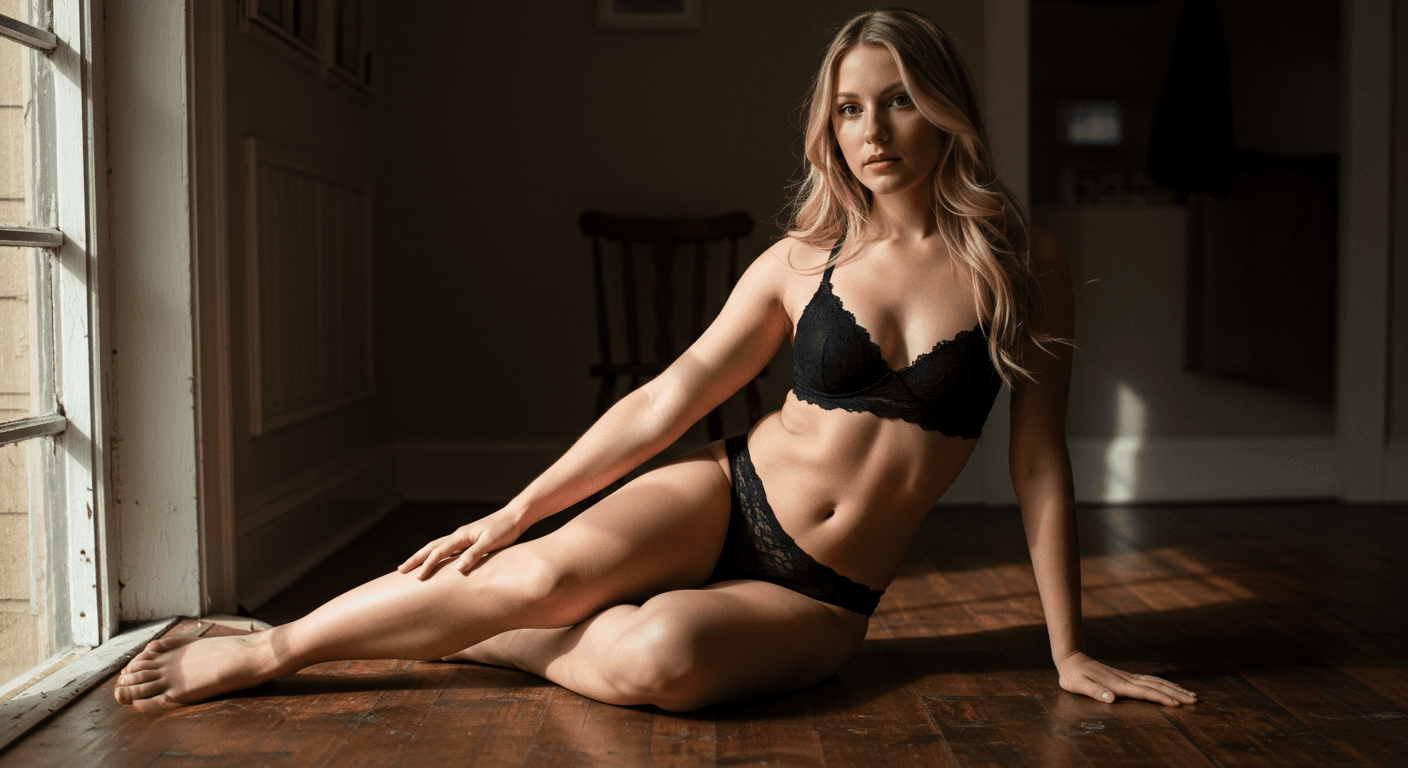
Boudoir portraits have long been misunderstood as purely glamorous or suggestive. In truth, they’re one of the most human-centered genres in contemporary photography, rooted in self-expression, narrative, and quiet courage. At their best, they’re not about posing for the camera but being seen in a way that feels deeply personal and affirming. This post explores how intentionality, light, and emotional fidelity shape meaningful intimate imagery, without cliché or compromise.
Key Takeaways
- Boudoir portraits prioritize emotional authenticity over stylized perfection, using narrative-driven planning to ground each session in personal meaning.
- Natural light mastery, including golden hour timing, reflectors, and open-shade positioning, creates warmth, dimension, and visual honesty in intimate photography.
- The candid edit framework preserves real texture and expression, removing only environmental distractions, not natural skin variation, movement, or human imperfection.
What Makes Boudoir Photography Meaningful, Beyond the Surface
Boudoir photography isn’t defined by location, attire, or level of coverage. It’s defined by intention. When someone chooses to step in front of the lens for a session rooted in self-celebration, not external validation, they’re making a quiet, powerful declaration. That declaration becomes the compass for everything that follows: how a space is framed, how light falls across a shoulder, how a glance holds space in the final image.
This is why the first 15 minutes of every session at Candid Studios isn’t spent reviewing pose charts or wardrobe options. It’s a story-first discovery chat. We ask: What does this moment represent for you? What feeling do you want to carry forward, not just in the photos, but in your daily life? That insight informs lighting decisions, lens choice, and even pacing. A session honoring postpartum strength might lean into soft, diffused window light and slow, grounded compositions. One marking a career milestone might use bold shadows and decisive framing to echo confidence and clarity.
It’s not about capturing a “type” of person. It’s about honoring a specific, unrepeatable chapter.
The Story-First Shoot: Where Narrative Guides Every Frame
A boudoir session shouldn’t feel like an audition. It should feel like a conversation, between photographer and subject, between memory and moment, between stillness and motion. That begins with listening. The Story-First Shoot methodology replaces rigid shot lists with responsive storytelling. There’s no “must-have pose” checklist. Instead, we identify visual metaphors: a hand resting on a favorite bookshelf, light catching the edge of a well-worn ring, the way someone tucks hair behind their ear when they laugh.
This approach also reshapes the power dynamic. The subject isn’t performing for the camera, they’re guiding it. We collaborate on environment, rhythm, and emotional pacing. If a location feels too sterile, we move to a sunlit corner of a living room. If silence feels heavy, we pause and talk, not about the shoot, but about what’s on their mind. That trust opens space for genuine expression: a half-smile that lingers, a quiet exhale before stepping into frame, the way light catches the curve of a collarbone just so.
The result isn’t a catalog of “pretty shots.” It’s a sequence, like chapters in a short story, where each image builds on the one before it, culminating in a visual arc that feels true.
Natural Light Mastery: Why Ambient Light Builds Trust
Artificial lighting can be precise, but it’s rarely intimate. Harsh grids, direct flash, and over-bounced strobes flatten texture, mute warmth, and create psychological distance between subject and image. That’s why natural light mastery is foundational, not just for aesthetic reasons, but emotional ones.
We don’t chase “perfect” light. We work with what’s available. That means scouting windows for directional morning glow, using white foam core as a gentle reflector to lift shadows without erasing them, or stepping outside during golden hour to let backlight halo hair and shoulders. Indoors, we seek open shade, where light is soft, even, and three-dimensional. Outdoors, we avoid midday sun not because it’s “bad,” but because its contrast is too extreme for the subtlety boudoir moments require.
This discipline does more than flatter skin tones or smooth highlights. It signals respect. When light feels familiar, like the glow of a living room lamp or the hush of afternoon sun through gauzy curtains, the subject relaxes. Their shoulders drop. Their gaze softens. That’s when authenticity enters the frame, not as a pose, but as presence.
The Candid Edit Framework: Editing With Emotional Fidelity
Post-production is where many intimate sessions lose their soul. Over-smoothing, aggressive retouching, and hyper-saturated color grading can turn a vulnerable moment into a glossy caricature. The Candid Edit Framework refuses that trade-off. Its core principle is emotional fidelity: every adjustment must serve the feeling of the moment, not erase its evidence.
We begin with exposure and white balance, calibrated to match the actual light conditions of the shoot. If a room was warm and dim, the image stays warm and dim. If skin had a faint freckle pattern or gentle texture in natural light, it remains. We remove only genuine distractions: a power cord snaking across the floor, a stray leaf on a windowsill, a reflection in glass that pulls focus from the subject’s eyes.
Then comes sequencing. A boudoir gallery isn’t a slideshow, it’s a narrative. We arrange images to mirror the emotional arc of the session: from quiet anticipation to grounded presence, from stillness to movement, from introspection to quiet joy. This isn’t about chronology. It’s about resonance. One image might hold a breath; the next might release it. That rhythm makes the collection feel lived-in, not staged.
Why “Nationwide” Matters for Intimate Imagery
Candid Studios serves clients across all 50 states, not as a marketing claim, but as a logistical and philosophical commitment. Intimacy shouldn’t be constrained by geography. A person in Portland, Maine, deserves the same level of narrative intention and light sensitivity as someone in San Diego, California, or Bozeman, Montana.
That nationwide reach is made possible by a curated network of backup photographers and a standardized process, not a one-size-fits-all template, but a shared methodology. Every collaborator is trained in the Story-First Shoot framework, natural light scouting protocols, and the Candid Edit Framework. That consistency ensures a client in Nashville isn’t getting a different philosophy than one in Anchorage. It also means no “local studio” compromise: there’s no dilution of vision to fit regional expectations or commercial trends.
It’s not about scale for scale’s sake. It’s about making thoughtful, human-centered photography accessible, without asking people to travel, relocate, or conform to a narrow idea of what “boudoir” should look like.
What Boudoir Is Not: Dispelling Common Misconceptions
Boudoir photography is often reduced to caricature, either as overly sexualized or unnecessarily clinical. Neither reflects its lived reality. It is not about fulfilling someone else’s fantasy. It is not a prerequisite for a wedding gift or a “before-and-after” body transformation tool. And it is not inherently risqué.
It is also not therapy, though many find it therapeutic. It’s not a fashion shoot, though styling matters. It’s not a modeling portfolio, though confidence shines through. What unites all authentic boudoir work is agency: the subject’s right to define the boundaries, tone, and meaning of their own session.
That includes wardrobe choice, location, level of coverage, and even whether images are shared publicly, or kept private. Some clients choose silk robes and soft candlelight. Others opt for tailored blazers and sunlit bookshelves. One might photograph in a hotel suite; another in their own backyard at dusk. None is more “correct” than the other, because boudoir isn’t a genre defined by aesthetics. It’s a practice defined by autonomy.
How Candid Studios Approaches Intimacy With Integrity
Candid Studios was founded in 2016 on a simple premise: photography should honor people, not just present them. That principle guides every decision, from the first discovery call to final delivery. There are no fixed packages, no mandatory upsells, and no pressure to conform to industry norms.
Every session includes free RAW files, because ownership belongs to the subject, not the studio. Delivery happens in 2 to 4 weeks, not months, because anticipation shouldn’t eclipse experience. And every project is backed by a network of insured, vetted collaborators, so a weather delay in Denver or a scheduling conflict in Atlanta doesn’t mean cancellation, just seamless continuity.
Pricing is transparent and hourly: photography and videography start at $425/hr per hour. Clients choose only what they need, whether that’s 90 minutes for a focused, story-driven session or half a day for layered storytelling across multiple locations. There are no hidden fees, no “must-book” add-ons, and no expiration on files. Just clarity, consistency, and care.
This integrity isn’t performative. It’s built into the process, because when someone chooses to be photographed in a deeply personal way, the last thing they need is ambiguity.
Frequently Asked Questions
Q: What is a boudoir portrait?
A: A boudoir portrait is an intimate, confidence-centered photograph that emphasizes emotional authenticity over stylized perfection. It’s created in collaboration with the subject, often in a private or personally meaningful setting, and focuses on narrative, light, and genuine expression, not prescribed poses or aesthetic trends.
Q: How much does a boudoir photoshoot usually cost?
A: Pricing varies by location, session length, and creative scope, but at Candid Studios, photography and videography begin at $425/hr per hour. Clients build their own package based on time and needs, with no mandatory minimums or fixed-session pricing.
Q: What is the point of boudoir pictures?
A: The point is personal: to honor a moment, mark a transition, reclaim confidence, or simply see oneself with kindness and clarity. It’s not about external validation, it’s about creating imagery that feels true, empowering, and quietly resonant long after the session ends.
Q: How explicit is boudoir photography?
A: Boudoir photography is defined by the subject’s comfort level, not industry standards. Some choose elegant minimalism; others prefer fully clothed storytelling in meaningful spaces. There is no required level of coverage, attire, or setting, only mutual respect, clear boundaries, and shared creative intention.
Q: Do I need professional hair and makeup for a boudoir session?
A: No. While some clients choose to work with stylists, many prefer to show up as they are, because authenticity, not polish, is the goal. Natural texture, unstyled hair, and everyday confidence often create the most powerful images.
Contact Candid Studios today for a free consultation.