Family Photography Tips: Capture Real Moments That Last
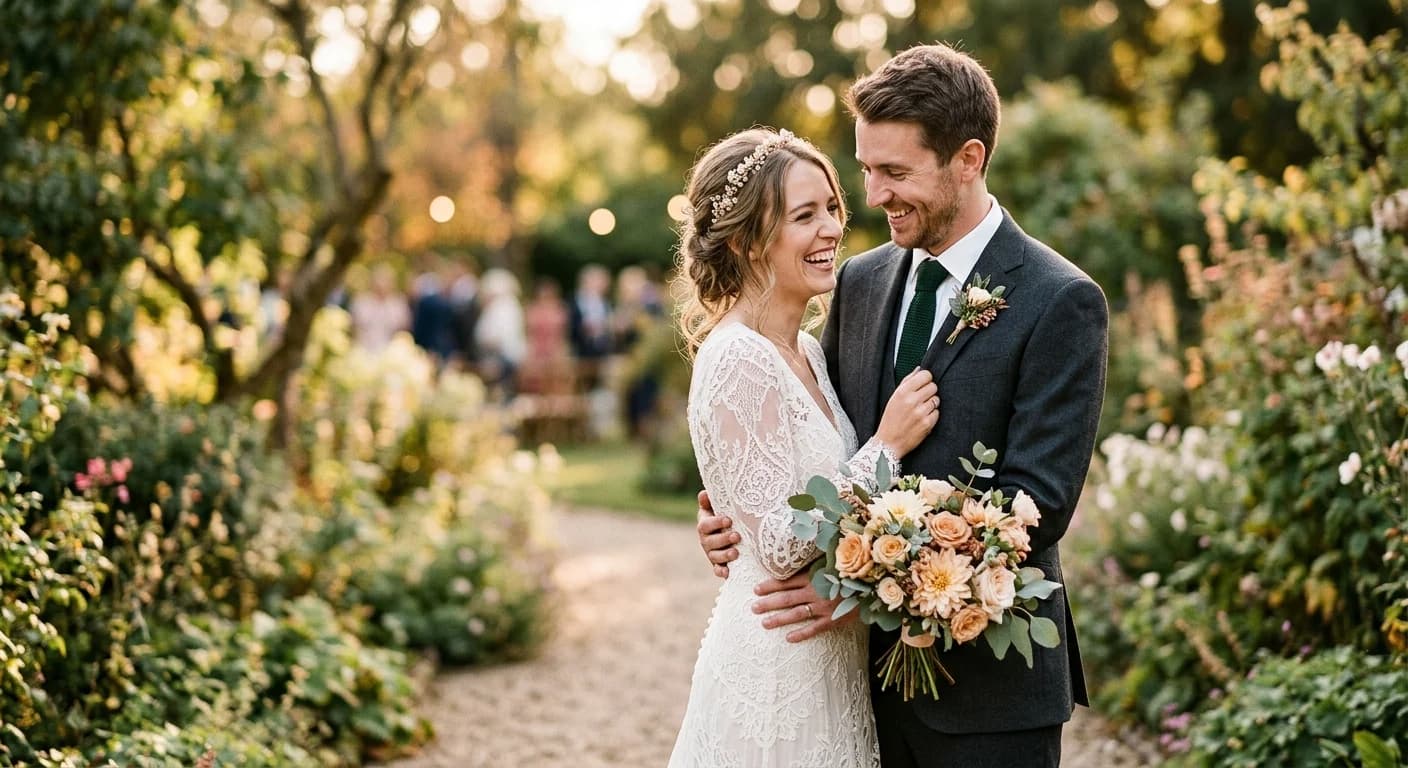
Family photos are meaningful visual records of connection, growth, and shared life chapters, captured not through stiff poses, but by honoring real moments, authentic expressions, and the quiet details that make your family uniquely yours.
Family photos anchor memory in something tangible. They’re not just visual souvenirs, they’re emotional touchstones that evolve in meaning over time. Whether it’s a newborn’s first yawn, a teenager’s reluctant smile, or grandparents holding hands on the porch, these images become part of your family’s visual language. At Candid Studios, we approach every session with the same care we’d give a wedding or corporate launch, not because it’s formal, but because it matters.
Key Takeaways
- Candid Studios is a photography and videography company based in Florida, Ohio, Illinois, and Colorado, founded in 2016, with 3,000+ events captured and 1,156+ verified five-star reviews averaging 4.9 stars.
- All family portrait sessions begin with a 15-minute discovery chat focused on meaning, not poses, to guide lighting, composition, and timing.
- Photography and videography services start at $350 per hour, include free RAW files, and guarantee delivery within 2–4 weeks.
The Story-First Approach to Portraiture
Most portrait sessions begin with a checklist: outfits, location, poses, props. But what if the most important detail wasn’t where you stand, but why you’re together in this moment?
At Candid Studios, every family session opens with a 15-minute discovery chat. We ask questions like: What’s changed since your last photos? What’s something small your kids do that makes you pause? What do you hope your kids remember about this season? These answers shape everything that follows, not as a script, but as a compass.
This isn’t about forcing “the perfect shot.” It’s about recognizing the narrative pulse beneath the surface: the way a toddler leans into their parent’s hip, the shared glance between siblings mid-laugh, the quiet pride in a grandparent’s eyes. We use those cues to determine where to stand, when to click, and even how to edit, always prioritizing emotional fidelity over aesthetic polish.
The result? Images that feel like memories, not stills. Photos you’ll want to print, frame, and pass down, not archive in a cloud folder.
Natural Light as Emotional Language
Light doesn’t just illuminate, it communicates. Harsh overhead light flattens expression. Cool fluorescent tones mute warmth. But golden hour glow? Open shade diffusion? The soft, directional light of a west-facing window at 3 p.m.? Those don’t just look beautiful, they evoke feeling.
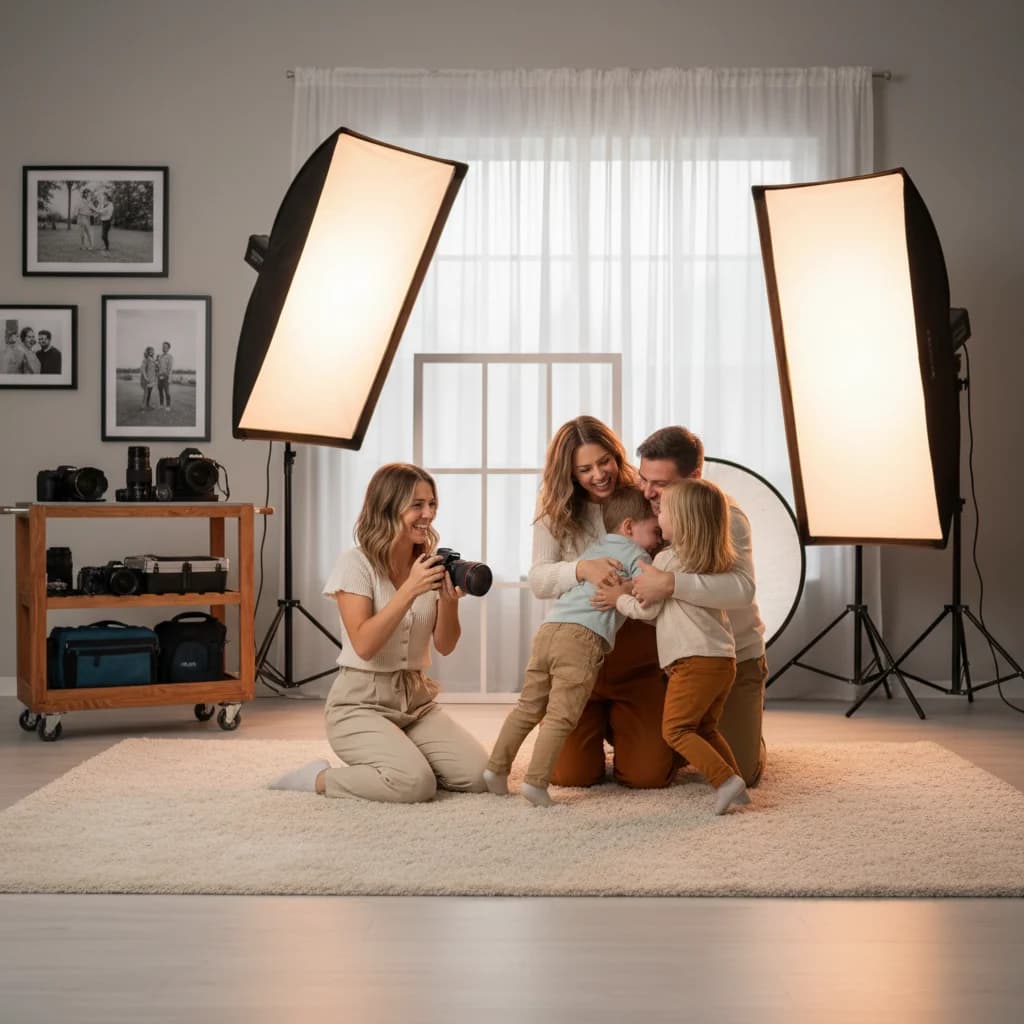
We don’t bring in heavy strobes or bounce flash for family sessions. Instead, we scout light like a storyteller scouts setting: observing how it moves across skin, how it catches a strand of hair, how it pools on a rug where a child just knelt to tie a shoe.
We use reflectors to lift shadow under chins, not to erase texture, but to reveal the curve of a smile. We use diffusers to soften midday sun, not to eliminate contrast, but to preserve dimension. We schedule outdoor sessions during golden hour or in open shade because those conditions support authenticity: skin tones stay true, eyes stay bright, and no one squints.
This approach means your family photos won’t look “lit”, they’ll look lived-in. Like the light in your home, or the glow on your porch at dusk. Like memory itself.
Why Candid Moments Outlast Posed Perfection
There’s a reason the photo you keep on your nightstand isn’t the one where everyone’s looking at the camera with matching grins. It’s the one where your daughter’s got peanut butter on her cheek and your son’s mid-sneeze, and you’re laughing so hard your shoulders are shaking.
Candid moments carry weight because they’re unguarded. They contain micro-expressions, half-smiles, raised eyebrows, the tilt of a head, that speak louder than any staged expression. They reveal relationship dynamics: who holds space, who leans in, who watches from the edge and still belongs.
Our post-production process, what we call the Candid Edit Framework, honors that truth. We adjust exposure to recover detail in shadows or highlights, but never to erase natural texture. We balance color to reflect the actual warmth of the room or the coolness of a rainy afternoon, not to impose a “look.” And we sequence final images not by technical merit, but by emotional arc: the quiet anticipation before a hug, the release of laughter, the calm after.
We remove distractions, like a stray plastic bag blowing across frame, but we never remove a freckle, a crooked tooth, or the way light catches a tear. Those aren’t flaws. They’re evidence of being real.
Choosing the Right Setting, and Why It Matters More Than You Think
Location isn’t just background. It’s context. It’s subtext. It’s the unspoken third character in your family photos.
A session on your front porch tells a different story than one in a botanical garden or an empty downtown alley. The porch says home, routine, belonging. The garden says growth, seasonal change, shared discovery. The alley says adventure, curiosity, urban rhythm.
We don’t prescribe locations, we explore them with you. If you love hiking, we’ll find a trail with layered light and soft moss. If your family cooks together every Sunday, we’ll photograph the flour-dusted counter, steam rising from a pot, hands reaching for the same spoon. If your kids build forts in the living room, we’ll capture the blanket-draped couch and scattered pillows, not as clutter, but as evidence of life.
This is why we never shoot “on location” in the transactional sense. We shoot in context, where your family’s story naturally unfolds. That’s how images gain resonance. That’s how a photo stops being a picture and starts being a record.
What to Wear (and What to Skip) for Meaningful Imagery
Clothing choices often dominate pre-session nerves, and for good reason. What you wear sets tone, directs attention, and affects how light interacts with skin and fabric.
The best color to wear for family photos? There’s no universal “best,” but there is a guiding principle: choose colors that support, not compete with, your family’s natural dynamic. Think in terms of harmony, not matchiness. A soft sage shirt next to charcoal jeans and a cream sweater reads as intentional, not accidental. A rust-toned dress beside navy and oatmeal tells a cohesive story without demanding attention away from faces.
Avoid bold logos, busy patterns, or neon shades, they pull focus and date quickly. Skip ultra-sheer fabrics or overly stiff clothing that restricts movement. Instead, lean into natural fibers (linen, cotton, wool) that move with you and photograph with gentle texture.
Most importantly: wear what makes your family feel like themselves. If your teen only wears black hoodies, and that’s how they show up in daily life, then that hoodie belongs in the frame. Authenticity isn’t dressed up. It’s dressed true.
The 20-60-20 Rule: A Practical Guide to Visual Balance
The 20-60-20 rule isn’t a law, it’s a compositional compass used by editorial and documentary photographers to create natural, engaging frames. It divides the image into three tonal zones: 20% light, 60% midtone, and 20% shadow.
In family photography, this translates to intentional contrast, not flat, even lighting, but a thoughtful distribution of brightness and depth. Think of a child’s face catching the sun while their parent’s shoulder falls into gentle shadow. Or the glow on a forehead against the soft dimness of a hallway behind.
We apply this instinctively, not by measuring percentages, but by observing how light falls across bodies, how expressions emerge from contrast, and how stillness reads differently in light versus shadow. The rule helps us avoid visual fatigue: too much brightness feels harsh; too much shadow feels heavy. The 20-60-20 ratio creates breathing room for the eye, and for emotion.
It’s also why we rarely use full-frame, head-to-toe group shots as anchors. Instead, we build sequences that move between tight, expressive details (20% light on a hand holding another’s) and wider, context-rich moments (60% midtone in a sunlit kitchen), letting the image rhythm support the story’s pace.
What to Expect From Start to Delivery
Every family session with Candid Studios follows the same thoughtful rhythm, whether you're in Maine or Maui.
First, the discovery chat: 15 minutes, no cameras, just conversation. Then, we co-create a simple session plan, not a shot list, but a set of intentions (e.g., “capture how your son teaches his sister to tie shoes,” or “show the way your partner always reaches for your hand when you walk”).
On shoot day, we arrive early to observe light and flow. We shoot for 60–90 minutes, not to rush, but to allow for pauses, resets, and organic transitions. We move with your family’s energy: slower when needed, lighter when laughter breaks out.
Afterward, we deliver 60–90 carefully edited images within 2–4 weeks. Every package includes full-resolution JPEGs and free RAW files, so you own the originals, not just the edited versions. We back up every file across three geographic locations, and every booking includes access to our backup-photographer network, ensuring no session is ever missed.
No hidden fees. No pressure to buy prints. No “retouching packages” that erase reality. Just clear pricing, starting at $350 per hour, and the quiet confidence that what you receive will feel like your family, seen clearly.
Frequently Asked Questions
Q: What is the best color to wear for family photos?
A: There’s no single “best” color, but cohesive, natural tones (like olive, charcoal, rust, or cream) tend to harmonize well and age gracefully. Avoid neon shades, bold logos, or ultra-busy patterns that distract from expressions and relationships.
Q: What is the 20 60 20 rule in photography?
A: It’s a compositional guideline suggesting images read most naturally when roughly 20% of the frame is light, 60% midtone, and 20% shadow. It supports visual balance and emotional depth, especially in family portraiture where expression and context both matter.
Q: How much would a family photoshoot cost?
A: Candid Studios offers flexible hourly pricing starting at $350 per hour for photography and videography. There are no fixed-session packages, no hidden fees, and every booking includes free RAW files and delivery in 2–4 weeks.
Q: What are the best free photo sites?
A: For personal use, Unsplash, Pexels, and Pixabay offer high-resolution, royalty-free images under permissive licenses. Always verify license terms before use, especially for commercial or printed projects.
Q: Do you offer digital-only delivery?
A: Yes, every package includes full-resolution JPEGs and free RAW files. We deliver digitally by secure link, with no mandatory print purchases or upsells. You own your images, period.
Contact Candid Studios today for a free consultation.