Book Top-Rated Studio Photographers Near Me for Your Next Session
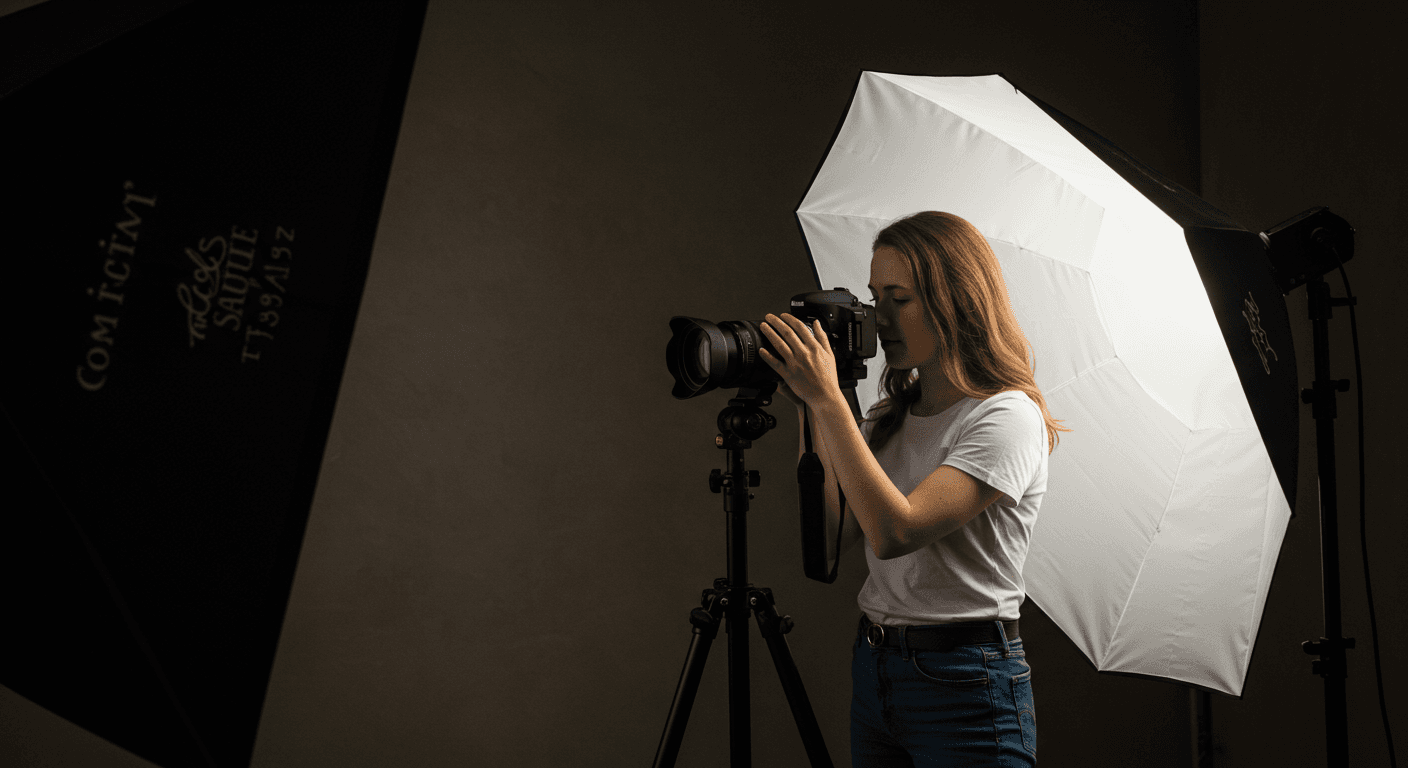
If you’re searching for studio photographers near me, start by prioritizing narrative intention over studio proximity. Authentic storytelling, lighting expertise, and editorial restraint matter more than ZIP code, especially since top-tier photographers serve clients across Florida, Ohio, Illinois, and Colorado with seamless virtual planning and local session coordination.
Finding the right creative partner shouldn’t hinge on geography alone. While “studio photographers near me” is a natural first search, what truly defines value isn’t square footage or street address, it’s methodology, emotional intelligence behind the lens, and consistency across genres. At Candid Studios, we work with clients from Maine to Maui not because we travel constantly, but because our process is built for intentionality, not inertia. Every shoot begins not with a backdrop, but with a conversation.
Key Takeaways
- Studio photographers near me should be evaluated first on storytelling methodology, not just location or studio size.
- Natural light mastery, not artificial lighting volume, is the hallmark of images that feel dimensional, warm, and timeless.
- When you evaluate a photographer, look for proof of process discipline: full session edits, a clear point of view on lighting, and editing restraint.
The Story-First Shoot: Where Meaning Drives the Frame
Most studio sessions begin with lighting diagrams. Ours begin with listening.
Before we set up a single reflector or adjust a shutter speed, we spend 15 minutes in a discovery chat, no poses, no presets, no assumptions. We ask: What does this moment represent? What feeling should someone feel when they see this image three years from now? For a small business owner, that might mean capturing the quiet confidence in their hands as they hold their first product prototype. For a family, it could be the unguarded laugh between siblings during a “serious” portrait.
This isn’t just warm-up small talk. It’s diagnostic. That insight directly informs our lighting ratio, lens choice, and even the cadence of our direction. A founder who describes their brand as “grounded, not glossy” won’t get high-key studio lighting, they’ll get open-shade window light, slightly muted contrast, and composition that centers texture over polish.
We’ve found that when clients feel seen before the shutter clicks, authenticity follows naturally. No forced smiles. No stiff shoulders. Just presence, captured with precision.
How It Differs From Traditional Studio Portraiture
Traditional studio work often follows a “pose-and-repeat” model: same lighting setup, same three angles, same retouching template. The Story-First Shoot flips that script. We treat each session like a short documentary, with a beginning (the discovery chat), middle (the session, guided by narrative cues), and end (the edit sequence that tells a micro-story). That’s why our clients return not just for headshots, but for brand evolution series, documenting growth across seasons, not just sessions.
Natural Light Mastery: Sculpting With Sunlight, Not Strobes
Light isn’t something we add. It’s something we invite.
We don’t avoid artificial lighting, but we treat it as a supporting actor, not the lead. Instead, we begin by studying ambient conditions: the direction and quality of available light, how it changes minute-to-minute, and how surfaces in the space interact with it. A north-facing window? Soft, even, shadowless, ideal for skin texture and quiet portraits. A sun-drenched south wall at 2 p.m.? Harsh, contrasty, full of storytelling opportunity, if we use a diffusion panel to soften edges and a white bounce card to lift shadows under the chin.
Golden hour isn’t just for sunset silhouettes. It’s also the 45 minutes after sunrise, when light is low, warm, and directional, perfect for highlighting the grain in reclaimed wood backdrops or the fine lines around a subject’s eyes that speak to experience.
And open shade? It’s our secret weapon. Not the dim corner of a studio, but the soft, wraparound light found under a covered porch, beneath a large awning, or beside a tall building during midday. It eliminates harsh overhead shadows while retaining dimension, the sweet spot between flat and dramatic.
Real-World Light Scenarios We Optimize For
- Home studios with limited windows: We use adjustable white curtains + silver reflectors to bounce and redirect existing light.
- Urban lofts with concrete floors and brick walls: We leverage texture-rich surfaces to add tonal depth, avoiding over-diffused light that flattens character.
- Outdoor studio sessions: We schedule by sun angle, not clock time, using apps like Sun Surveyor to map light paths across the space.
This approach doesn’t just look better. It feels better, less clinical, more human.
The Candid Edit Framework: Editing With Emotional Fidelity
Post-production is where many photographers lose the story they captured.
Our Candid Edit Framework is built on three non-negotiables: restraint, relevance, and rhythm.
- Restraint: We adjust exposure and white balance to match the feeling of the moment, not to hit a technical “ideal.” A slightly cooler tone might underscore quiet intensity; a hint of warmth can evoke nostalgia, even if the original file reads “neutral.”
- Relevance: We remove only what distracts from the subject’s presence, a stray leaf, a power cord, a smudge on a window, never natural texture, freckles, or the gentle shadow of a smile line. Imperfection isn’t noise. It’s narrative.
- Rhythm: We sequence images to reflect emotional arc. In a brand launch series, we might open with a tight shot of hands typing, cut to a wide of the team in motion, then close on a quiet, centered portrait of the founder, not because it’s “the best,” but because it lands the story.
This isn’t “before and after” editing. It’s before, during, and after editing, with intention at every stage.
Why This Matters for Long-Term Brand Consistency
Clients who work with us across multiple years, for annual reports, product drops, or leadership transitions, often tell us the biggest value isn’t in any single image, but in the visual continuity. Because our edits are guided by narrative, not trends, a portrait from 2022 still feels like the same person in 2024, just more lived-in, more grounded, more real.
Standards That Reflect Rigor, Not Just Logos
What separates a true professional isn’t a wall of badges. It’s process discipline: a repeatable approach to light, composition, and editing that holds up across every session.
That discipline shows in the work itself. Look for spatial accuracy, including lens distortion correction, horizon-level verification, and dynamic range balancing for rooms with mixed lighting (e.g., daylight through windows + tungsten bulbs overhead). No “HDR sliders.” Just precision.
It also shows in restraint: judging an image on decisive moment, composition, and emotional resonance rather than heavy retouching. The story should survive the edit, not depend on it.
These aren’t badges on a website. They’re proof points you can see in a full gallery.
What to Look For, and What It Won’t Tell You
A consistent process tells you how someone thinks, not just what they shoot. It signals they’ve been held to objective benchmarks, not just liked on Instagram. That said, process alone doesn’t guarantee chemistry. Which is why every consultation includes a 10-minute creative alignment check: “Does your vision for this session match how we work?” If the answer isn’t a clear yes, we’ll help you find someone who’s a better fit.
Why “Near Me” Is Only the First Filter, Not the Final Criterion
Geography matters, but only as a logistical variable, not a quality proxy.
Yes, a local studio photographer may offer walk-in headshot sessions or same-day proofs. But if their process prioritizes speed over storytelling, proximity becomes a liability, not an advantage. Conversely, a photographer based 200 miles away who conducts pre-session discovery calls, ships custom backdrops, and edits with narrative sequencing may deliver more value than five “near me” options combined.
We serve clients across Florida, Ohio, Illinois, and Colorado, not by flying everywhere, but by designing for remote collaboration:
- Virtual studio walkthroughs using 360° video
- Custom lighting kits shipped pre-session with setup videos
- Shared editing dashboards with timestamped feedback
- Local assistant coordination in 12 metro areas (including Atlanta, Denver, Portland, and Nashville)
“Near me” is about convenience. “Right for you” is about alignment.
How to Evaluate Local Options With Intention
If you do choose to work with someone nearby, ask these three questions:
- Can you share a full session edit, not just your top 3 images? This reveals consistency, not curation.
- How do you handle lighting when natural light is limited? Their answer should reference reflector angles and diffusion, not just “we turn on more lights.”
- What’s one edit you refused to make, and why? Their reasoning will tell you more about values than any portfolio.
Building Trust Through Genre Fluidity, Not Just Specialization
Photographers often silo themselves: “I only do weddings” or “I’m a product photographer.” That’s practical, but limiting.
At Candid Studios, we intentionally cross-pollinate genres. A real estate shoot teaches us how to compose for spatial storytelling. A brand portrait session sharpens our ability to convey voice through gesture and environment. A product lifestyle shoot hones our eye for texture, shadow, and contextual relevance.
That fluidity builds trust, because clients see we understand why a detail matters, not just how to light it.
When a boutique hotel hires us for both guest portraits and room photography, we don’t treat them as separate jobs. We notice how the light falls on a guest’s shoulder at 3 p.m., and use that exact angle to highlight the same linen texture on the bedspread. That visual thread creates cohesion no style guide can replicate.
Real Examples of Cross-Genre Insight
- A wedding client’s reception tent lighting informed how we lit a tech startup’s launch event, using the same gobo patterns to cast intentional, non-distracting shadows.
- A food photography session taught us how to use backlighting to separate a subject from a busy background, a technique we now apply to executive portraits against urban skylines.
- A commercial architecture shoot revealed how lens distortion affects perceived space, knowledge we now apply when staging small-business owner portraits in tight home offices.
This isn’t “jack of all trades.” It’s master of connection.
Frequently Asked Questions
Q: How much do studio photographers charge?
A: Studio photographers’ rates vary widely based on experience, session length, deliverables, and usage rights, not just location. Entry-level sessions may begin around $200 for digital files only, while full-service packages with custom lighting, multi-outfit coverage, and commercial licensing often range from $800–$3,500. Always clarify what’s included before booking.
Q: How to stand to look thinner?
A: Natural posture adjustments work better than forced poses: shift weight onto your back foot, tilt hips slightly back, elongate your neck, and turn shoulders at a 45-degree angle to the lens. Avoid sucking in your stomach, it tenses the face. A skilled photographer will guide subtle, sustainable alignment, not contortion.
Q: What is the 80 20 rule in photography?
A: Also known as the Pareto Principle, it suggests 80% of visual impact comes from 20% of compositional elements, usually the subject’s eyes, expression, and primary gesture. Strong photography minimizes distractions so that core 20% commands attention without competition.
Q: What colors do not photograph well?
A: Neon brights (especially fluorescent orange or lime), pure white, and deep black can challenge exposure consistency. Busy patterns like micro-checks or fine stripes may cause moiré in digital files. Solid mid-tone colors, like charcoal, olive, or rust, tend to render most reliably across lighting conditions.
Q: Do studio photographers use natural light?
A: Yes, many top studio photographers prioritize natural light when possible, using windows, skylights, and open-shade setups. It offers dimensional quality, soft transitions, and color accuracy that artificial sources often struggle to replicate without extensive modification.
Ready to capture your special moments? Contact Candid Studios today for a free consultation.