Branding Video Production Guide
Branding Video Production Guide
Branding video production is all about capturing your company's "why" and translating it into a compelling story. It goes far beyond simply selling a product; it’s about forging a genuine, emotional connection with your audience by showing them what you stand for—your core mission, your values, and your vision. Think of it as putting your brand's soul on screen.
Unpacking the Power of Brand Storytelling

At its heart, a branding video isn’t really about features and benefits. It’s about feelings and beliefs. A standard advertisement tells people what you sell, but a branding video shows them who you are and why you even exist. It’s a powerful tool for building trust that lasts and carving out a unique space for yourself in a noisy market.
This kind of storytelling turns abstract ideas like company culture or mission into something tangible and memorable. It’s the difference between saying your company is innovative and actually showing the passionate team working on the next big breakthrough. The ultimate goal is to create something that resonates so deeply that viewers don't just become customers—they become true advocates for your brand.
The Strategic Advantage of Video
The move toward video as a core marketing tool is impossible to ignore. A staggering 91% of businesses used video in 2023, which is a huge leap from just 61% back in 2016. Even more telling is that marketers who go all-in on video grow their revenue 49% faster than those who don't. This stat alone shows that quality video production isn't just a creative pursuit; it's a serious business driver.
Video has a unique ability to humanize your brand in a way no other medium can quite match. It lets you:
- Show Your Personality: Give your audience a peek behind the curtain at the real people and passion that fuel your logo.
- Build Real Trust: Authentic storytelling creates a genuine connection and boosts your credibility.
- Explain Big Ideas Simply: Use visuals to break down your mission or vision into a clear and compelling narrative.
A great branding video makes your audience feel something. It connects on a human level, creating a bond that goes beyond just a transaction and fosters real, lasting loyalty.
Branding Videos vs. Product Videos
It's really important to draw a line between a branding video and a typical product video. While both are types of professional business video production, they have fundamentally different goals. To get a better handle on this, checking out a comprehensive guide to branding video production can be incredibly helpful.
Let's break down the key differences to make it crystal clear.
Branding Video vs Product Video At a Glance
Attribute
Branding Video
Product Video
Primary Goal
Build emotional connection & trust
Drive immediate sales & conversions
Focus
The "why" behind the company
The "what" and "how" of a product
Call to Action
Subtle (e.g., learn our story)
Direct (e.g., buy now, sign up)
Tone
Inspirational, aspirational, emotional
Informational, persuasive, functional
Measurement
Brand recall, engagement, sentiment
Sales, click-through rates, leads
Ultimately, a branding video is playing the long game—it's about building a reputation and a loyal following. A product video, on the other hand, is focused on the here and now, aiming to close a sale. Both are essential, but they serve very different purposes in your marketing toolkit.
What Kinds of Branding Videos Are There?
Think of a branding video not as a single tool, but as a whole toolbox. Just like a carpenter needs more than a hammer, your brand needs different types of videos to tell its story effectively. The format you choose really depends on your goal, your audience, and where you plan to share it.
Getting this right is half the battle. A cinematic brand film might be perfect for making a big splash at a conference, while a quick social video is what you need to stay relevant in someone's daily feed. Let's break down the main types you'll encounter.
The Cinematic Brand Film
This is your brand's epic. It’s the origin story, the manifesto, the big "why" behind what you do, all wrapped up in a beautifully shot film. Typically running between two and five minutes, these are high-production pieces that focus on emotion and values, not just products.
Brand films are your heavy hitters. They belong on your homepage, at the start of a major presentation, or as the centerpiece of a new campaign. The goal here isn't a quick sale; it's to forge a genuine emotional connection and make people feel like they’re part of your story.
Brand Vignettes and Social Media Assets
In a world of infinite scrolling, you have seconds to make an impression. That’s where brand vignettes and social media assets come in. These are short, punchy videos—almost always under 60 seconds—built for platforms like Instagram, TikTok, or LinkedIn.
They’re designed to be consumed on the go and can take many forms:
- A quick behind-the-scenes look at your team in action.
- An energetic, fast-cut montage that captures your brand's vibe.
- A simple animated logo that reinforces brand recall.
The trick is to make every little piece feel like it belongs to the same puzzle. Each clip, no matter how short, should echo your core brand message and personality, keeping you top-of-mind.
The Product Story Video
This is where brand storytelling meets product marketing. Instead of a dry list of features and benefits, a product story video shows how your product fits into your brand's bigger promise. It’s less about what the product does and more about why it matters.
Imagine a company that makes sustainable outdoor gear. Instead of just showing their new backpack on a white background, they create a video of a real person using it to explore a breathtaking national park. The story isn't just about the backpack; it's about adventure, quality, and a commitment to the environment. It turns a simple product into a symbol of your brand's values.
A product story isn’t about what the product is; it's about what the product enables. It connects a tangible item to the intangible emotions and aspirations of your audience, making the purchase feel more meaningful.
Executive and Team Profile Videos
At the end of the day, people connect with people, not logos. Putting a human face on your brand is one of the most powerful ways to build trust and credibility. Videos featuring your leaders and team members do exactly that.
An executive interview video, for example, gives a founder the chance to share their vision and passion directly with the audience. It creates an authentic, personal link that a press release never could. These videos remind your customers that they’re dealing with real people who believe in what they do, which is fundamental for building lasting loyalty.
The End-to-End Video Production Process
Making a powerful branding video isn’t like taking a quick snapshot. It's much more like directing a film—even a 90-second one. Every project worth its salt follows a structured journey, a path that takes a spark of an idea and turns it into a polished, compelling final cut. Knowing how this works demystifies the whole thing and helps you become a better partner to your production team.
Think of it like building a house. You wouldn't just show up with a hammer and some nails; you'd start with a detailed blueprint. It's the exact same principle here. Each step is built on the one before it, making sure the final video doesn't just look good, but actually works for your brand.
This graphic shows how different video formats—from big, sweeping brand films to quick vignettes and product stories—all fit into the production ecosystem.
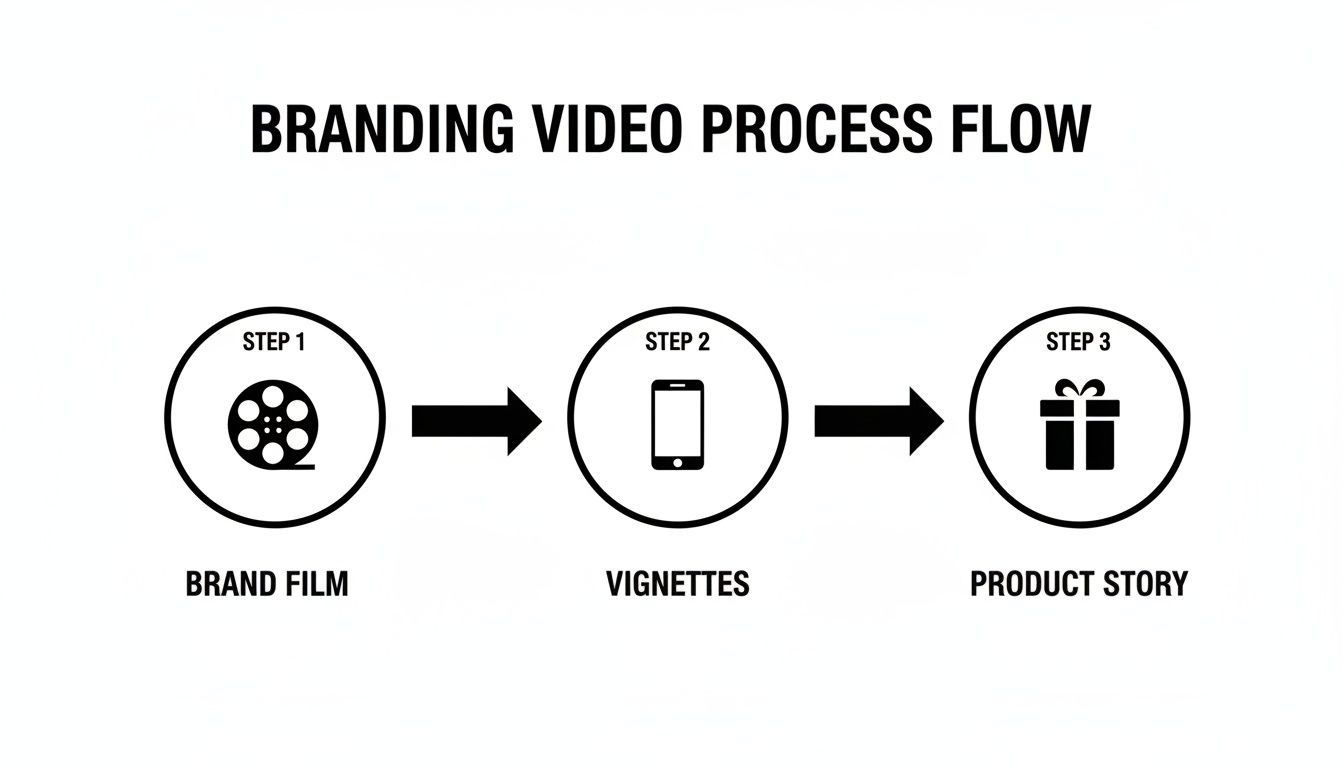
Each of these has a unique job to do, showing just how versatile branding video production can be in telling your story where your audience lives.
Stage 1: Strategy and Discovery
Honestly, this is the most important part of the entire process. Before anyone even thinks about a camera, your production partner needs to become a temporary expert on your brand. This isn't about a few surface-level questions; it's a deep dive. They need to get your mission, your audience, who you’re up against, and exactly what problem this video is supposed to solve.
Here’s what happens in this stage:
- Setting Goals: We figure out what "success" actually means. Is it boosting brand awareness? Driving people to your website? Getting more job applicants?
- Profiling the Audience: Who are we talking to? We need a clear picture of their frustrations, their values, and where they hang out online.
- Nailing the Message: Your brand has a big story. We have to boil it down to one core, compelling message that will be the emotional anchor for the whole video.
If you skip this strategic work, you’ll end up with a video that’s all style and no substance. It might look pretty, but it won’t do a thing for your business.
Stage 2: Creative Brief and Scripting
Okay, the strategy is locked in. Now it’s time to turn that plan into an actual creative idea. This is where the abstract goals start to feel like a real story. It all begins with a creative brief—a document that gets everyone on the same page about the video's objective, tone, and key messages.
From there, we move to the script. This is so much more than just writing down what people will say. It's about crafting a narrative with a clear beginning, middle, and end. A good script maps out the emotional rollercoaster you want your viewer to ride. If you want to dig deeper into the nuts and bolts of this, there are some great resources that explain how to make marketing videos that connect with people.
Stage 3: Production and Filming
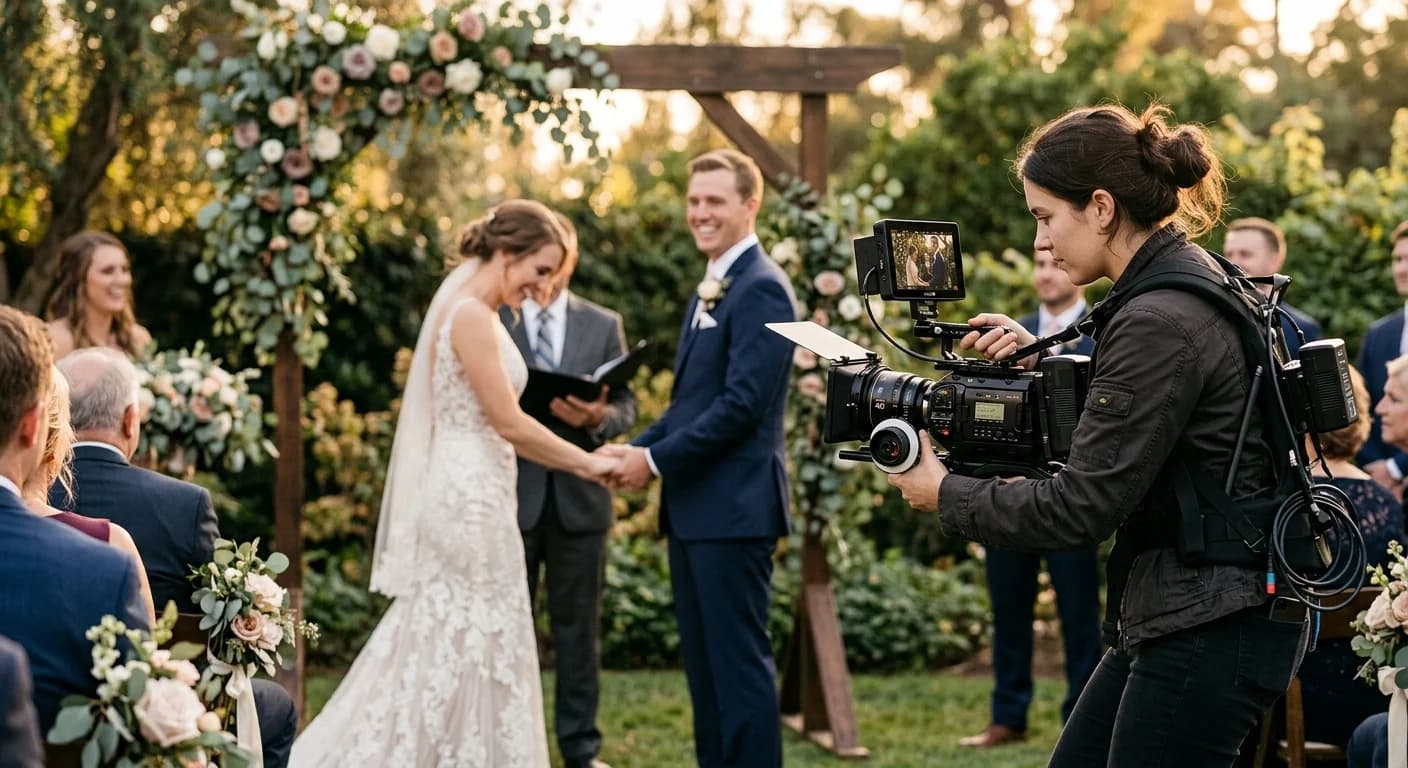
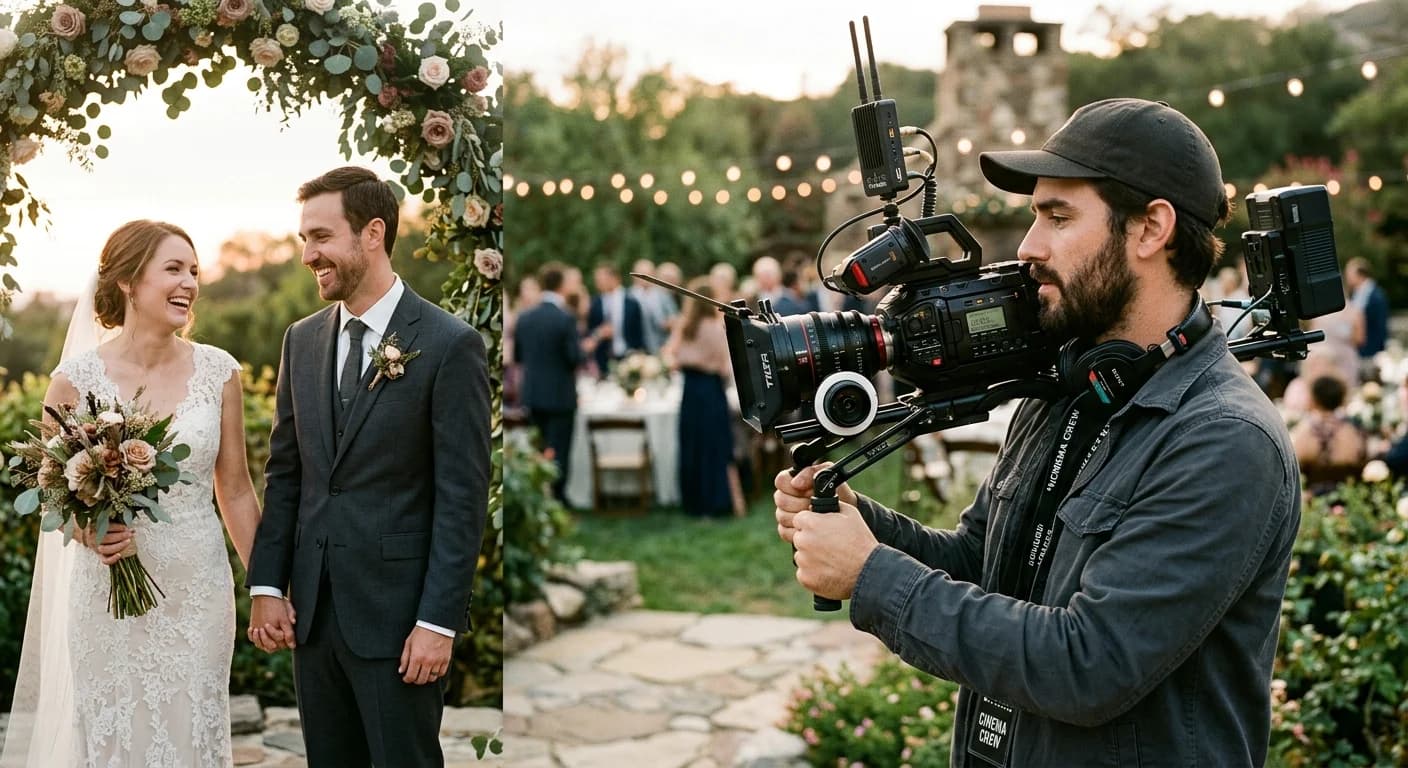
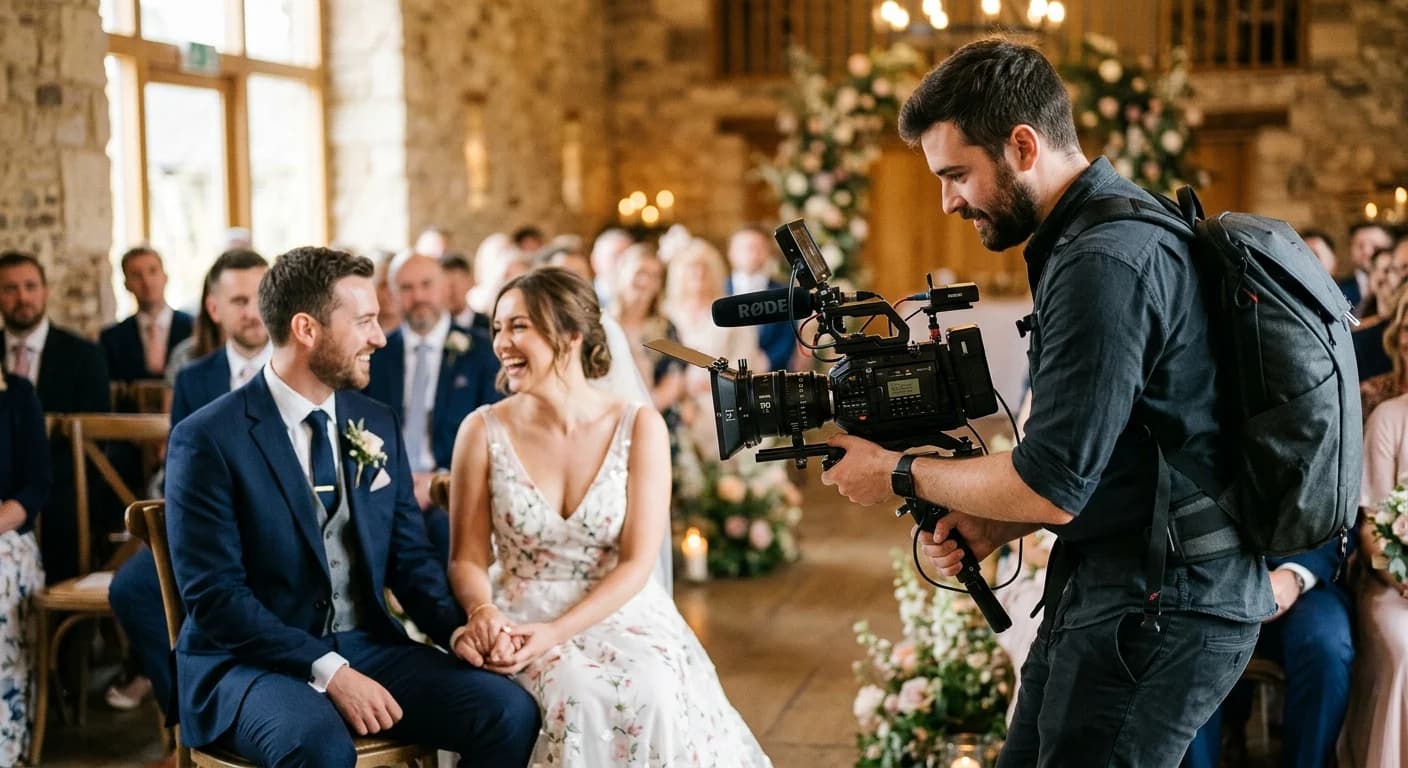
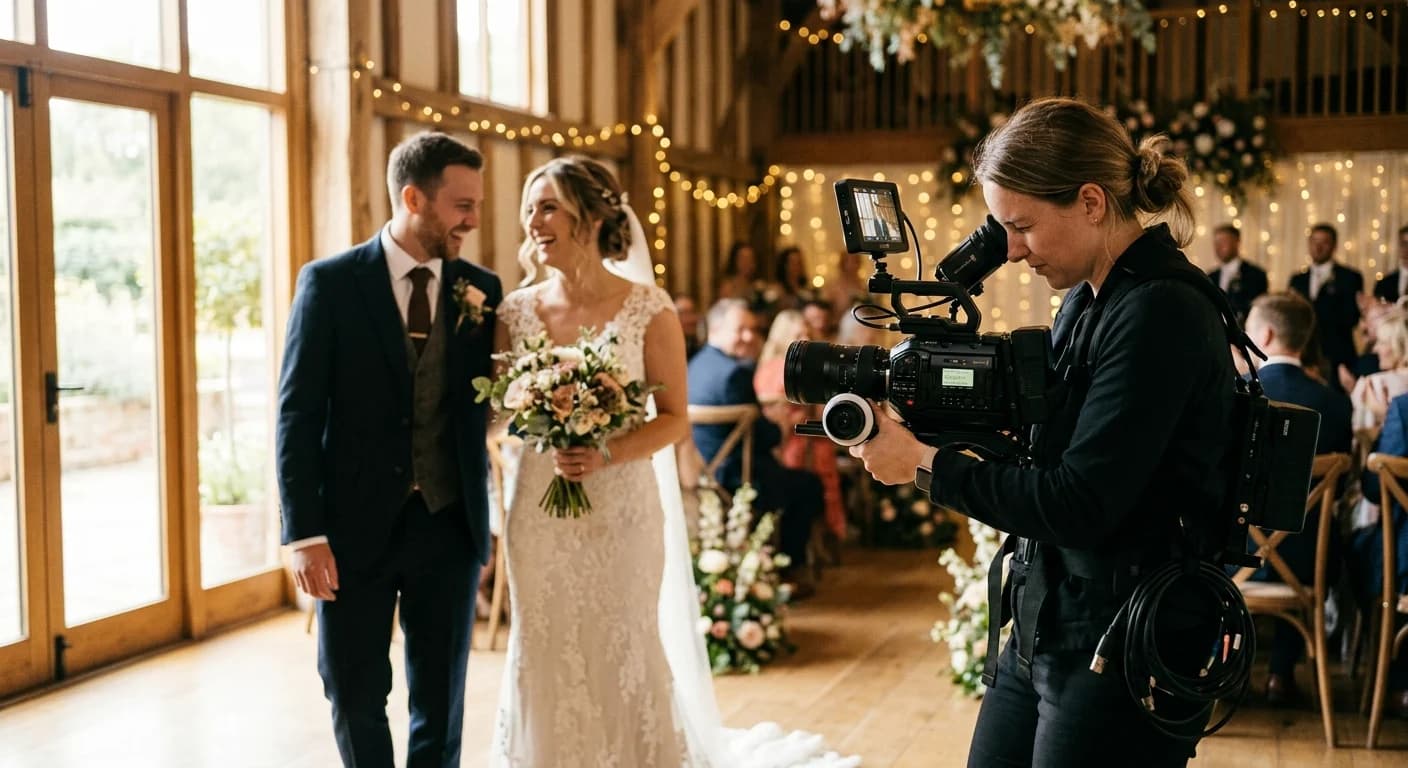
This is the part everyone pictures: the lights, the cameras, the action. All the careful planning comes to life on set. The production team wrangles all the logistics, from finding the perfect location and casting the right people to managing the crew and making sure every single shot lines up with the vision.
A film set is a carefully choreographed dance between technical pros and creative artists. The director coaches the talent, the cinematographer paints with light, and the sound engineer captures every word perfectly. When a shoot is run well, it’s a focused and efficient machine, capturing all the raw material needed to build a powerful story later on. This level of detail is why professional video production for business is a non-negotiable for serious brands.
Stage 4: Post-Production and Editing
Once the cameras stop rolling, all that raw footage heads to the editing suite. This is where the real magic happens—where the story is truly built. The editor sifts through hours of footage to find the perfect takes, piecing them together to create a seamless and compelling narrative.
But "post-production" is a big umbrella. Editing is just one piece of it:
- Color Grading: This is where we dial in the mood, adjusting the colors to create a consistent, cinematic feel.
- Sound Design & Mixing: Music, sound effects, and voiceovers are added to amplify the emotion and make the visuals pop.
- Motion Graphics: Animated text, logos, or other visual elements are woven in to reinforce your brand and communicate key info.
This is the final polish that turns raw footage into a captivating film.
Post-production is the final rewrite of the story. It’s where pacing is perfected, emotion is amplified, and the video's message is sharpened to its finest point.
Stage 5: Distribution and Promotion
The job isn't done when the final video is exported. A brilliant branding video is completely useless if nobody sees it. The last step is getting it in front of the right eyeballs, which requires a smart distribution plan.
This means choosing the right channels—your website’s homepage, YouTube, LinkedIn, Instagram, a paid ad campaign, or all of the above. Each platform needs a slightly different touch, so the video should be optimized with custom thumbnails and descriptions to grab attention. By actively pushing the video out there, you make sure your investment pays off and hits the goals you set way back in the discovery phase.
How to Budget for Your Branding Video
Let’s get real about the one question everyone has when it comes to branding video production: what’s this actually going to cost? Nailing down a realistic budget is the first, most critical step, but vague answers don't help anyone. The truth is, there’s no magic number. A video’s price tag is a direct reflection of the creative ambition and the resources needed to make it happen.
Think of it like building a house. A simple, functional bungalow has a very different price tag than a custom-designed mansion with imported marble and a home theater. Both are houses, but the time, skill, materials, and complexity involved are worlds apart. It's the same with video—a straightforward testimonial shoot is a completely different beast than a multi-day production with actors, custom animations, and a dozen locations.
Your budget isn't just an expense; it’s a direct investment in how the world sees your brand. Understanding where the money goes empowers you to have smarter conversations with production partners and make decisions that align with your goals.
Deconstructing Your Video Production Budget
The final cost of your branding video is a sum of its parts. Each of these components can be dialed up or down, which is what gives you a final price. If you want to go even deeper, you can check out our complete guide to corporate video production costs.
Here are the main cost drivers you need to have on your radar:
- Concept Complexity: Are we talking about a single-person interview in one room or a narrative story that unfolds across multiple scenes and timelines? The bigger the idea, the more planning, coordination, and on-set management it’s going to take.
- Crew Size and Expertise: For a simple shoot, a small, nimble crew might be perfect. But for that polished, cinematic feel, you’ll need a team of specialists: a director, a cinematographer, a gaffer (your lighting guru), a sound engineer, and more.
- The Gear: Professional cinema cameras, high-end lenses, sophisticated lighting rigs, and crystal-clear audio equipment are non-negotiable for top-tier quality. If you need specialty tools like drones, gimbals, or camera cranes, that will also factor into the budget.
- Talent and Locations: Hiring professional actors or scouting and securing permits for unique locations will influence the cost. Logistical details like travel and lodging for the crew also play a part in the bottom line.
- Post-Production Magic: This is where the raw footage is shaped into a compelling story. This phase includes the editor's time, color grading, sound design and mixing, music licensing, and any motion graphics or visual effects.
The key is to see your budget as a strategic tool. It's not about finding the cheapest path, but about allocating the right resources to create a video that actually moves the needle for your brand and delivers a real return.
Realistic Budget Tiers
To give you a clearer picture, let's break down some typical budget ranges. While most professional videos start around $1,500+ per finished minute, the investment is often well worth it—especially when you consider that 64% of consumers make a purchase after watching branded social videos. The market reflects this value, with digital video ad spending hitting a massive $62.1 billion in 2024 and making up 24% of total ad spend. You can find more of these powerful video marketing statistics on marinopr.com.
Here’s what you can generally expect at different levels of investment:
- Essential Tier ($3,000 – $7,000): This is a great starting point for more straightforward projects, like a single-location brand message or a simple product story. This budget usually covers a small crew for a half or full-day shoot plus standard editing and graphics.
- Professional Tier ($8,000 – $20,000): In this range, you get a lot more creative breathing room. We're talking multiple shoot days, the budget for professional on-screen talent, more advanced camera and lighting packages, and custom motion graphics that make your brand pop.
- Premium Tier ($25,000+): This is the territory for high-concept brand films destined for major campaigns. A budget like this can support a larger, specialized crew, custom-built sets, advanced visual effects, and a truly cinematic final product that commands attention.
Choosing the Right Production Partner

The success of your branding video doesn't just come down to a great idea. It hinges almost entirely on the creative partner you choose to bring it to life. This isn't like hiring a typical vendor; think of it more like entering a strategic partnership. The right team becomes a true extension of your brand, translating your vision into a powerful story.
Finding that perfect fit requires looking past a simple price sheet. You're searching for a team that is genuinely curious about your mission and works with a collaborative spirit. Their job isn’t just to check boxes on a task list—it’s to elevate your concept and make it better.
Evaluating a Potential Partner
Before you sign on the dotted line, you have to do your homework. A little due diligence upfront will save you a world of headaches later and ensure the final video actually hits your goals. What you're looking for is that perfect blend of creative vision, technical chops, and a proven history of success.
Start by taking a deep dive into their portfolio. Go beyond the flashy visuals and ask yourself some hard questions:
- Stylistic Alignment: Does their work have a look and feel that truly resonates with your brand’s personality?
- Storytelling Ability: Do their videos make you feel something? Do they tell a clear, compelling story, or are they just a montage of pretty shots?
- Proven Track Record: Have they created successful branding videos for companies in your industry or of a similar size?
This first pass will help you quickly filter your options and zero in on partners who are a genuine fit.
A production partner’s portfolio is their resume. Look for proof that they can not only create beautiful content but also drive real results and capture the unique essence of a brand—not just their own signature style.
Your Vendor Vetting Checklist
Once you’ve got a shortlist, it’s time to dig deeper. Use this checklist to guide your conversations so you can make a confident, well-informed decision. A great partner will have clear, thoughtful answers for every single one of these points.
1. Understand Their Creative Process: Ask them to walk you through their entire production journey, from the first discovery call to the final delivery. A professional team will have a structured, transparent process that keeps you in the loop at every critical stage.
2. Assess Technical Expertise: Inquire about the cameras, lighting, and audio equipment they use. You don't need to be a gearhead, but their answer will reveal a lot about their commitment to high-quality production standards.
3. Review Client Testimonials: Look for reviews or case studies that talk about their communication, professionalism, and ability to deliver on time and on budget. What do past clients say about the experience of actually working with them?
4. Gauge Their Curiosity: Do they ask smart, insightful questions about your brand, your audience, and your goals? The best partners are curious; they invest time upfront to truly understand your "why." If they jump straight to a price without a real conversation, that’s a major red flag.
For more detailed advice on what to look for, our comprehensive guide on hiring a business videographer provides an even deeper dive into the selection process.
Ultimately, choosing the right partner for your branding video production is an investment in your brand’s future. Find a team that is just as passionate about telling your story as you are.
How to Know if Your Branding Video is Actually Working
A beautiful branding video is great, but what really matters is whether it's moving the needle for your business. Just counting views is a classic rookie mistake—it's like judging a car by its paint job without ever looking under the hood. To get the real story on your branding video production, you need to look at the numbers that tie directly back to your business goals.
Ditching those surface-level "vanity metrics" is the first step. The right data doesn't just prove your return on investment; it gives you a roadmap for making your next video even better. This is how you start analyzing performance, justifying your budget, and building a video strategy that actually works.
Match Your Metrics to Your Goals
Before you look at a single number, you have to know what you’re trying to achieve. Is this video meant to introduce your brand to the world, or is it supposed to drive sign-ups for a demo? Your measurement strategy needs to reflect that goal.
We can break down the most important metrics into three buckets that line up with the classic marketing funnel. This makes sure you’re always measuring what matters for that specific stage of the customer journey.
- Brand Awareness: If you’re just trying to get your name out there, your focus should be on reach and impressions. Impressions count every time your video shows up on a screen, while Reach tells you how many unique people saw it.
- Audience Engagement: Want to know if your story is hitting home? This is where engagement comes in. Watch Time and Completion Rate are gold because they tell you if people are sticking around to hear what you have to say.
- Action and Conversion: When you need your audience to do something, you look at conversion metrics. This is where you track things like Website Traffic coming from the video or watch for a bump in Lead Generation from a linked form.
The smartest video strategies don't just track views; they measure impact. When you connect specific KPIs to your core branding objectives, you turn a creative piece into a measurable business tool that drives real growth.
The Key Performance Indicators to Keep an Eye On
Once you have your objective locked in, you can zoom in on the specific KPIs that will paint the full picture of your video’s performance. Think of these as the dials on your campaign’s dashboard—each one gives you a vital piece of information.
Here are the essential metrics you should be monitoring:
- Watch Time: This is the grand total of all the minutes people have spent watching your video. It’s a huge deal for platforms like YouTube, which see it as a primary sign of quality content.
- Average View Duration: This number tells you, on average, how long someone watches before clicking away. A high number here is a great sign that your story is compelling enough to hold attention.
- Audience Retention: This is my personal favorite. It’s a graph that shows you, second by second, where viewers are dropping off. Are you losing everyone at the 15-second mark? You’ve just learned something incredibly valuable for your next video.
- Click-Through Rate (CTR): If your video has a call-to-action (and it should!), the CTR shows what percentage of viewers actually clicked it. This is how you directly connect your video to traffic and leads.
- Social Shares: A share is more than just a click; it’s a personal endorsement. When someone shares your video, they’re putting their own reputation on the line to vouch for your message, giving you powerful organic reach.
Answering Your Top Branding Video Questions
Even with a solid plan in place, stepping into the world of branding video production can feel a bit like navigating uncharted territory. It's natural to have questions. We've gathered some of the most common ones we hear from clients to give you the clear, straightforward answers you need to feel confident.
Think of this as your pre-flight check. You know where you're going; these details just make sure the journey is smooth.
How Long Should a Branding Video Be?
There’s no one-size-fits-all answer here. The right length depends entirely on where the video will live and what you need it to accomplish. The real trick is matching the runtime to viewer expectations for that specific platform.
On a fast-scrolling Instagram or TikTok feed, you've got to make an impact in seconds. Videos under 90 seconds tend to perform best, delivering a quick, memorable hit. But for something like a brand film on your website's homepage, you can earn a bit more of your audience's time. A 2-3 minute video allows for deeper storytelling without people clicking away. The golden rule is simple: make every second count.
How Much Does a Branding Video Typically Cost?
This is the big question, and the honest answer is: it varies. Professional production costs can range from the low thousands to well beyond, depending entirely on the creative vision and the logistics needed to bring it to life.
A few key things will shape your budget:
- The Concept: Is it a simple, one-location interview or a complex story shot across multiple cities?
- People Power: The size of the film crew and whether you're hiring professional actors will influence the cost.
- Shoot Days: More days on set means a bigger budget for the crew, gear, and locations.
- The Finishing Touches: Post-production work like custom animation, motion graphics, or visual effects will add to the final investment.
The best way to get a real number is to ask for a custom quote based on a detailed creative brief.
Don't think of your video budget as an expense. It's an investment in how the world sees your brand. The resources you put in directly shape the quality, polish, and ultimately, the impact of the story you're telling.
What Is the Difference Between a Branding Video and a Commercial?
It’s a great question, because they can look similar but have fundamentally different jobs. A commercial is a sprinter. It’s built for a short race with one clear goal: drive a sale. It’s direct, features a specific product or offer, and always ends with a clear call-to-action.
A branding video, on the other hand, is a marathon runner. It’s focused on building a long-term relationship. Instead of selling a product, it sells the company’s identity, values, and purpose. The goal is to create an emotional connection and build brand loyalty that lasts. It’s all about the "why" behind what you do, not just the "what" you sell.
How Long Does the Entire Production Process Take?
From our first conversation to the final file delivery, a typical branding video project takes anywhere from 4 to 12 weeks. This timeline gives everyone enough breathing room to be thoughtful and strategic, ensuring no creative corners get cut.
Here's a rough breakdown of how that time is spent:
- Strategy & Discovery (1–2 weeks): This is where we lay the foundation, defining goals and core messaging.
- Creative & Scripting (1–3 weeks): We brainstorm the big idea and put it down on paper.
- Pre-Production (1–2 weeks): All the logistical magic happens here—casting, location scouting, scheduling.
- Filming (1–3 days): The actual production days where we capture all the footage.
- Post-Production (2–4 weeks): The story comes together through editing, color grading, sound design, and all the final polishing.
Of course, bigger, more complex ideas might need a little more time in the oven to get just right.
At Candid Studios, we believe that every brand has a powerful story waiting to be told. Our team specializes in crafting cinematic and authentic branding videos that connect with your audience on a human level.
Ready to bring your brand’s story to life? Explore our commercial media production services and let's create something unforgettable together.