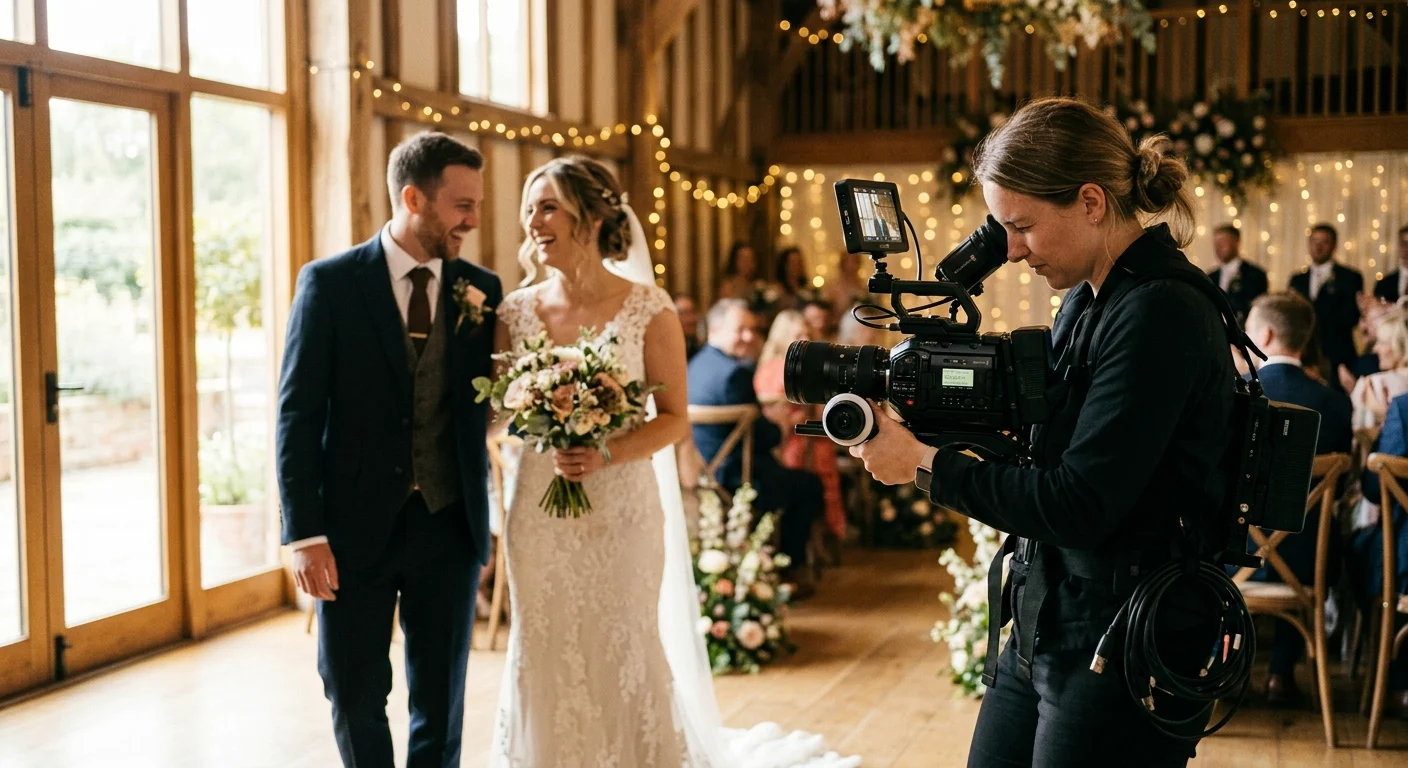
Corporate Video Production: Strategies & Services
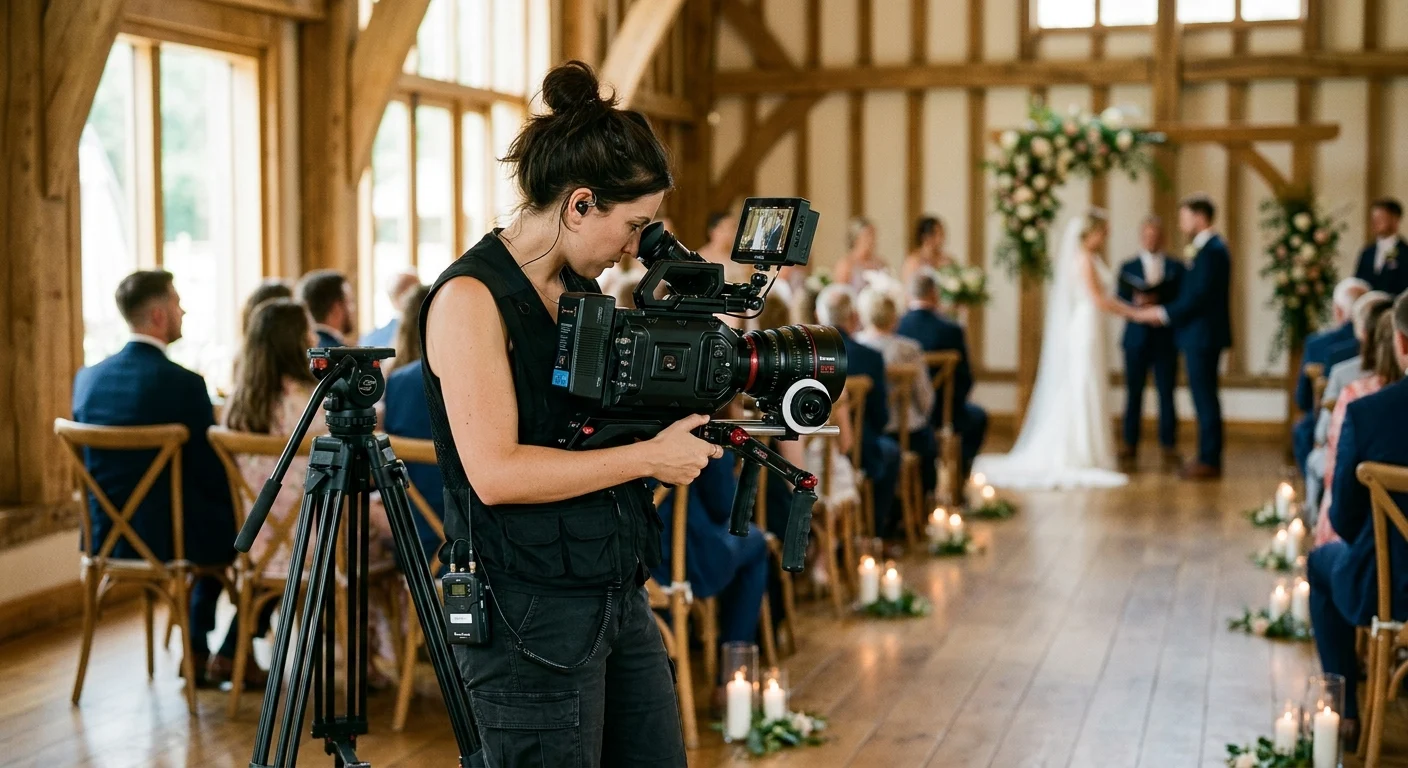
Corporate video production turns business messages into watchable stories for sales, recruiting, training, and brand trust. Strong productions start with a clear audience and CTA—not gear. Candid Studios plans, shoots, and edits business films with professional audio, lighting, and a narrative arc that holds attention longer than text alone.
Corporate video production is more than just hitting record; it's about giving your brand a powerful, consistent voice across every digital channel. It’s the tool you use to shape your public image, get your entire team on the same page, and even speed up the sales process with compelling visuals.
Why Corporate Video Production Matters
Think of it this way: having a great story without video is like being a fantastic speaker in a packed auditorium with no microphone. Your message, no matter how compelling, just won't carry.
High-quality video builds instant credibility, forges a real connection with your audience, and simply holds their attention in a way that text alone can't.
It’s not just about looking good. It’s a strategic move that delivers tangible results.
- You elevate how the public sees your brand by telling authentic stories.
- You create rock-solid team alignment with clear internal communications.
- You shorten the sales cycle by showing your product's value in action.
Each of these benefits stacks on top of the other, creating a powerful growth engine for your business.
Core Benefits of Corporate Video
When people see a well-produced, authentic video, it changes how they feel about your brand. A tech startup’s mission video can create an emotional spark that a standard press release could never hope to achieve. You grab attention, and more importantly, you earn trust.
Internally, video is a game-changer for clarity. Explaining a complex new policy or process visually cuts down on confusion in a way a dense memo never can. Suddenly, everyone is rowing in the same direction, guided by the same goals and brand voice.
And for sales? Video-powered presentations close deals faster. Showing your product solving a real problem is infinitely more persuasive than describing it. That clarity often translates directly into higher conversion rates and more revenue.
The trend is clear. Video has become the dominant format online, and audiences now spend a huge share of their time watching it rather than reading. Brands are following that attention, putting more of their marketing dollars into video every year, because that is where their customers already are.
Strategic Impact on Teams and Sales
Want to see how this plays out for local companies? We've seen firsthand how corporate videography elevates West Palm Beach brands.
For teams, these videos become a north star. They provide a shared story that guides decisions across every department, from marketing to operations, ensuring everyone is on the same page.
For sales reps, having a library of product demos and testimonials is like having a secret weapon. It helps them build trust quickly and shorten the long, winding path from prospect to customer. Decision-makers can visualize the real-world impact, which often gets them to "yes" much faster than a dense proposal ever could.
The results show up across very different kinds of businesses:
- A retailer can lift online conversions after rolling out product demo videos.
- A software company can shorten employee onboarding time with short, targeted training videos.
- A B2B services firm can close deal cycles faster once they start using client testimonial films.
Wins like these show that strategic video doesn't just get views. It turns viewers into loyal customers and brand advocates.
When you invest in quality video production, you're investing in stories that stick, spread, and deliver a real return. It's time to give your brand the voice it needs to finally break through the noise.
Exploring Key Corporate Video Production Types
Once you grasp how video can drive your business forward, choosing the right format becomes crucial. Think of your strategy as a toolbox—you wouldn’t pick a wrench to drive a nail.
Each video type has its own strengths, audience, and objectives. Mix them wisely to boost engagement, shorten sales cycles, and build lasting connections.
Brand Films And Product Demos
Brand films invite viewers into your world. They focus on:
- Your company’s story
- Core values and mission
- Emotional resonance with your audience
These videos work best at the top of the funnel, laying the foundation for trust and recognition.
Product demos zero in on features and functionality. By showing your solution in action, you can:
- Answer common questions
- Demonstrate real-world benefits
- Increase purchase intent by showing the product in action
They’re perfect for prospects who are already interested and need that final nudge.
You’ll often see manufacturing firms investing in glossy, high-resolution demos. Meanwhile, regulated sectors like banking and healthcare lean toward clear, compliance-friendly presentations. For a deeper dive, check out this detailed industry report.
Customer Testimonials And Training Videos
Authentic stories from happy clients can sway undecided buyers faster than any brochure. Testimonial videos:
- Showcase real-world success
- Build credibility through peer validation
- Turn satisfied customers into brand advocates
A memorable testimonial goes beyond praise—it narrates a customer’s journey and highlights measurable results.
On the flip side, training videos speak directly to your team. They’re designed to:
- Standardize processes
- Accelerate onboarding
- Improve retention of policies and procedures
When done right, these internal assets cut down training time and keep everyone on the same page.
Event Highlights And Internal Communications
An event video can capture the energy of your latest conference, product launch, or team-building retreat. Use highlights to:
- Generate post-event buzz on social media
- Give attendees a keepsake
- Promote next year’s gathering with real footage
Internal communications videos—from CEO updates to department briefs—bring transparency to your culture. For example, featuring leadership in an interview format helps humanize your brand. Learn more about producing an effective executive interview video in our guide on producing an effective executive interview video.
Below is a quick reference to help you align video types with your key objectives.
Matching Video Type To Business Goal
Use this table to pinpoint the formats that best serve each stage of your strategy.
Business Goal
Primary Video Type
Secondary Video Type
Key Performance Indicator (KPI)
Build Brand Awareness
Brand Film
Event Highlights
Video Views, Social Shares
Educate Prospects
Product Demo
Customer Testimonial
Demo Completions, Lead Form Fills
Validate Purchase Decisions
Customer Testimonial
Brand Film
Conversion Rate, Case Study Downloads
Train And Onboard Employees
Training Video
Internal Comm Video
Completion Rate, Quiz Scores
Promote Events
Event Highlights
Brand Film
Registrations, Post-Event Surveys
Strengthen Internal Culture
Internal Comm Video
Executive Interview
Employee Engagement, Open Rates
Use this guide as a roadmap. Match your specific goals with the right video formats, track the metrics that matter, and you’ll see how each piece fits into your broader communications strategy.
Navigating The Corporate Video Production Process
Kicking off a video project can feel a bit overwhelming, like you’re setting out on a road trip without a GPS. But the reality is, the entire corporate video production process follows a clear, logical path from start to finish. I like to think of it like building a house: you pour a solid foundation before you frame the walls, and you get the structure right before you start decorating.
This step-by-step approach ensures every creative decision—from the initial spark of an idea to the final cut—is deliberate and tied directly to your business goals. It turns what could be a chaotic scramble into a predictable, well-managed workflow. The whole journey is universally broken down into three main phases: pre-production, production, and post-production.
Each stage has its own distinct tasks, team members, and milestones. Understanding this flow helps everyone set realistic expectations, manage resources wisely, and collaborate effectively with their production partner.
Phase 1: Pre-Production, The Blueprint
This is, without a doubt, the most important phase of the entire corporate video production process. It’s where we lay the groundwork for everything that follows. Just like an architect creates detailed blueprints before a single brick is laid, pre-production is where your video’s concept, story, and logistics are meticulously hammered out. Rushing this stage is the number one reason projects go over budget or just don't hit the mark.
Here’s what happens in pre-production:
- Concept Development: This is the big-picture thinking. We define the core message, who we're talking to (the target audience), and the emotional takeaway. What do you want people to think, feel, or do after watching?
- Scriptwriting: A tight, compelling script is the heart and soul of your video. It guides the narrative, any dialogue, and the overall pacing of the story.
- Storyboarding and Shot Lists: We start visualizing the video frame-by-frame with storyboards to make sure the creative vision is crystal clear. From there, a shot list details every single camera angle and movement we’ll need on shoot day.
- Logistics Planning: This is all the behind-the-scenes coordination. It covers everything from scouting the perfect location and casting talent to scheduling the crew and securing any necessary permits.
A well-executed pre-production phase accounts for a huge share of a project's success. It’s the strategic planning that prevents costly surprises down the road.
Phase 2: Production, Framing The Structure
With the blueprint finalized, it's time to bring the vision to life. The production phase is when the cameras actually roll and all the planned elements come together on set. This is the "framing the house" stage, where the skeleton of your video is built, shot by shot.
A professional production crew, led by a director, works to capture all the footage detailed in the shot list. This involves everything from setting up lights to create the right mood, to recording crystal-clear audio, to guiding on-screen talent to deliver authentic, believable performances. Efficiency is everything here, since every hour on set involves coordinating a whole team and a lot of expensive gear.
As you navigate the corporate video production process, it's smart to think about streamlining design and development with tools and workflows. This kind of efficiency ensures a smooth handoff from concept to the final cut.
The infographic below does a great job of showing how different kinds of videos—like brand films, product demos, and testimonials—all follow this same structured process.
As you can see, no matter the specific goal of the video, a successful project always moves from a solid concept to the actual filming and then, finally, to a polished edit.
Phase 3: Post-Production, The Finishing Touches
Once all the filming is wrapped up, the raw footage heads into post-production. This is where the real magic happens, as an editor transforms hours of individual clips into a cohesive, polished final product. Think of it as adding the paint, flooring, and light fixtures to your newly framed house.
First, editors assemble the best takes according to the script, carefully weaving the story together. Then, a team of specialists adds layers of refinement:
- Color Grading: This involves adjusting colors and tones to create a specific mood and ensure the video has a consistent, professional look from start to finish.
- Sound Design and Mixing: We clean up all the audio, add a music score, incorporate sound effects, and lay in any voiceovers to really boost the emotional impact.
- Motion Graphics and Titles: Animated text, logos, and other visual effects are added to highlight key information and reinforce your brand identity.
- Review and Revisions: You’ll get to review drafts of the video and provide feedback for any final tweaks and adjustments.
This final stage is highly collaborative and incredibly detail-oriented. The goal is to polish every single element until the video not only looks and sounds incredible but also crushes the strategic goals we defined way back in pre-production. For a closer look at how we manage this entire journey, you can explore our detailed approach to video production for business.
Planning Your Budget And Timeline For Video Production
Let's talk about the two things that make or break any video project: money and time. Before you get lost in the creative possibilities, it’s critical to get a firm handle on the budget and schedule. Getting these right from the start isn't just about logistics; it's about setting your project up for a smooth, successful run.
Think of it like building a house. You wouldn't start ordering materials or hiring contractors without a solid blueprint and a clear budget. A simple talking-head video is like building a garden shed—straightforward and relatively quick. A cinematic brand film, on the other hand, is like building a custom home with multiple rooms, complex designs, and high-end finishes. Both serve a purpose, but they demand vastly different resources.
What Actually Drives The Cost of a Video?
So, where does the money go? The final price tag is a blend of several key ingredients. Knowing what they are helps you understand the quote you receive and gives you levers to pull if you need to adjust the scope. For a much deeper dive into specific numbers, check out our complete guide on corporate video production costs.
Here are the main things that move the needle on cost:
- Concept & Complexity: A simple script with one speaker is far more affordable than a complex story that needs custom props, multiple actors, or detailed animations.
- Crew Size: Are we sending a one-person crew, or do we need a full team with a director, sound engineer, gaffer (lighting expert), and production assistants? More hands on deck means a higher cost.
- Locations & Logistics: Filming in your office is always the most budget-friendly option. Renting a studio, securing permits for a public space, or traveling to multiple cities will naturally increase the investment.
- Post-Production Magic: Basic editing is a given. But if you want custom motion graphics, high-end color correction, a professionally licensed music track, or custom sound design, those elements add to the post-production budget.
How Long Does It Realistically Take?
Just like the budget, the timeline for a video can vary wildly. A quick clip for social media might take just a few days from idea to export. A full-blown brand film or an in-depth training series, however, could easily take several weeks or even a couple of months.
As a rule of thumb, every minute of polished, finished video often requires hours upon hours of work spread across planning, shooting, and editing.
Trying to rush the process, especially the planning phase, is a classic mistake. It feels like you're saving time, but it almost always leads to confusion on set, costly reshoots, and a final video that just doesn't hit the mark. A well-planned project is a smooth project.
That dedicated time ensures every detail—from the script to the sound mix—gets the attention it needs to create something you're proud of.
The Growing Role Of AI In Production
One of the biggest game-changers for both budgets and timelines is the recent surge in Artificial Intelligence tools. This isn't just a trend; it's a fundamental shift in how teams approach production. More professionals are using AI to handle initial drafts, visualize concepts, and manage routine tasks, which can significantly reduce timelines without sacrificing quality or authenticity.
AI is becoming a powerful co-pilot for creatives. Tools can now help generate first-draft scripts, visualize storyboards, or even create temporary voiceovers for editing. This can shave hours, and sometimes days, off the typical workflow, leading to real savings and faster delivery without sacrificing quality.
To give you a clearer picture of how this all comes together, we've put together a table with some typical project ranges.
Sample Budget And Timeline Ranges
Use this table as a general guide to benchmark what you might expect for different types of video projects. Keep in mind that these are estimates, and your final quote will depend on the specific creative choices you make.
Video Project Type
Estimated Budget Range
Typical Production Timeline
Simple Social Media Clip
$1,500 – $4,000
1–2 Weeks
Professional Talking Head Interview
$2,500 – $7,000
2–3 Weeks
Product Demonstration Video
$5,000 – $15,000
3–5 Weeks
Customer Testimonial Video
$4,000 – $12,000
3–4 Weeks
Cinematic Brand Film
$15,000 – $50,000+
6–10 Weeks
Ultimately, the best way to get a precise scope is to have a conversation about your goals. With a clear vision, we can help build a production plan that aligns perfectly with your budget and deadline.
Choosing The Right Corporate Video Production Partner
Picking the right production partner is probably the single most important decision you'll make for your video project. This choice is what separates a video that gets results from one that just… exists. You’re not just hiring someone with a fancy camera; you're looking for a creative collaborator who genuinely gets your business goals.
Think of it like hiring an architect to build your dream house. You wouldn't just find someone who's good with design software. You’d want a partner whose portfolio gets you excited, who listens intently to your vision, and who has a rock-solid process for bringing ideas to life. It's the exact same principle with video production.
The sweet spot is a team that combines sharp strategic thinking with technical mastery. Ultimately, this partnership has to be built on trust, open communication, and a shared goal of creating something great.
What To Look For In A Production Agency
When you start vetting potential partners, you have to look past the highlight reel. A slick portfolio is a good starting point, but it's only one piece of the puzzle. You need to dig in and really understand their process, their background, and whether they'll even be a good cultural fit for your team. The real goal is to find an agency that feels like a natural extension of your own department.
A truly great partner will start by asking you smart questions about your objectives long before they ever talk about cameras or lighting. They’ll be curious about your audience, your brand's personality, and what success actually looks like for you.
Here’s a quick checklist to help you evaluate your options:
- Portfolio Diversity: Does their work show a range of styles and industries, or is it all kind of the same? Versatility is a huge indicator that they can adapt to your specific brand and needs.
- Industry Experience: Have they worked with companies in your world before? An agency that already knows the nuances of your industry will get up to speed much, much faster.
- Storytelling Prowess: Look for videos that do more than just list facts. The best producers are master storytellers who know how to connect with an audience emotionally and inspire action.
- Cultural Fit: Pay close attention to how they communicate in those first conversations. You want a team that is collaborative, transparent, and easy to get ahold of—it makes the whole process smoother.
Key Questions To Ask During The Consultation
Once you have a shortlist, the first real conversation is your chance to see who’s a contender and who’s a pretender. This is where you get past the sales pitch and into the nitty-gritty of how they actually work. Coming prepared with the right questions will tell you everything you need to know.
For a deeper dive, our guide on how to hire a business videographer has a ton more questions you can use.
A top-tier agency should give you clear, confident answers that show off both their creative vision and their operational discipline. They won't just tell you what they do; they'll show you how they think.
Here are a few must-ask questions to get you started:
- How do you develop your creative approach for a new project? This peels back the curtain on their strategic process.
- Can you share a case study that shows measurable outcomes? This proves they deliver real results, not just pretty footage.
- What does your project management workflow look like to ensure we hit our deadline? This gets at their reliability and professionalism.
- Who will be my main point of contact? This is a simple but crucial question that clarifies communication from day one.
As you evaluate potential partners, it can also be helpful to look at companies like Short Genius, which might specialize in particular video formats you're interested in. A thorough vetting process is the best way to guarantee you find a partner who can truly bring your vision to life.
Measuring The ROI Of Corporate Video Production
A great video isn’t just about slick visuals and a killer script. At the end of the day, its true value is measured by the results it drives for your business. To really prove the worth of your investment, you need a clear, no-nonsense way to track its return on investment (ROI). Otherwise, you’re just guessing.
This process actually kicks off long before you even think about hitting the export button. It all starts with setting SMART goals—goals that are Specific, Measurable, Achievable, Relevant, and Time-bound. A vague goal like "boost brand awareness" is useless. A SMART goal sounds more like this: "Increase lead form submissions from our new product demo video by 15% within Q3."
Moving Beyond Simple View Counts
It’s easy to get excited about vanity metrics like view counts, but they don't tell you the whole story. Let’s be real: a video with a million views that brings in zero leads is a failure. A video with a thousand hyper-targeted views that drives a wave of new sales? That’s a massive success.
To get a true picture of performance, you have to look at the metrics that actually connect to business outcomes. These are the numbers that show you how your audience is really interacting with your content and what they do next.
Here are the key performance indicators (KPIs) you should be tracking:
- Engagement Rate: What percentage of viewers actually watched a meaningful chunk of your video? High engagement is a great sign that your message is hitting the mark.
- Play-Through Rate: This tells you how many people stuck around until the very end. It's a powerful indicator of how captivating your story is.
- Click-Through Rate (CTR): If your video has a call-to-action link, the CTR shows how many viewers clicked it. This is a direct measure of how effectively you’re driving action.
- Conversion Rate: This is the big one. It tracks how many viewers took the final step you wanted them to, whether that’s filling out a form, downloading an e-book, or making a purchase.
Thankfully, platforms like YouTube Analytics, Wistia, and Vimeo have incredibly powerful dashboards. They make it easy to monitor these KPIs and pinpoint exactly where your viewers are dropping off.
A Simple Framework For Calculating ROI
Once you’ve gathered your data, you can plug it into a simple formula to see the financial return. The exact calculation might change depending on your specific goals, but the basic framework is both straightforward and powerful.
The core idea is to tie the cost of your video production directly to the value it generated. This transforms your video from a creative expense into a measurable business asset.
Let’s walk through a quick example. Imagine you invested $5,000 in a new product demo video.
- The video brought in 50 new qualified leads.
- You know from past data that your lead-to-customer conversion rate is 20%.
- That means the video is directly responsible for 10 new customers (50 leads x 0.20).
- If your average customer lifetime value (CLV) is $1,500, the total revenue generated is $15,000 (10 customers x $1,500).
Your ROI in this scenario is a whopping 200%. This kind of clear, data-driven analysis is exactly what you need to justify your marketing spend and make even smarter decisions for your next video project.
FAQ: Your Corporate Video Questions, Answered
Let's tackle some of the most common questions that pop up when businesses start thinking about video. I'll give you the straight-up, practical answers based on years of experience in the field.
How Long Should a Corporate Video Be?
Honestly, it's a bit like asking "how long is a piece of string?" The perfect length depends entirely on the video's job and where people will be watching it. Shorter is almost always better for grabbing and holding attention.
Think about the context:
- Social Media Clips: For platforms like Instagram or TikTok, you've got seconds, not minutes. Keep it punchy and under 60 seconds.
- Website Explainers: Here, you have a bit more breathing room. A solid 2–5 minute video is the sweet spot for a landing page or product overview.
- Training & Internal Videos: These can be longer, but nobody wants to sit through a 30-minute monologue. Break it down into digestible 3–7 minute modules to keep your team engaged.
- Webinars & In-Depth Tutorials: If you're going deep, 10–20 minutes is fine, but structure it with clear chapters so viewers can easily navigate.
The golden rule? One video, one core message. Trying to cram too much in is the fastest way to lose your audience.
Should We Do This In-House or Hire an Agency?
This is a classic crossroads. Can you shoot something decent on a smartphone for a quick internal update? Absolutely. But when the stakes are higher—like for a major brand film or a key recruitment video—bringing in a specialized agency is a game-changer.
The decision really boils down to your scope, budget, and how much you value your brand's image.
A great production partner doesn't just bring fancy cameras; they bring storytelling expertise and a process that just works.
An agency delivers consistent branding, top-tier quality, and the peace of mind that comes with hitting your deadlines. In-house teams are perfect for quick, low-stakes content. An agency is your go-to when you need a video that makes a strategic impact.
- In-House: Best for small budgets and fast turnarounds, but you'll likely be limited by your team's skills and equipment.
- Agency: Your ticket to specialized talent, a full-service experience, and videos that are built for a specific strategic goal.
What’s the Single Most Important Part of a Great Video?
I'll say it again and again: A compelling story beats flashy visuals every single time.
Of course, technical quality matters. But if your video doesn't connect with the viewer on a human level, the slickest drone shots and fanciest graphics in the world won't save it.
Start with a script that speaks directly to your audience's problems, fears, or aspirations. Every other decision—the people you cast, the locations you choose, the music you use—should serve that core story. A narrative with an emotional arc is what pulls people in and makes them remember you long after the video ends.
Ready to elevate your brand with cinematic, authentic video storytelling? Partner with Candid Studios to bring your vision to life.
Frequently Asked Questions
What types of corporate videos work best?
Brand films, customer stories, product demos, recruiting, and internal training each need different structures. Start with the business goal, then pick the format.
How long should a corporate video be?
Most web videos convert best under 90–120 seconds for top-of-funnel content. Training and keynotes can run longer with clear chapters.
Do we need a full production crew?
Not always. Simple testimonials can work lean; multi-location campaigns need larger crews. Scope follows story complexity.
Planning a brand film? Explore video production or contact Candid Studios. Cost ranges: corporate video production cost.