
What’s the Best Time of Day for Outdoor Photography in 2025?
Every photographer knows that light is the single most important ingredient in a captivating image. While modern cameras offer incredible technical capabilities, the quality of light ultimately defines the mood, dimension, and impact of your work. But what truly is the best time of day for outdoor photography? The answer isn't a single magic moment but a series of distinct periods, each offering its own unique character and creative potential.
From the warm, flattering glow of golden hour to the dramatic contrast of midday sun, understanding how to harness the power of natural light is what separates a good snapshot from a great photograph. Mastering this skill is fundamental, but it works best when combined with strong compositional techniques. For more creative guidance on framing and styling, you can explore supplemental tips for taking amazing Instagram photos that apply broadly to all kinds of photography.
This guide breaks down the eight key lighting scenarios throughout the day, providing actionable insights to help you master each one. Whether you're planning family portraits, a commercial shoot, or simply capturing everyday beauty, this comprehensive roundup will equip you with the knowledge to create stunning outdoor images, no matter what time the clock says.
1. Golden Hour – The Magic Hour After Sunrise and Before Sunset
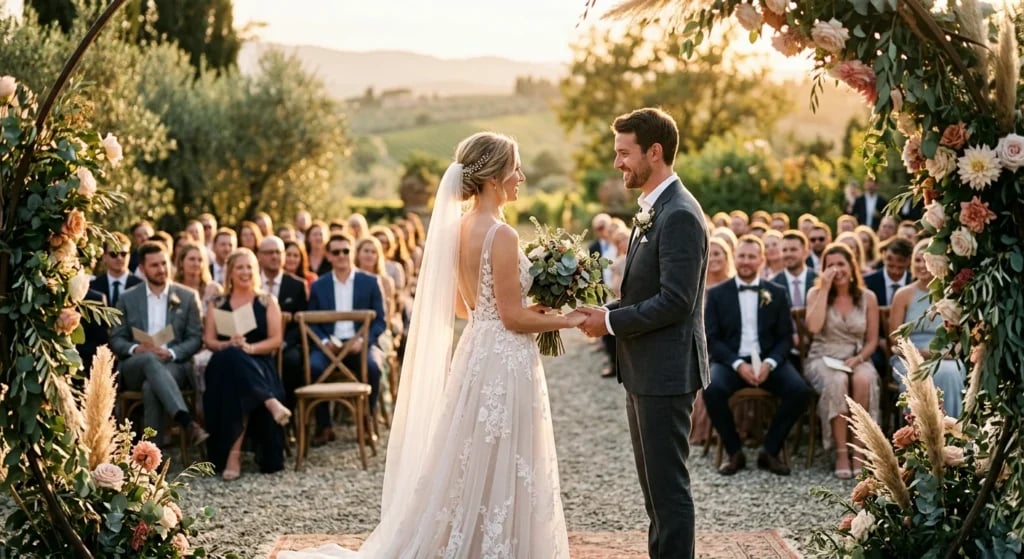
Golden hour is arguably the most coveted time for outdoor photography, celebrated by professionals and enthusiasts alike for its stunning, ethereal light. Occurring in the brief period after sunrise and before sunset, this is when the sun sits low on the horizon. This low angle forces the sunlight to travel through more of the Earth's atmosphere, scattering the blue light and allowing the warmer red, orange, and golden tones to dominate the scene.
The resulting light is soft, directional, and diffused, creating a magical quality that is difficult to replicate. It wraps around subjects, producing long, gentle shadows that add depth and dimension without the harsh contrast found at midday. This makes it an exceptionally flattering light for portraits, as it smooths skin textures and adds a warm, healthy glow. Landscape photographers, like the legendary Ansel Adams and Peter Lik, built careers chasing this light to capture dramatic, vibrant scenes.
Why It's the Best Time of Day for Outdoor Photography
The warm, directional light is incredibly versatile. It’s perfect for creating a romantic, inviting atmosphere in wedding and engagement photos or for making real estate listings look warm and welcoming. For portrait photographers, golden hour offers a unique opportunity to experiment with creative lighting techniques.
- Backlighting: Placing the sun behind your subject creates a beautiful "rim light" or halo effect, separating them from the background.
- Frontlighting: With the sun in front of the subject, the light is soft and even, minimizing harsh shadows and highlighting features beautifully.
- Silhouettes: The vibrant, colorful sky provides a perfect canvas for creating dramatic silhouettes by exposing for the background instead of the subject.
The following infographic provides a quick reference to the specific conditions that define this magical period.
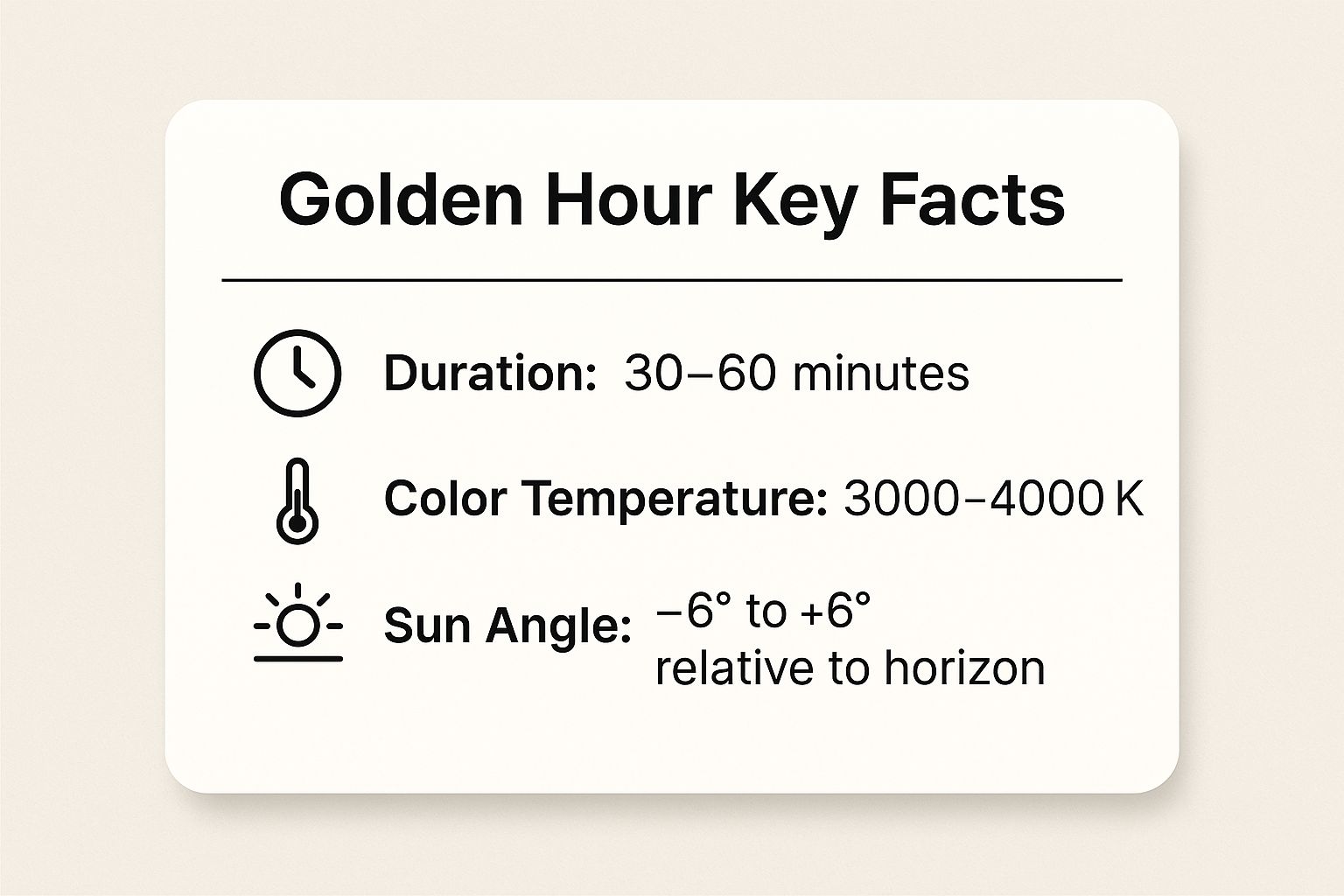
These metrics highlight the narrow window and specific warm color temperature that make golden hour so unique and sought after by photographers.
Actionable Tips for Golden Hour Success
To make the most of this fleeting opportunity, preparation is key. The light changes rapidly, so you need to work efficiently.
- Plan Ahead: Use an app like PhotoPills or The Photographer's Ephemeris to determine the exact timing and sun position for your location. Arrive at least 30 minutes early to scout your composition and set up your gear.
- Shoot in RAW: This format captures the maximum amount of data, giving you greater flexibility to adjust colors and exposure during post-processing without losing quality.
- Control Your White Balance: Set a custom white balance (like "Shade" or "Cloudy") to enhance the warm tones, or leave it on "Auto" for a more neutral look that can be adjusted later.
- Work Quickly: The best light lasts for only a short time. Have a shot list in mind and be prepared to move and adapt as the sun's position changes.
2. Blue Hour – The Twilight Period Before Sunrise and After Sunset
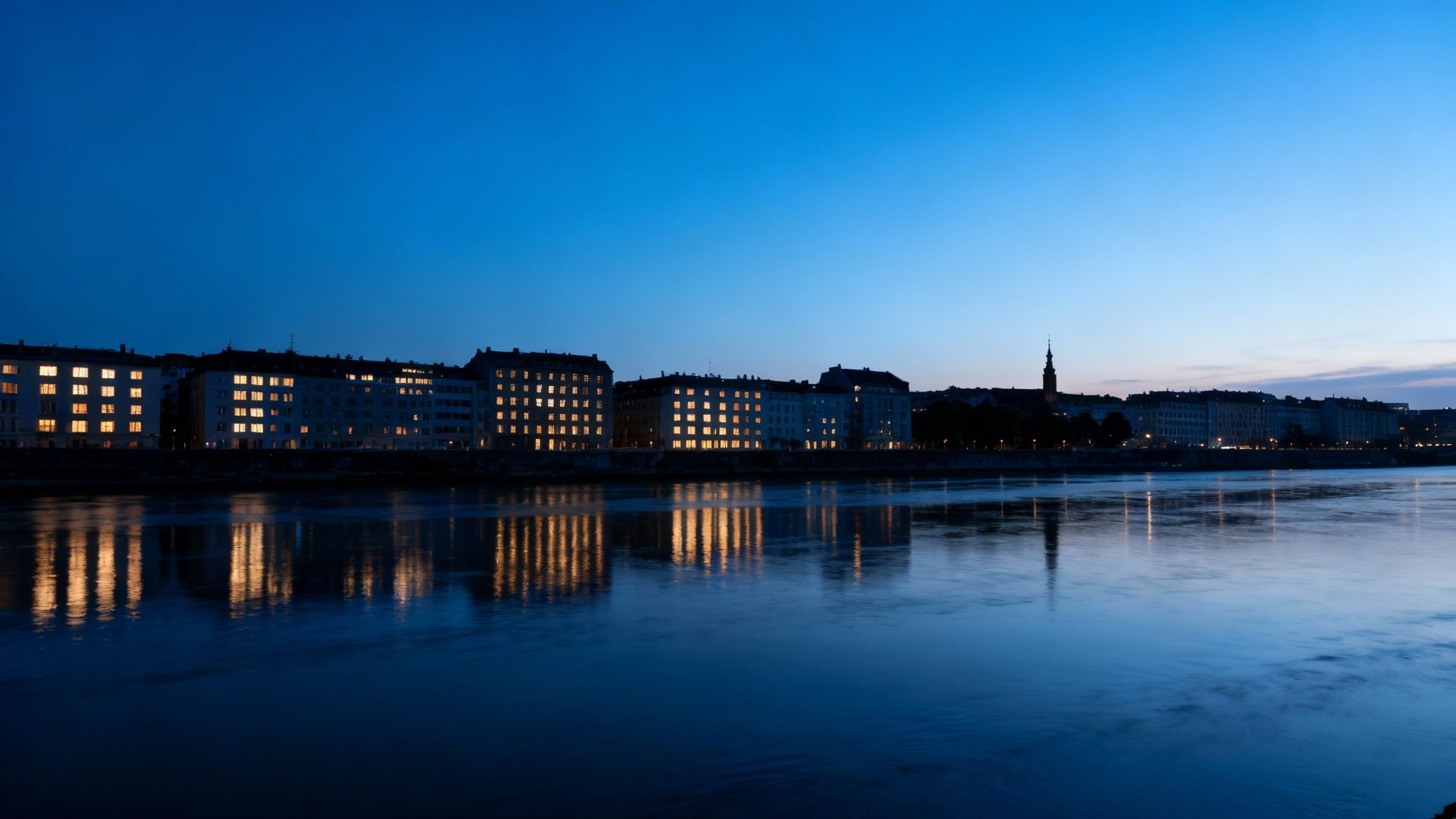
Blue hour is the enchanting period of twilight that occurs just before sunrise and right after sunset. During this time, the sun is significantly below the horizon, and its indirect light scatters in the upper atmosphere, casting a deep, serene blue hue over the landscape. This creates a cool, moody, and often magical atmosphere that is distinctly different from any other time of day.
The light during blue hour is incredibly soft and evenly diffused, eliminating harsh shadows and revealing subtle details. This unique quality allows for a perfect balance between the ambient light in the sky and artificial light sources like city lights, street lamps, or illuminated buildings. Architectural photographers like Julius Shulman and fine art masters like Michael Kenna have famously used this time to create breathtaking images where urban and natural elements coexist in perfect harmony.
Why It's the Best Time of Day for Outdoor Photography
The cool, ethereal light of blue hour is ideal for capturing dramatic and evocative scenes, particularly in urban, landscape, and architectural photography. It provides a brief window where the natural and man-made worlds are perfectly exposed together, a feat that is nearly impossible in broad daylight or complete darkness.
- Cityscapes: The balance between the deep blue sky and the warm glow of city lights creates a vibrant, high-contrast scene full of energy and mood.
- Landscapes: Seascapes and minimalist landscapes take on a peaceful, contemplative quality, especially when paired with long exposures to smooth out water or clouds.
- Architectural & Real Estate: Blue hour is a favorite for luxury property photography, as it allows photographers to showcase both the exterior of a building and its warm, lit interior simultaneously, creating an inviting and premium feel.
Actionable Tips for Blue Hour Success
This period is even shorter than golden hour, so being prepared and efficient is crucial. The light fades quickly, demanding a methodical approach.
- Use a Tripod and Remote Shutter: Low light necessitates slow shutter speeds. A sturdy tripod and a remote shutter release are essential to avoid camera shake and ensure sharp images.
- Shoot in Manual Mode: The light changes second by second. Shooting in manual mode gives you full control to adjust your ISO, aperture, and shutter speed to maintain a consistent exposure.
- Bracket Your Exposures: Take multiple shots of the same scene at different exposure levels (bracketing). This allows you to blend them later in post-processing for a perfectly exposed final image with detail in both the highlights and shadows.
- Master Your White Balance: To preserve the rich blue tones, set your white balance to "Daylight" or use a custom Kelvin setting between 5500K and 6500K. Avoid "Auto" white balance, which may try to neutralize the blue.
3. Overcast Days – Diffused Natural Light Photography
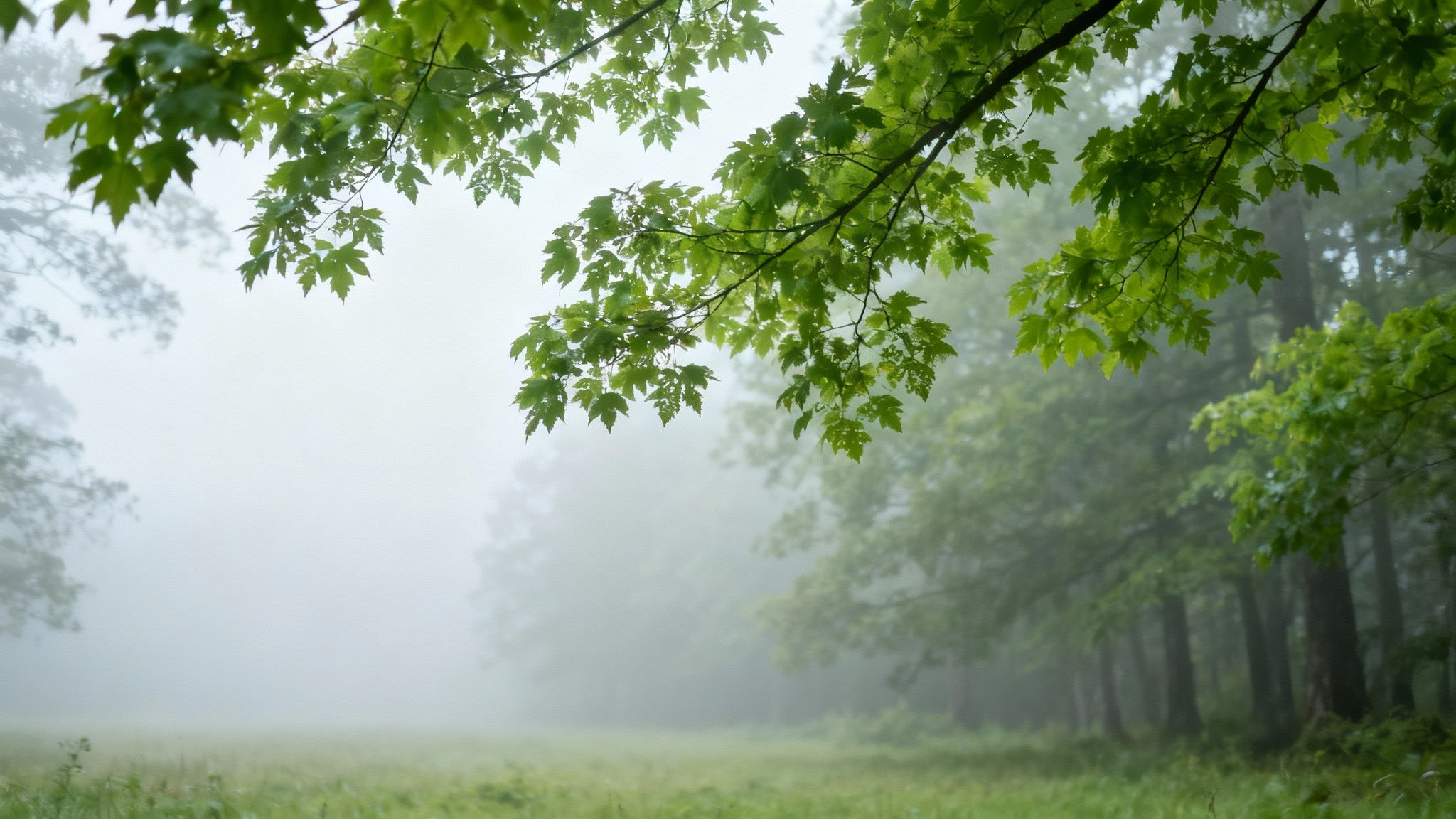
While many photographers chase the dramatic light of sunrise and sunset, overcast days offer a unique and highly advantageous lighting scenario. When the sky is covered with clouds, it acts as a massive softbox, diffusing the sun’s harsh rays and scattering light evenly across the landscape. This creates soft, wraparound light with minimal contrast and gentle, often non-existent, shadows.
The result is a cool, clean aesthetic that allows colors to appear rich and saturated without the risk of blown-out highlights or crushed blacks. This consistent, shadowless illumination is why many professional photographers, including portrait masters like Sue Bryce and editorial photographers like Annie Griffiths, consider overcast conditions to be a perfect time for certain types of outdoor photography. It provides a soft, flattering light that is ideal for capturing fine details, textures, and true-to-life colors.
Why It's the Best Time of Day for Outdoor Photography
The diffused light of an overcast day is exceptionally flattering for portraits, as it minimizes skin blemishes and wrinkles without creating harsh shadows under the eyes and nose. It’s also perfect for flower and nature photography, where the goal is to capture vibrant colors and intricate textures. For product or fashion shoots, this even light ensures that the subject is the star, free from distracting highlights or deep shadows.
- Color Saturation: The low-contrast light allows colors to pop, making it ideal for capturing vibrant autumn leaves, colorful flowers, or bold fashion choices.
- Detail and Texture: Without harsh shadows obscuring details, the subtle textures of clothing, foliage, or architectural elements become more pronounced.
- Extended Shooting Window: Unlike the fleeting golden hour, overcast conditions provide consistent light for many hours, offering incredible flexibility for longer shoots.
This controlled, natural lighting is a key reason why many photographers prefer it for specific genres. To master this style, you can explore the many essential portrait photography tips on candidstudios.net that build on using natural light effectively.
Actionable Tips for Overcast Day Success
To make the most of cloudy conditions, you need to adjust your approach to composition and camera settings. The goal is to leverage the soft light while adding life and dimension back into the scene.
- Exclude the Sky: A flat, white, or gray sky can be uninteresting and is prone to being overexposed. Compose your shots to minimize or completely exclude it, focusing instead on your subject and their immediate environment.
- Boost Contrast in Post: Since the light is naturally low-contrast, your images may initially look flat. A slight boost to the contrast and clarity sliders during post-processing can add the necessary punch.
- Find Colorful Subjects: Use the neutral, gray backdrop as a canvas. A subject wearing a bright color or standing near a vibrant element will stand out dramatically.
- Use a Polarizing Filter: A circular polarizer can cut through glare on wet surfaces like leaves or pavement after rain, further enhancing color saturation and detail.
4. Midday Sun – High Contrast and Creative Opportunities
While many photographers pack up their gear when the sun is high, the midday period (typically 11 AM to 2 PM) presents unique creative opportunities for those willing to embrace its challenges. This time is characterized by direct, overhead sunlight that creates harsh, deep shadows and intense highlights. Instead of soft, diffused light, you get high contrast and a neutral, bright color temperature around 5500K.
Traditionally seen as the most difficult lighting, midday is not for every subject, but it can produce incredibly striking and graphic images. The stark light emphasizes textures, shapes, and patterns, creating a bold, contemporary aesthetic. Masters of street and documentary photography, like Alex Webb and Elliott Erwitt, have famously harnessed this challenging light to create powerful, dramatic compositions where shadows become as important as the subjects themselves.
Why It's the Best Time of Day for Outdoor Photography
The bright, unfiltered light of midday is perfect for creating images with a punchy, graphic quality. Its intensity makes colors appear highly saturated and gives a crisp definition to architectural lines and geometric forms, an effect often utilized by architectural photographer Julius Shulman. For fashion or editorial shoots, especially swimwear, this harsh light provides an authentic, high-energy feel.
- Graphic Compositions: Use the hard shadows as key compositional elements, leading lines, or abstract shapes within your frame.
- Saturated Colors: The intense brightness makes colors pop, perfect for vibrant travel or street photography in the style of Martin Parr.
- Black and White: The high contrast is ideal for dramatic black and white images, stripping a scene down to its essential forms and textures.
Actionable Tips for Midday Sun Success
Controlling and creatively using midday light is the key to success. Rather than fighting the harshness, learn to make it work for your vision.
- Embrace the Shadows: Don’t try to eliminate shadows. Instead, incorporate them into your composition to add depth, drama, and mystery.
- Use Fill Flash or a Reflector: For portraits, a reflector can bounce light back into the subject’s face to soften harsh facial shadows. A fill flash can achieve a similar, more controlled effect.
- Find Open Shade: Position your subject under the overhang of a building or a large tree. This provides soft, even light while retaining the bright, ambient feel of the day.
- Shoot from Above: Photographing your subject from a higher vantage point can minimize unflattering shadows cast under the eyes and nose.
- Control Your Exposure: Be mindful of blowing out highlights. It's often better to slightly underexpose the image to retain detail in the brightest areas, as it's easier to recover shadows than lost highlights in post-processing. To see how to position subjects for various lighting conditions, explore our guide with outdoor photoshoot ideas and poses on candidstudios.net.
5. Early Morning Light – Fresh Atmosphere and Enhanced Colors
While golden hour claims the spotlight, the period immediately following it offers a unique and often overlooked photographic opportunity. Early morning light, spanning from just after sunrise through the mid-morning hours, presents a world washed in fresh, clean light. During this time, the atmosphere is typically at its clearest, with less haze and pollution, allowing for crisp details and vibrant, true-to-life colors.
The cooler temperatures of the night often leave behind a magical residue: dew on plants that sparkles like diamonds, or mist and fog that blankets valleys and lakes, adding a profound sense of mood and mystery. This makes it an ideal time for landscape photographers like Galen Rowell, who sought these specific atmospheric conditions to add depth to his mountain scenes. Wildlife is also more active, and popular locations are significantly less crowded, offering a peaceful and productive shooting environment.
Why It's the Best Time of Day for Outdoor Photography
The versatility of early morning light is its greatest strength. It begins with the lingering warmth of golden hour and gradually transitions into a cooler, brighter, and more neutral light. This progression allows photographers to capture a wide range of moods in a single session, from soft and dreamy to crisp and clear. The low angle of the sun still provides enough direction to create texture and form without the harshness of midday.
This period is perfect for capturing the serene beauty of nature, from misty forest scenes to wildlife in its natural habitat. Event organizers planning early morning functions, such as charity runs or outdoor breakfasts, can leverage this light for vibrant and engaging coverage. To see how professionals harness these conditions for various shoots, you can explore the work of expert commercial event photography services.
- Atmospheric Effects: Capture unique shots with natural fog, mist, and dew that add texture and a serene mood.
- Vibrant Saturation: The cool, clear air enhances natural color saturation, making foliage and landscapes appear more vivid.
- Peace and Quiet: Photographing popular landmarks or natural wonders is far easier without the usual crowds, allowing for cleaner compositions.
Actionable Tips for Early Morning Success
To capitalize on the unique conditions of early morning, you must be prepared for the dark and the damp. Planning is crucial, as the best effects are often fleeting.
- Scout in Advance: Visit your location the day before to plan your compositions. Arrive well before sunrise to set up in the dark using a headlamp.
- Manage Moisture: Dew and mist can quickly coat your lens. Use a lens hood to protect it and carry several microfiber cloths to keep your gear dry.
- Embrace Manual Focus: Autofocus systems often struggle to find a focal point in misty or foggy conditions. Switch to manual focus to ensure your subject is sharp.
- Bracket Your Exposures: The bright mist can trick your camera's meter. Bracket your shots (taking one darker and one brighter) to ensure you have a perfectly exposed image to work with in post-processing.
6. Late Afternoon – Warm Directional Light and Long Shadows
Late afternoon offers a fantastic middle-ground, providing a generous shooting window with beautiful, dimensional light. Occurring in the hours just before golden hour, typically between 2 PM and 5 PM, this period sees the sun descend from its overhead peak. This lower angle creates directional light that is softer than the harsh midday sun but still has enough structure to produce compelling, long shadows that define shapes and add texture.
The light's quality shifts from neutral to a subtle warmth, lending a pleasant and inviting tone to images without the intense orange of golden hour. This makes it an incredibly practical and versatile time for many genres. Photographers like Jay Maisel and Joey L have masterfully used this period's reliable light to create impactful street, portrait, and commercial work. The longer duration also reduces the time pressure associated with the fleeting magic hours.
Why It's the Best Time of Day for Outdoor Photography
The angled, warm light of late afternoon is ideal for creating depth and dimension. It reveals texture in landscapes and architectural details while being exceptionally flattering for portraits by sculpting facial features gently. This makes it a go-to for photographers who need high-quality, consistent light for an extended period.
- Dimensional Portraits: The directional light creates a beautiful play of light and shadow, defining jawlines and cheekbones without harshness.
- Textured Landscapes: The angled light rakes across surfaces, emphasizing the texture of rock, bark, and terrain, adding a three-dimensional feel.
- Consistent Commercial Shoots: For lifestyle or product photography, the long window of reliable light allows for multiple setups and complex shots.
This period is particularly popular for family photographers who need a flexible schedule; it's a perfect time for capturing vibrant and creative outdoor family photoshoot ideas when children are often at their most energetic after a nap.
Actionable Tips for Late Afternoon Success
Maximizing the potential of late afternoon light involves controlling its directional nature to your advantage.
- Use a 45-Degree Angle: Position your subject so the sun hits them at a 45-degree angle. This classic portrait lighting technique, known as Rembrandt lighting, creates dimension and flattering shadows.
- Embrace Reflectors: The shadows, while softer than midday, can still be deep. Use a white or silver reflector to bounce light back into shadowed areas, creating balanced and professional-looking portraits.
- Use a Polarizing Filter: A circular polarizing filter can help manage reflections on surfaces like water or glass and can deepen the blue of the sky, adding contrast and saturation to your images.
- Meter for the Subject: Use spot metering to ensure your primary subject is perfectly exposed, especially if they are positioned against a brighter or darker background.
7. Night Photography – Long Exposures and Artificial Light
Night photography transforms the familiar world into an alien landscape of light and shadow, offering a canvas for stunning creativity long after the sun has set. This specialized period occurs when natural light is minimal or entirely absent, demanding technical skill and patience. It pushes photographers to master long exposures, high ISO settings, and artificial light to capture scenes invisible to the naked eye.
The absence of sunlight gives you complete creative control, allowing you to paint with light, trace the movement of stars, or capture the vibrant energy of a city at night. This technique produces truly unique images, from breathtaking astrophotography of the Milky Way to dynamic urban light trails. Photographers like Babak Tafreshi, founder of The World At Night, and timelapse specialist Michael Shainblum have popularized this style, showcasing the dramatic and surreal beauty of nocturnal landscapes.
Why It's the Best Time of Day for Outdoor Photography
Night photography is the best time of day for outdoor photography when your goal is to create something otherworldly and technically impressive. It allows for complete manipulation of light and time, turning ordinary scenes into extraordinary works of art. The techniques used are perfect for capturing the soul of a bustling city or the serene vastness of the cosmos.
- Astrophotography: Capturing stars, planets, and the Milky Way requires a dark, clear sky and precise camera settings.
- Light Painting: Use flashlights, LEDs, or other light sources to "paint" light onto your subject during a long exposure for a highly creative effect.
- Urban Scenes: Cityscapes come alive at night with artificial lights from buildings, streets, and vehicles, creating vibrant and dynamic compositions.
The following video from Adorama offers a great introduction to the fundamentals of capturing stunning images after dark.
Mastering artificial light is key to success, a skill that translates to other challenging scenarios. You can explore a variety of wedding photography lighting techniques on candidstudios.net that share principles with night shooting.
Actionable Tips for Night Photography Success
Success at night requires meticulous preparation and technical precision. Unlike daytime shooting, you cannot simply point and shoot; every setting matters.
- Stabilize Your Camera: A sturdy tripod and a remote shutter release (or a 2-second timer) are non-negotiable to prevent camera shake during long exposures.
- Master Manual Mode: Shoot in manual mode for full control over aperture, shutter speed, and ISO. Use manual focus with live view zoomed in on a bright star or distant light to achieve sharp focus.
- Use the 500 Rule: For sharp stars without trails, divide 500 by your lens's focal length. This gives you the maximum shutter speed in seconds (e.g., 500 / 20mm = 25 seconds).
- Scout During the Day: Visit your location in daylight to find strong compositions and identify potential hazards that are invisible in the dark.
- Dress Appropriately: Night temperatures can drop unexpectedly. Dress in warm layers to stay comfortable during long waits for the perfect shot.
8. Weather Transitions – Dramatic Atmospheric Conditions
While predictable light has its place, some of the most emotionally charged and spectacular outdoor photography happens during periods of atmospheric instability. Weather transitions, such as the moments just before a storm hits or immediately after it clears, offer a unique and dramatic canvas. This is a time of dynamic contrast, moody skies, and fleeting, powerful light that can transform an ordinary scene into something extraordinary.
The interplay between dark storm clouds and piercing shafts of sunlight creates a high-contrast environment full of texture and depth. Landscape photographers like Marc Adamus and Mitch Dobrowner have built their careers by chasing these very conditions, capturing the raw power and beauty of nature in flux. These moments are unpredictable and challenging, but they offer rewards that stable, clear weather simply cannot match, making them a contender for the best time of day for outdoor photography.
Why It's the Best Time of Day for Outdoor Photography
The dramatic lighting and atmospheric effects present during weather transitions are perfect for creating images with a strong emotional impact. The tension between light and shadow, combined with turbulent skies, can evoke feelings of awe, drama, and wonder. This is ideal for epic landscape shots, artistic portraits, and any scenario where you want to create a powerful mood.
- Dramatic Skies: Approaching or clearing storm fronts create complex cloud structures, vibrant colors, and an undeniable sense of drama that can become a compelling subject in itself.
- Unique Light: Sunlight breaking through a gap in dark clouds creates a natural spotlight effect, illuminating a specific part of the landscape or a subject with intense, beautiful light.
- Atmospheric Effects: These conditions often produce stunning phenomena like rainbows, crepuscular rays (sunbeams), and visible rain shafts, adding magical elements to your photos.
Actionable Tips for Weather Transition Success
Working in volatile weather requires safety, preparation, and quick thinking. The most incredible light might only last for a minute or two.
- Monitor the Weather: Use reliable weather apps and radar maps to anticipate when a storm front will arrive or break. This allows you to be in position safely before the most dramatic moments occur.
- Protect Your Gear: A weather-sealed camera and lens are ideal. If you don't have them, use a simple rain cover or even a plastic bag to shield your equipment from precipitation.
- Shoot in RAW and Bracket: The lighting contrast can be extreme. Shooting in RAW gives you maximum editing flexibility, and bracketing your exposures ensures you capture the full dynamic range from the bright highlights to the deep shadows.
- Prioritize Safety: Never compromise your safety for a shot. Be aware of your surroundings, especially regarding lightning, flash floods, and high winds. Avoid exposed ridgetops and lone trees during thunderstorms.
Best Times for Outdoor Photography Compared
| Lighting Condition | Implementation Complexity 🔄 | Resource Requirements ⚡ | Expected Outcomes 📊 | Ideal Use Cases 💡 | Key Advantages ⭐ |
|---|---|---|---|---|---|
| Golden Hour | Moderate – requires precise timing | Low – natural light, some apps helpful | Warm, soft, flattering light with rich color | Portraits, landscapes, architecture, wildlife, real estate | Flattering skin tones, natural saturation, versatile |
| Blue Hour | High – very short window, tripod needed | Moderate – tripod, remote shutter | Moody blue tones, balanced natural/artificial | Cityscapes, long exposures, urban nightscapes | Balanced sky/artificial light, dramatic mood, unique colors |
| Overcast Days | Low – consistent, longer window | Low – natural diffused light | Soft, even light without shadows | Portraits, macro, food, waterfalls, forests | Extended shooting time, flattering portraits, natural colors |
| Midday Sun | Moderate – challenging contrast | Low – abundant natural light | Harsh shadows, high contrast, vibrant colors | B&W, architecture, sports, beach, graphic compositions | Fast shutter speeds, bold contrasts, saturated colors |
| Early Morning Light | Moderate – early start, possible dew | Low – natural light, scouting needed | Clear atmosphere, mist, dew sparkle, active wildlife | Wildlife, landscapes, macro, reflection | Less crowded, atmospheric effects, clear sharp images |
| Late Afternoon | Low to Moderate – longer window | Low – natural light | Warm, directional sidelight with manageable shadows | Portraits, commercial, street, product, travel photography | Longer shoot time, dimensional light, practical timing |
| Night Photography | High – technical, long exposure | High – tripod, remote shutter, high ISO | Dramatic night scenes, stars, light trails | Astrophotography, light painting, urban nightscapes | Unique night scenes, creative light control, less crowded |
| Weather Transitions | High – unpredictable, rapid changes | Moderate – weather-sealed gear recommended | Dramatic, emotional, dynamic light and atmosphere | Storms, landscapes, moody portraits, environmental photos | Most dramatic light, rare phenomena, rich mood |
Your Next Shot Starts Now
The quest to find the single “best time of day for outdoor photography” is a journey that ultimately leads back to one core principle: every moment has its own unique light, and every light has its own unique potential. While the soft, warm glow of the golden hour is undeniably alluring for everything from wedding portraits to family sessions, it's just one chapter in a much larger story. The real artistry begins when you learn to see the creative opportunities hidden in every hour of the day.
This guide has shown that what some photographers dismiss as “bad light” is often just misunderstood. The harsh midday sun can be sculpted into bold, graphic compositions with dramatic shadows. An overcast sky provides a massive, diffused softbox perfect for flattering portraits and rich, saturated colors. Even the deep, inky canvas of night offers a playground for long exposures and creative light painting. The key is to shift your perspective from waiting for perfect conditions to mastering the conditions you have.
Mastering Light: Your Path to Exceptional Photography
The most impactful photographers are not just masters of their cameras; they are masters of light. Understanding the distinct qualities of each time of day empowers you to become a more versatile and intentional creator. Instead of being limited to two short windows of "good" light, you unlock the full 24-hour creative cycle.
Here are the essential takeaways to put into practice:
- Embrace the Extremes: Don’t shy away from midday or the dead of night. Use these times to experiment with high contrast, shadows, and long exposures to create images that stand out.
- Plan with Purpose: For a family portrait, the soft light of a late afternoon or an overcast day might be ideal. For a dramatic architectural shot, the stark contrasts of the midday sun could be perfect. Match the time of day to your creative vision.
- Observe and Adapt: The most crucial skill is observation. Pay attention to how light interacts with your environment. Notice the length of shadows, the color temperature of the light, and how it reflects off different surfaces. This awareness will allow you to adapt your approach on the fly.
By applying these principles, you move beyond simply taking pictures and begin crafting them with purpose and vision. Your ability to tell a compelling story, whether for a commercial shoot or a maternity session, grows exponentially when you can confidently shoot in any light. Of course, capturing the perfect moment is only the first step. Once you have your shots, understanding post-processing is crucial to refining your final image. For those looking to broaden their skills in post-production, exploring resources on basic editing tips for visual content can offer valuable insights into enhancing your work.
Ultimately, the best time of day for outdoor photography isn't a specific hour on the clock. It's the moment you decide to pick up your camera and see the world not for its limitations, but for its endless creative possibilities.
Ready to capture your story in the perfect light? The expert photographers and videographers at Candid Studios specialize in understanding the nuances of natural light to create stunning, timeless visuals for your wedding, event, or commercial project. Visit Candid Studios to see how we can bring your vision to life, no matter the time of day.