Cheesman Park Pavilion: A Timeless Denver Landmark
A Historic Landmark in the Heart of Denver
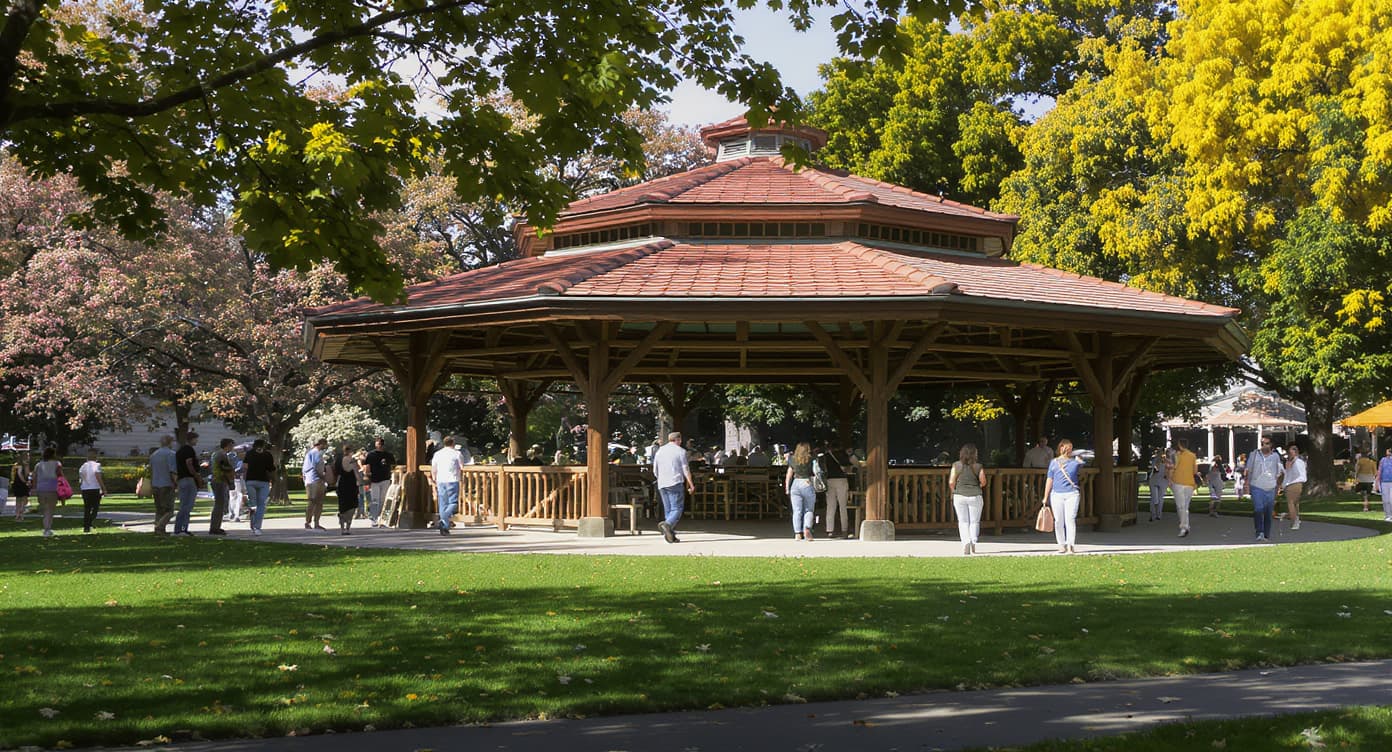
The Cheesman Park Pavilion stands as one of Denver’s most graceful and enduring architectural treasures. Nestled within the 80-acre Cheesman Park, this elegant structure has welcomed generations of residents and visitors since its 1908 debut. Designed by famed Denver architect Frederick Law Olmsted Jr., son of the visionary behind New York’s Central Park, the pavilion was conceived not just as shelter, but as a civic gesture: a place where art, nature, and public life converge.
Its limestone columns, arched roofline, and open-air symmetry reflect the City Beautiful movement’s ideals: harmony, accessibility, and democratic beauty. Today, it remains a functional centerpiece, hosting weddings, civic ceremonies, photo sessions, and quiet afternoon reflection alike.
What makes it especially compelling for visual storytelling is how naturally it integrates with its surroundings. The pavilion doesn’t dominate the landscape, it converses with it. That quiet dialogue between structure and sky, stone and grass, history and present moment is exactly what draws photographers, event planners, and everyday admirers back, year after year.
Architectural Design and Restorative Legacy
The Cheesman Park Pavilion was originally built as part of a broader redesign of what was then called “Congress Park”, later renamed in honor of Denver philanthropist Mary Cheesman. Its design is a masterclass in early 20th-century civic architecture: neoclassical in proportion, yet relaxed in execution. The open colonnade invites airflow and light; the low-pitched hipped roof avoids visual weight; the central dome, though modest in scale, lends quiet grandeur.
Unlike many historic structures that fell into disrepair, the pavilion benefited from consistent stewardship. A major restoration in the early 2000s addressed structural integrity, masonry erosion, and roofing systems, all while preserving original materials and craftsmanship. Local historians note that even the original wrought-iron railings were painstakingly recreated using archival photos and surviving fragments.
That fidelity to authenticity makes the site especially valuable for visual documentation. When capturing architectural detail, light interaction, or spatial relationships, the pavilion rewards patience and intention, not flash or force. Its balance of form and function aligns closely with our natural light mastery approach: let the space speak, then support its voice with thoughtful composition.
Why Photographers and Creators Are Drawn Here
Few locations in Denver offer the same combination of visual versatility, emotional resonance, and logistical ease. The Cheesman Park Pavilion serves as both subject and stage, equally compelling as a standalone architectural portrait or as a contextual frame for human moments.
Wedding photographers appreciate its clean sightlines and forgiving light conditions. Real estate and lifestyle shooters value its implied narrative: a space that suggests belonging, celebration, and continuity. Even commercial clients seeking brand-aligned backdrops find it adaptable, whether for a wellness brand’s mindfulness campaign or a boutique’s seasonal lookbook.
What sets it apart from other city parks is its quiet dignity. There’s no overt signage, no branded infrastructure, just space, structure, and sky. That neutrality gives creators freedom. It doesn’t impose a mood; instead, it reflects and amplifies the one you bring. That’s why our Story-First Shoot methodology resonates so naturally here: we begin not with a shot list, but with understanding why this place matters to our client.
Capturing Authenticity: Light, Timing, and Intention
Photographing the pavilion at its most evocative isn’t about gear, it’s about rhythm and attention. Morning light sweeps across the eastern colonnade with soft clarity, ideal for architectural detail and texture work. Late afternoon, during golden hour, wraps the limestone in warm, dimensional tones, perfect for portraits where subjects glow with the space, not just in front of it.
We avoid midday sun not because it’s “bad,” but because its harshness flattens nuance, and this structure thrives on nuance. Instead, we use open shade beneath the colonnade or position subjects just inside the archway, where light pools like liquid. Reflectors bounce gentle fill into shadowed faces; diffusers temper brightness without losing contrast.
Timing also means honoring the pavilion’s living context: the joggers who pause for photos, the families who picnic on its steps, the musicians who play beneath its dome. Our Candid Edit Framework ensures those fleeting, human moments stay, not as distractions, but as narrative anchors. A child’s hand on a column. A shared laugh beneath the arch. These aren’t flaws to erase, they’re the heartbeat of the place.
Hosting Events with Meaning and Grace
Beyond its visual appeal, the Cheesman Park Pavilion functions as one of Denver’s most beloved public event spaces. Permits are managed by Denver Parks and Recreation, and the process is intentionally accessible, reflecting the pavilion’s founding ethos of civic inclusion. Weddings, vow renewals, memorial services, and community forums all find resonance here.
What makes it uniquely suited for meaningful gatherings is its lack of visual clutter. There’s no built-in stage, no permanent sound system, no branded signage, which means every event is defined by the people in it, not the infrastructure around them. Couples choose it not for spectacle, but for sincerity. Organizers select it not for capacity, but for calm.
That intentional minimalism also supports storytelling. When documenting an event here, our focus stays on gesture, expression, and interaction, not on competing visual elements. The architecture provides rhythm and framing; the people provide the story. That alignment is rare, and powerful.
The Pavilion as a Lens Into Denver’s Civic Identity
The Cheesman Park Pavilion is more than brick and limestone. It’s a quiet manifesto of Denver’s evolving relationship with public space. From its origins in the City Beautiful movement, which sought to uplift urban life through design, to its current role as a democratic gathering place, the pavilion mirrors the city’s values: openness, resilience, and quiet pride.
It also reflects Denver’s climate-conscious design intelligence. The open-air structure promotes natural ventilation. Its orientation minimizes solar heat gain in summer while capturing low-angle winter light. Even its materials were chosen for longevity and local resonance, Colorado limestone, regional timber accents, and durable terra cotta detailing.
For photographers and storytellers, that deeper layer matters. Knowing the why behind the what adds intention to every frame. It transforms a beautiful background into a meaningful character, one that speaks to stewardship, memory, and shared belonging. That’s the foundation of our Story-First Shoot: we don’t just photograph a place, we listen to its history, then translate that into visual language.
Seasonal Rhythms and Visual Storytelling Opportunities
One of the pavilion’s quietest strengths is how it changes with the seasons, not dramatically, but thoughtfully. Spring brings soft light and new grass, with cherry blossoms framing the western arches. Summer offers long shadows and vibrant green backdrops, ideal for high-contrast lifestyle imagery. Fall turns the surrounding cottonwoods golden, casting warm, dappled light across the colonnade. Winter, when the park is hushed and the pavilion stands stark against snow-dusted lawns, reveals its sculptural strength, clean lines, strong geometry, and a sense of serene endurance.
Each season invites a different storytelling approach. In spring, we emphasize renewal and softness, using shallow depth of field to blur blossoms into pastel bokeh. In winter, we lean into contrast and texture, capturing frost on limestone, breath in cold air, wool coats against smooth columns.
This seasonal responsiveness also makes the pavilion ideal for brand storytelling across time. A wellness studio might launch a year-long campaign anchored by monthly pavilion portraits, showing not just changing light, but changing energy, intention, and community. That kind of narrative sequencing is central to our Candid Edit Framework: images don’t exist in isolation. They build arcs.
Community, Memory, and the Human Connection
At its core, the Cheesman Park Pavilion endures because people return, again and again, to mark moments that matter. It’s where proposals happen under the dome. Where veterans’ groups gather on Memorial Day. Where high school seniors take commencement photos. Where grandparents bring grandchildren to feed ducks, then sit awhile beneath its arches.
These repeated, unscripted human gestures are what give the space its emotional weight. They’re also what make it ideal for documentary-style photography, the kind that doesn’t chase perfection, but honors presence. Our editing philosophy reflects that: we don’t erase a stray leaf or a passing cloud. We preserve the breath of the moment, because that’s where authenticity lives.
That human rhythm also informs how we prepare for sessions here. Our 15-minute discovery chat often uncovers unexpected layers: a family’s multi-generational connection to the park, a couple’s first date beneath those columns, a business owner’s vision for community impact. Those aren’t just anecdotes, they’re creative directives. They tell us where to stand, when to shoot, and what to hold in focus.
Frequently Asked Questions
Q: Is the Cheesman Park Pavilion available for weddings and private events?
A: Yes, permits are issued through Denver Parks and Recreation. The process is straightforward and designed for public access, with fees based on group size and time of year. Early reservation is recommended, especially for weekend slots during peak seasons.
Q: What’s the best time of day to photograph the pavilion for natural light?
A: Golden hour, the first hour after sunrise and the last hour before sunset, delivers the warmest, most dimensional light. Overcast mornings also offer beautifully even illumination, ideal for detail and portrait work.
Q: Are drones allowed for aerial photography at Cheesman Park?
A: No. Drone use is prohibited in all Denver city parks without explicit written permission from Parks and Recreation, and such permission is rarely granted for recreational or commercial drone flights.
Q: Can I bring professional lighting equipment to the pavilion?
A: Yes, but with care. Portable strobes and reflectors are permitted, though permanent setups or generators require special permits. We recommend lightweight, battery-powered gear to maintain the pavilion’s serene atmosphere.
Q: How does the pavilion accommodate accessibility needs?
A: The site is fully ADA-compliant, with paved pathways, ramp access to the main platform, and accessible restrooms nearby. Event planners report strong support from park staff for inclusive setup and mobility accommodations.
Contact Candid Studios today for a free consultation.