Average Wedding Videographer Cost (2026): Prices & Packages
Most couples spend $1,500–$5,000+ on wedding videography, with a national average near $2,300. Simple coverage can start near $1,000; multi-camera cinematic films can exceed $10,000. Price tracks hours, crew size, highlight vs full-film deliverables, and edit complexity—not just “having a video.”
Explore related coverage
Related: The Price of Perfection: Demystifying Wedding Photography Costs
Compare packages: Wedding videographers serving Florida, Ohio, Illinois, Colorado, Texas, and New York
Let's start with the number everyone wants. The average cost of a wedding videographer in the U.S. lands around $2,300, and most couples spend somewhere between $1,500 and $5,000+ depending on hours, crew size, and style.
That average is only a starting point. Prices can dip near $1,000 for simple elopement coverage or climb past $10,000 for a full cinematic production with a multi-person crew. The final price tag reflects the artist's experience, how many hours they are with you, and what kind of films you receive at the end. This guide breaks down every factor so you can plan your budget with confidence.
Key Takeaways
- The national average wedding videography cost is around $2,300, with most couples paying $1,500 to $5,000+ depending on location and services.
- Packages fall into three tiers: budget-friendly ($1,000 to $2,500), mid-range ($2,500 to $5,000), and luxury ($5,000 to $10,000+).
- Region matters: the Midwest averages $1,500 to $3,500 while the West Coast runs $3,000 to $6,000, and elite videographers in markets like New York City can start at $10,000.
- Common add-ons change the total: a second shooter adds $500 to $1,500, drone footage runs $300 to $700, extra coverage costs $200 to $500 per hour, and extra edits start around $750 each.
- Booking off-season, choosing a Friday or Sunday, and bundling photo and video together are the easiest ways to save without sacrificing quality.
Wedding Videography Cost Tiers at a Glance

Most videographers structure their packages in tiers based on experience and what's included. Think of it like booking a hotel: everything from a basic, comfortable room to a luxury suite. Here is what each budget category typically gets you.
| Price Tier | Typical Cost Range | What You Can Expect |
|---|---|---|
| Budget-Friendly | $1,000 – $2,500 | Basic coverage (4-6 hours) with a single videographer and a simple highlight reel. Common for newer professionals building a portfolio, and a good fit for elopements and micro-weddings. |
| Mid-Range | $2,500 – $5,000 | The most common price range. Expect 6-8 hours of coverage, a lead videographer (often with a second shooter), a polished highlight film, and frequently the full ceremony footage. |
| Luxury / High-End | $5,000 – $10,000+ | All-day coverage (8-12+ hours) with a multi-person crew, cinematic editing, multiple films (teaser, highlight, feature), and add-ons like drone footage. |
These tiers are a guide, not a rule. Every videographer prices their unique skills and artistry differently, so always ask for a detailed breakdown of what's included before comparing quotes.
Regional Variations: How Location Changes the Price
Where you get married is one of the biggest, and most surprising, factors in your final quote. The same level of service can cost thousands more in a major metro than in a small town, because studio rent, insurance, and demand all run higher in big cities.
Here is how average wedding videography costs compare across the United States:
| Region | Average Cost | What Drives the Price |
|---|---|---|
| Northeast | $2,500 – $5,000 | High demand, urban settings, premium services |
| Midwest | $1,500 – $3,500 | Lower demand, rural areas, fewer luxury options |
| South | $2,000 – $4,000 | Moderate demand, mix of urban and rural locations |
| West Coast | $3,000 – $6,000 | High demand, scenic venues, drone services |
To make that real: a standard package in a premium market like Los Angeles typically runs $2,500 to $5,500, while the same videographer's skill in a smaller Midwestern town might price at $2,000 to $3,500. A videographer in a major hub like Miami or Denver will almost always have a higher starting rate than someone in a rural town, and elite professionals in New York City can command prices starting at $10,000.
Travel and Destination Wedding Fees
If your dream videographer is based a few hours away, or you're planning a destination wedding, expect travel fees. These cover the real expenses of getting a crew and their gear to your venue safely:
- Mileage or airfare to your wedding location.
- Accommodation for a night or two so the team is rested for your day.
- Per diem for meals and small expenses on the road.
Travel fees typically add $500 to $1,000 or more, and destination weddings can require special packages covering lodging and meals for the whole crew. Our guide to destination wedding videography breaks down the logistics and budgeting in detail.
What Drives the Cost of a Wedding Videographer
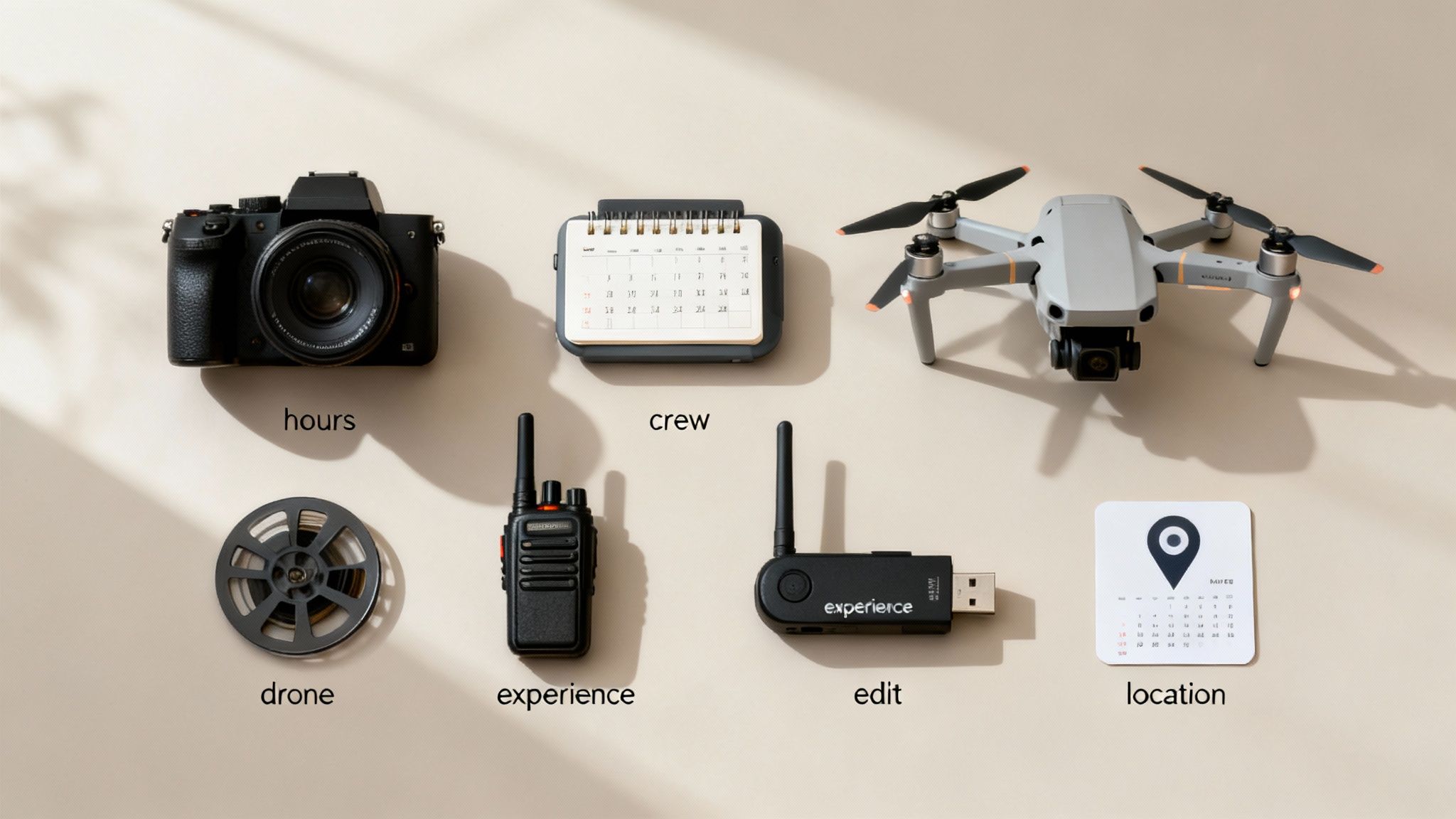
Why does one videographer quote $2,000 while another comes back at $8,000? It comes down to a few specific factors.
Experience and Artistic Style
Experience is the single biggest price driver. A videographer who has filmed over 100 weddings knows how to anticipate key moments, manage tricky lighting, and navigate the chaos of the day without missing anything. Style matters too:
- Documentary: Captures the day as it happens with little direction, for a candid, chronological film.
- Cinematic: Creative camera work, dramatic angles, and powerful music for a movie-trailer feel. It requires far more planning and editing time.
- Storytelling: A blend of both, weaving visuals with audio from your vows and speeches into a narrative.
Cinematic and storytelling films cost more because of the advanced skill and intensive post-production they demand.
Coverage Hours and Team Size
Most packages offer 8 to 10 hours as standard, covering everything from getting ready to the end of the reception, while full-day affairs can need 10 to 12 hours. Extra time is one of the most practical upgrades: expect $200 to $500 per additional hour. For smaller weddings, couples often skip extended coverage and focus on key moments like the ceremony and speeches.
Crew size changes the price too. A solo videographer is the most budget-conscious option but can only be in one place at a time. A lead with a second shooter, the most common setup, typically adds $500 to $1,500 and captures reactions and angles one person simply can't. Large, complex weddings may call for a crew of three or more, including dedicated audio or a drone pilot.
Gear and Post-Production
Behind every polished wedding film is a mountain of professional gear: high-end cameras, lenses, stabilizers, and audio equipment. Our list of wedding videography equipment shows what a pro carries.
The real time sink is the editing suite. A skilled editor can spend 30 to 60 hours or more on a single wedding film: sorting clips, color grading, mixing audio, and licensing music. For every hour of shooting, expect another 3 to 5 hours of editing. Extra edit requests beyond what's included usually start around $750 each.
What Wedding Videography Packages Include
The final videos you receive, called deliverables, are the biggest driver of a package's price because they dictate the editing hours involved. Common deliverables include:
- Highlight Reel: A 3-5 minute cinematic montage of the day's best moments, set to licensed music and perfect for sharing.
- Cinematic Short Film: A longer, story-driven 8-15 minute film weaving in audio from your vows and speeches.
- Documentary Edit: A lightly edited, chronological record of the full ceremony, speeches, and first dances.
- Raw Footage: Every unedited clip from the day, usually delivered on a hard drive. Many videographers charge extra for this, but Candid Studios includes all RAW content free, with no hidden costs.
Sample Wedding Videography Package Comparison
| Feature | The Essentials Package | The Classic Package | The Cinematic Experience |
|---|---|---|---|
| Price Range | $1,500 – $3,000 | $3,000 – $5,500 | $5,500 – $10,000+ |
| Coverage | 4-6 Hours | 6-8 Hours | 8-12+ Hours |
| Videographers | One Videographer | Lead Videographer + Second Shooter | Multi-Person Crew (2-3+) |
| Primary Film | 3-4 Min Highlight Reel | 4-6 Min Highlight Reel | 10-15 Min Cinematic Short Film |
| Extra Edits | Usually none | Full Ceremony Edit | Full Ceremony, Speeches, & Dances |
| Add-Ons | Teaser, Drone (extra cost) | Social Media Teaser, Drone | Teaser, Drone, Raw Footage |
| Best For | Elopements & Intimate Weddings | Most Traditional Weddings | Large Events & Story-Focused Couples |
Whatever tier you choose, make sure every deliverable is listed in writing before you sign. A good wedding videographer contract template shows what a thorough agreement should cover.
Popular Add-Ons and Their Costs
Beyond the core package, most videographers offer extras that can elevate your film:
- Drone Footage: Sweeping aerial views of your venue that ground cameras can't capture. Adding a drone typically runs $300 to $700, depending on the shots and the pilot's licensing, and many packages don't include it, so ask upfront.
- Second Shooter: More angles and reactions covered, typically $500 to $1,500 extra.
- Same-Day Edit: A short highlight film shot and edited on your wedding day, then played during the reception. It requires a dedicated on-site editor, so costs start around $1,000.
- Specialty Films: A 60-second teaser trailer for social media, or nostalgic Super 8 film segments for a vintage feel.
- Raw Footage: Every unedited clip from the day on a hard drive, usually $500 to over $1,000 (Candid Studios includes RAW content free).
- Guest Interviews and Live-Streaming: Great for including guests who couldn't attend; each adds staff time and gear to your quote.
How to Budget for Wedding Videography
A beautiful film doesn't have to break the bank. The smartest approach is shifting priorities rather than cutting coverage.
Prioritize Coverage Over Complexity
For most couples, 8 hours of coverage with one amazing highlight film is a better use of money than a 6-hour package loaded with teasers and extra edits. More time on-site means more memories captured, and a simpler editing load means savings passed on to you.
Get Creative with Your Timing
Videographers have peak seasons just like venues. Booking between November and April, or choosing a Friday or Sunday instead of a Saturday, can unlock noticeably better rates for the exact same service. It never hurts to ask if pricing changes for off-peak dates.
Bundle Photo and Video
Studios that offer both photography and videography, including Candid Studios, usually discount the bundle, often saving 10-15% compared to hiring two separate companies. You also get one team that already knows how to work together with a consistent style.
Ask the Right Questions
Before booking, review each videographer's portfolio and watch full wedding films, not just highlight reels. Confirm who will actually film your wedding, the turnaround time for the finished films, the revision policy, and whether they carry liability insurance. Ask for a line-item breakdown so you can spot hidden costs like travel, extra hours, or revision fees, and don't be afraid to mention competing quotes. Our guide to questions to ask your wedding videographer covers the full list.
Is a Wedding Videographer Worth the Cost?
Photos freeze a single perfect moment; a film lets you step back inside it. A wedding video preserves the sound of your partner's voice during the vows, the laughter during the toasts, and the energy of the dance floor, details a still image can't hold. Years from now, it becomes a family heirloom you can share with future generations.
A meaningful number of couples who skip the videographer later say they regret it. In the blur of the day, it's impossible to see everything, and a great film catches the moments you missed, like your parents tearing up as you walk down the aisle. When you weigh the average wedding videography cost, remember you're not just paying for a service; you're investing in a lifetime of memories.
FAQs
Q: What is the average cost of a wedding videographer?
A: The national average is around $2,300, and most couples spend between $1,500 and $5,000+ depending on location, coverage hours, crew size, and the films included. Budget packages start near $1,000, while luxury cinematic coverage can exceed $10,000.
Q: What factors determine the cost of a wedding videographer?
A: Location, the videographer's experience and artistic style, hours of coverage, team size, and deliverables are the big ones. Add-ons like drone footage, second shooters, and same-day edits raise the total, as do travel fees for destination weddings.
Q: What is typically included in a wedding videography package?
A: Most packages include a set number of coverage hours, professional audio capture, a 3-5 minute highlight film, and digital delivery. Mid-range and premium packages add a second shooter, a full ceremony or documentary edit, and extras like teaser films or raw footage.
Q: Do I really need two videographers?
A: For weddings with over 150 guests, a second videographer is strongly recommended so nothing gets missed and both partners' reactions are captured. For smaller, intimate weddings or elopements, one skilled videographer can absolutely cover the day beautifully.
Q: How far in advance should I book a wedding videographer?
A: Book 12 to 18 months ahead, especially for peak-season Saturdays (late spring through early fall). The best videographers book up fast, and booking early locks in current pricing.
Q: What is the difference between a highlight film and a feature film?
A: A highlight film is a short, cinematic 3-5 minute recap set to music, ideal for sharing. A feature or short film runs 8-15 minutes or more and weaves in audio from vows, toasts, and candid moments to tell the full story of the day.
Q: Is raw footage included in the price?
A: Usually it's an extra fee, since it means delivering every unedited clip from the day. Candid Studios includes all RAW content free, so you keep everything recorded without hidden costs.
Q: Should I tip my wedding videographer?
A: Tipping is a kind gesture but never expected, since professionals price their services to cover their costs. If the team went above and beyond, $100 to $200 for the lead videographer and $50 to $75 for second shooters is generous. A detailed online review means just as much.
Q: Do wedding videographer prices vary by season?
A: Yes. Peak wedding season and Saturday dates carry premium pricing, while off-season months (November through April) and Friday or Sunday weddings often come with better rates. Booking early secures current pricing before annual increases.
Q: Is it cheaper to bundle photography and videography?
A: More often than not, yes. Studios offering both services typically discount the bundle by 10-15%, and you get a photo and video team that already works seamlessly together with a consistent style.
At Candid Studios, we believe pricing should be clear and simple, and your wedding film should be as timeless as your story. Explore our award-winning videography services to see how we can capture your day.
Explore wedding videography packages at Candid Studios
Related services:
- Wedding videographers serving Florida, Ohio, Illinois, Colorado, Texas, and New York
- Wedding Videographer in New York
Related: How Much Does a Wedding Photographer Cost
Frequently Asked Questions
How much does a wedding videographer cost?
Plan on $1,500–$5,000+ for most full weddings. The midpoint near $2,300 is common for standard highlight coverage.
Is wedding videography worth it?
If hearing vows and seeing motion matters to you long-term, yes. Photos freeze moments; film preserves voice, music, and movement.
Should we book photo and video together?
A coordinated team simplifies timelines and storytelling. See photo + video packages.
Browse wedding videography · photo + video combos · why invest in video · contact.