How much does wedding videography cost? A Clear Guide to Wedding Film Budget
When you start planning a wedding, "How much does wedding videography cost?" is one of the first questions that comes up. The short answer? Expect to spend somewhere between $1,500 and $5,000, with the national average sitting right around $2,300.
Of course, that's a huge range. The final price tag depends entirely on the videographer's experience, where you're getting married, and exactly what kind of film you want.
Breaking Down the National Average Cost
Trying to nail down your wedding budget can feel like hitting a moving target, especially for big-ticket items like videography. The national average gives you a good ballpark figure, but think of it as the base price of a car—it’s just the starting point before you add all the features that make it perfect for you.
Recent industry data shows just how important this investment has become. Heading into 2025, the average cost for a wedding videographer in the U.S. is expected to be about $2,300, consistently landing it among the top ten expenses for couples. A recent comprehensive study by The Knot found that 37% of couples hired a videographer in 2024. That number is climbing as more people realize you just can't replace the feeling of reliving your day through a professional film.
Why Prices Vary So Much
So, why isn't there one simple number? The cost of your wedding film is a mix of a few key ingredients, which we'll explore throughout this guide. The biggest factors that drive the price up or down are:
- Experience and Reputation: A seasoned pro with a stunning portfolio and a true cinematic eye will naturally cost more than a videographer who is just starting to build their business.
- Geographic Location: It’s no surprise that a videographer in New York City or Los Angeles will have higher rates than one in a smaller town, simply because their cost of living and doing business is higher.
- Hours of Coverage: This is a big one. The more time the videographer spends with you on your wedding day, the more it will cost. An 8-hour package is standard, but a 12-hour package that captures everything from getting ready to the grand exit will be a bigger investment.
- The Final Films: What you actually get back after the wedding—a short highlight reel for social media, a full-length documentary-style film, or all the raw footage—plays a massive role in the final price.
This is just the first piece of the puzzle. As you start building out your total wedding budget, it's helpful to see where videography fits in with everything else. For a bigger-picture view, take a look at our guide on how much you should spend on a wedding.
To give you a clearer idea of what your money gets you, here’s a quick breakdown of what to expect at different price points.
Average Wedding Videography Costs at a Glance
This table gives you a snapshot of what you can generally expect to find as you start your search for the perfect videographer.
Experience Level
Typical Price Range
What You Can Expect
Entry-Level
$1,000 – $2,000
Basic coverage (4-6 hours), a single videographer, and usually one simple highlight film. A great option for smaller weddings.
Mid-Range
$2,500 – $4,500
Full-day coverage (8+ hours), often a second shooter, and multiple videos like a highlight reel and a longer feature film. This is the sweet spot for most couples.
Luxury/Cinematic
$5,000 – $10,000+
A highly experienced team, top-of-the-line gear (drones, cinema cameras), and a polished, movie-quality final film that tells your unique story.
Ultimately, these tiers are just a guide. The most important thing is finding a videographer whose style you love and who offers a package that fits both your vision and your budget.
What Actually Determines a Videographer's Price
So you've seen the price ranges, but what's really behind those numbers? Trying to figure out wedding videography costs can feel like comparing apples and oranges. You get one quote that’s double another for what seems like the exact same service, and it’s easy to get confused.
The truth is, a videographer's price is a complex recipe with a few key ingredients. Think of it like commissioning a custom piece of art. The final cost isn't just for the paint and canvas; it's for the artist's unique vision, their years of honed skill, and the sheer time it takes to bring your idea to life. A wedding film is no different.
This dynamic is fueling a booming industry. The global market for wedding services, including videography, was valued at an incredible $315 billion in 2024 and is projected to soar past $667 billion by 2030. That growth isn't just a number; it shows how many couples now see professional video not as a nice-to-have, but as an essential investment in their memories. You can dig into the full market analysis from Grand View Research if you're curious.
Experience and Artistic Style
Hands down, the biggest factor driving the cost is the videographer's experience and their unique artistic signature. A seasoned pro with a decade of weddings under their belt, a distinct cinematic style, and a portfolio of jaw-dropping films is naturally going to command a higher price than someone just starting out.
This isn’t just about being good with a camera; it’s about being a great storyteller. An experienced videographer has a sixth sense for anticipating moments. They know how to capture those fleeting, unscripted emotions and weave them into a narrative that feels like yours. Their price reflects thousands of hours of practice, refinement, and a deep understanding of what it takes to create a true family heirloom.
Key Takeaway: You're not just paying for someone to hold a camera. You're investing in their artistic eye, their storytelling ability, and the peace of mind that comes with proven expertise.
Hours of Coverage
One of the most straightforward cost drivers is time. The more hours your videographer is on-site, the higher the price tag. It’s a simple equation: more coverage means more filming, more data to manage, and way more footage to sort through in the editing room.
A standard package often includes 8 hours of coverage. This usually gets you the final stages of getting ready, the ceremony, cocktail hour, and the main reception events. But if you want the whole story—from the mimosas in the morning to the sparkler exit at midnight—you’ll need to look at a 10 or 12-hour package.
Here’s a quick breakdown of what you can expect from different coverage times:
- 4-6 Hours: Perfect for elopements or intimate weddings. This typically covers just the ceremony and a slice of the reception.
- 8-9 Hours: The sweet spot for most couples. It captures the heart of the wedding day, from preparations through the main party.
- 10-12+ Hours: This is your all-in, "full story" coverage. It ensures no moment is missed, from the very beginning to the grand finale.
The Power of a Second Videographer
Ever watch a wedding film and wonder how they captured the groom's emotional reaction and the bride walking down the aisle, all at the same time? The secret is almost always a second videographer.
While a solo shooter can do an incredible job, a two-person team offers a depth and richness that's simply impossible to get otherwise.
A second videographer allows for:
- Multiple Perspectives: One can stay tight on the couple while the other captures the laughter and tears from your family and friends.
- Simultaneous Events: They can film both partners getting ready, even if you’re in separate locations.
- Creative Freedom: It frees up the main videographer to hunt for those truly cinematic, artistic shots, knowing the second shooter has all the essential moments covered.
Adding another person obviously adds to the cost, but the impact it has on the quality and emotional punch of your final film is huge.
Equipment and Production Value
Let's be real: professional gear is expensive. A videographer's toolkit goes far beyond just a nice camera. It includes a whole array of specialized equipment that all work together to create that polished, cinematic look. For a detailed breakdown, check out our guide on the essential wedding videography equipment professionals rely on.
The cost of this top-tier gear is baked into a videographer's pricing. We're talking about:
- Cinema-quality cameras and lenses that deliver that crisp, beautiful footage.
- Drones for those epic, sweeping aerial shots of your venue.
- Gimbals and stabilizers that create that smooth, gliding motion.
- Professional audio recorders to capture every word of your vows and speeches with crystal clarity.
When you understand all these moving parts, you start to see a price quote not as a random number, but as a true reflection of the talent, time, and tools required to create a memory you'll cherish forever.
Understanding Videography Packages And Price Tiers
Trying to figure out wedding videography packages can feel a little like trying to order at a new restaurant without a menu. You've seen the gorgeous films online, but you have no idea what actually goes into making them or how the pricing works.
The good news is, it's simpler than it looks. Most videographers bundle their services into packages, creating clear tiers that match different budgets and what you're hoping to get.
Think of it like buying a car. There's the reliable base model that gets you from A to B, a popular mid-range option with all the features most people want, and a fully-loaded luxury model with every bell and whistle you can imagine. Each tier serves a different purpose, and understanding what’s inside helps you find the perfect fit for your wedding day.
This all really boils down to three main things: the videographer’s experience, how many hours they’ll be there, and what films (the "deliverables") you get in the end. This diagram breaks down how these pieces directly impact the final price.
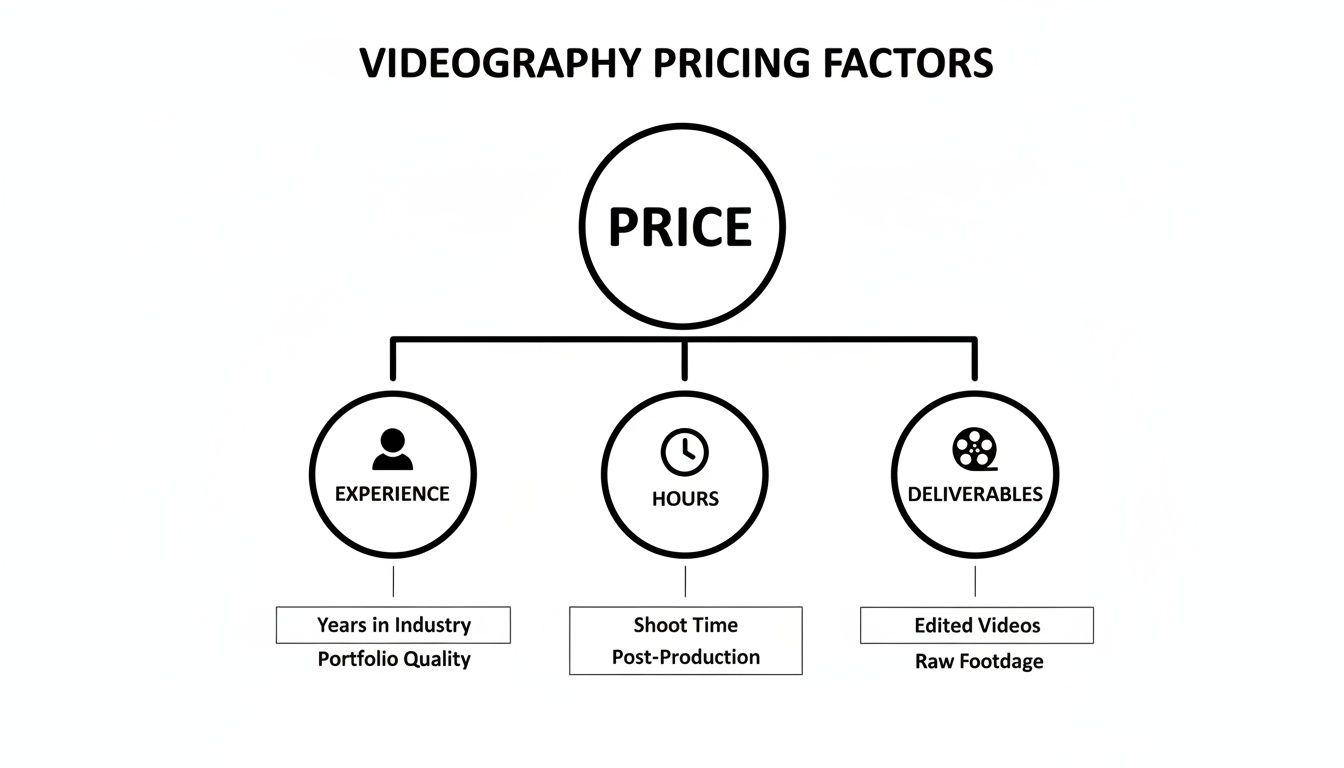
As you can see, tweaking any one of these—adding more hours, asking for another film, or hiring a more seasoned pro—will adjust the investment needed.
To make this crystal clear, here’s a look at what different packages usually include. This side-by-side comparison should help you see where your budget and wish list line up.
Sample Wedding Videography Package Comparison
Feature
Essential Package (~$1,500 – $2,500)
Popular Package (~$2,500 – $4,500)
Cinematic Package (~$5,000+)
Coverage Hours
4-6 hours
8-9 hours
10-12+ hours
Number of Videographers
One
One (often with an option for a second)
Two or more
Main Deliverable
3-5 minute highlight film
4-7 minute highlight film
15-20+ minute feature film
Additional Films
None
Often includes full ceremony video
Teaser, highlight film, feature film, plus full ceremony & toasts
Specialty Gear
Professional cameras & audio
Adds enhanced lighting & stabilization
Adds drone, cinema cameras, advanced audio gear
Best For
Elopements, intimate weddings, or budget-conscious couples
The vast majority of couples wanting full-day coverage
Couples who prioritize a high-end, artistic film as a key wedding keepsake
This table is just a guide, of course, as every studio structures its offerings a bit differently. But it gives you a solid framework for what to expect at each price point.
The Essential Package: The Foundation
The Essential Package is your entry point into professional wedding videography, and you'll typically see these priced from $1,500 to $2,500. This is a fantastic choice for couples with a smaller, more intimate wedding or those who just want the absolute key moments captured beautifully without a full-day production.
Here’s what you can generally expect:
- Limited Coverage: Usually around 4 to 6 hours of filming. This is just enough time to cover your ceremony, some portraits, and the very beginning of your reception.
- One Videographer: A single, talented filmmaker will be on-site to capture everything.
- A Highlight Film: The star of the show here is a 3-5 minute cinematic highlight reel, perfectly edited to music, that tells the story of your day in a short, shareable format.
This package gets the job done and ensures you have a beautiful film to remember your day by. Just keep in mind, it probably won’t include footage of you getting ready in the morning or the crazy dance party late into the night.
The Popular Package: The Sweet Spot
Just like the name says, this is the package most couples land on, and it usually falls in the $2,500 to $4,500 range. It's built to provide a much more complete narrative of your wedding, documenting the day from start to finish. For couples who don't want to worry about missing anything important, this is the sweet spot.
This tier almost always builds on the essential package by adding:
- Full-Day Coverage: We're talking 8 to 9 hours, which is enough to capture everything from the final touches of hair and makeup to the main reception events like toasts and the first dance.
- A Second Videographer: This is a huge plus. Having a second shooter is often included to capture multiple angles—like both of your reactions during the first look or walking down the aisle.
- More Deliverables: On top of the highlight film, you might also get a separate video of your full ceremony or the unedited speeches.
Why This Tier Works So Well: It strikes the perfect balance between cost and comprehensive coverage. You get the peace of mind that comes with having your videographer there all day and the richer, more dynamic story that a second shooter can tell.
The Cinematic Package: The Luxury Experience
For couples who see their wedding film as a true piece of art, the top-tier package delivers an experience that's on another level. Priced at $5,000 and often going well beyond $10,000, this is a serious investment in premium artistry and storytelling. These are the packages offered by the most in-demand studios, the ones known for creating deeply personal, visually stunning films.
At Candid Studios, our cinematic packages are where our passion for storytelling really shines. We're focused on creating more than just a video; we aim to craft a timeless family heirloom. You can see what this level of artistry looks like by exploring some of the best wedding videography we've had the honor of creating.
A cinematic package takes everything from the popular tier and elevates it:
- Extended Coverage: 10-12+ hours of filming ensures every last moment is captured, from the mimosas in the morning to your grand exit.
- Advanced Equipment: This means pulling out all the stops—drones for breathtaking aerial shots, cinema-grade cameras for that buttery-smooth image quality, and pro-level audio gear for crystal-clear sound.
- Multiple Films: You'll often receive a short social media teaser, a highlight film, and a longer 15-20 minute feature film that dives deep into your story. Full edits of the ceremony and toasts are also common.
This is the package for couples who want the ultimate storytelling experience, crafted by a team of artists using the best tools in the trade. It’s about turning your wedding day into a true work of art.
Evaluating Common Add-Ons and Upgrades
Once you’ve locked in a base package you love, you'll probably see a menu of potential upgrades. These are the bells and whistles—the extras that can take your film from great to absolutely unforgettable. But they also add to the bottom line, so the trick is figuring out which ones are truly worth it for you.
Think of it like building a new home. The standard floor plan is solid and gives you everything you need. But then you see the options: the finished basement for entertaining, the upgraded kitchen for your inner chef, the spa-like master bath. Each one is a fantastic addition, but you have to decide what fits your budget and what will genuinely make your house feel like a home.
Let's walk through some of the most popular videography upgrades so you can make a smart choice.
Drone Footage for Epic Views
There's no denying it—drone footage adds a breathtaking, cinematic feel that you just can't get from the ground. Those sweeping aerial shots of your venue, the stunning landscape, and your guests arriving can give your film an incredible sense of scale and set the scene beautifully.
- The Good: It delivers a serious "wow" factor, creating a grand, movie-like opening or transition. It's especially impactful if you've chosen an outdoor venue with gorgeous scenery.
- The Not-So-Good: Drones can be noisy, and they're at the mercy of the weather and FAA rules. Plus, many venues have restrictions, so you'll need to get permission first.
- Typical Cost: Adding drone footage usually runs between $300 and $700. The price depends on the complexity of the shots and the pilot's licensing.
Raw Footage for the Archives
What exactly is raw footage? It’s every single unedited clip from your wedding day, straight from the camera. We're talking unfiltered, uncolored, and including all the shaky shots, out-of-focus moments, and candid bits that don’t make it into the final, polished film.
Getting the raw footage is like a photographer handing you every single negative from their camera, not just the perfectly edited prints. It's a complete, unfiltered chronicle of your day.
This is a fantastic option for couples who are sentimental archivists and want every possible moment preserved. Just be prepared to sort through hours of video files. The cost for raw footage typically ranges from $500 to over $1,000, and it's almost always delivered on a dedicated hard drive because the files are massive.
Additional Hours of Coverage
Most videography packages are built around eight hours of coverage. That's usually enough to capture the final moments of getting ready all the way through the main reception events, like the first dance and cake cutting.
But what if you're planning a spectacular sparkler exit late at night? Or you have important pre-ceremony traditions you want on film? Adding extra hours is one of the most practical and valuable upgrades you can make. It ensures your videographer is there for the entire story, from the morning mimosas to the final wave goodbye. Expect to pay between $200 and $500 per additional hour.
Same-Day Edits and Special Films
Want to absolutely blow your guests away? A same-day edit is a short highlight film (usually 2-3 minutes) that’s shot, edited, and played during the reception. It’s a powerful way to let everyone relive the most emotional moments of the day they just experienced.
Other specialty films you might consider:
- Super 8 Film: For a truly nostalgic, vintage vibe, some videographers can shoot parts of your day on authentic Super 8 film.
- Teaser Trailer: This is a high-energy, 60-second trailer delivered within a week of your wedding—perfect for immediately sharing on social media.
These kinds of edits require an incredible amount of skill and a super-fast workflow, often needing a dedicated editor on-site. As you can imagine, they aren't cheap. Costs typically start around $1,000 and can go up significantly. For couples tying the knot far from home, these films can be a beautiful way to share the experience. You can find out more about how travel impacts filming in our guide to destination wedding videography.
How to Find a Videographer That Fits Your Budget
Okay, so you understand the numbers. But how do you actually find that perfect person who can capture your day, match your vibe, and fit the budget? This is where the real work begins.
The search can feel a bit overwhelming, but a little strategy goes a long way. It turns a stressful hunt into an exciting, confident decision.
The absolute key is to start with a clear vision. Before you even think about scrolling through endless portfolios, take a moment and define the feeling you want from your wedding film. Are you picturing something light, airy, and super romantic? Or is your style more dark, moody, and dramatic? Nailing this down first will instantly narrow your search, helping you focus only on the artists whose work genuinely speaks to you.
Where to Begin Your Search
Your quest for the right videographer can kick off in a few different spots, and each one has its perks. Casting a wide net gives you the best shot at finding that hidden gem who’s a perfect match.
- Trusted Wedding Platforms: Websites like The Knot and Zola are fantastic starting points. They’re built to help you filter vendors by location, price, and reviews, giving you a structured way to see who’s in your area.
- Social Media Exploration: Instagram and TikTok are visual goldmines for this. Try searching hashtags like
#[YourCity]WeddingVideographeror even#[YourVenue]Weddingto see who has filmed at your location before. It’s the best way to see a videographer’s most recent work and get a feel for their personality. - Venue and Planner Recommendations: Don't overlook your other vendors! Your wedding planner and venue coordinator are invaluable resources. They’ve worked with dozens of local pros and can point you toward videographers they know are reliable, professional, and do amazing work.
Smart Budgeting Strategies
Finding a brilliant videographer doesn't always mean shelling out top dollar. There are some clever ways to make professional videography more affordable without cutting corners on quality. As you map out your total wedding spending, it’s useful to see how all the pieces fit together—for example, comparing videography costs to things like wedding car hire options helps put everything in perspective.
Here are a few tactics that can help save some cash:
- Book in the Off-Season: Most videographers are swamped from May to October. If your wedding is planned for sometime between November and April, you might find that some pros offer reduced rates.
- Choose a Friday or Sunday: Saturdays are prime time for weddings, and that demand drives up prices. Booking your wedding on a Friday or Sunday can sometimes unlock a lower price point.
- Prioritize Videography Early: Don't let videography be an afterthought. Booking 12-18 months in advance not only secures your first-choice artist but also locks in their current pricing before any annual increases kick in.
Remember, the value of a wedding film actually grows over time. While other wedding expenses are for a single day, your film is an investment that lets you relive those moments for the rest of your lives.
Vetting Your Top Choices
Once you've narrowed your list down to 3-5 videographers, it’s time to do a little digging. This part is crucial for making sure you're making a wise investment.
Start by watching at least two or three of their full highlight films from start to finish. Pay close attention to the storytelling, the music choices, and the emotional pacing. Does their work make you feel something?
Next, read through their reviews on multiple platforms. Look for consistent praise about their professionalism, communication, and their knack for making couples feel comfortable on camera.
Finally, before you make any decisions, schedule a video call. This is your chance to see if your personalities click. It's also the perfect opportunity to ask all the important questions before you sign on the dotted line.
So, You're Ready to Sign the Dotted Line? Hold On…
You've found a videographer you love. Their portfolio gave you chills, and their packages seem to line up with your budget. Awesome! But before you pop the champagne and sign that contract, there's one last crucial step.
Think of it like the final walkthrough of a new home. You need to peek in all the closets and make sure everything is exactly as you expect. Asking the right questions now isn't about being difficult; it's about making sure you and your creative partner are perfectly aligned. It’s the foundation for a great working relationship and a film you'll absolutely adore.
Diving into Their Creative Vibe
Every videographer is an artist with a unique point of view. You're not just hiring a person with a camera; you're hiring their eye, their storytelling instincts, and their creative vision. Let's make sure it matches yours.
- How would you describe your filmmaking style? Are they a fly-on-the-wall documentarian who captures things as they happen? Or are they more of a cinematic storyteller, creating a movie-like feel?
- How does music play a role in your films? Do you get to suggest songs, or do they select the soundtrack based on the emotion and pacing of the day? This is a huge part of the final film's feel!
- Can you walk me through your approach to capturing audio? How do you make sure the vows and speeches are perfectly clear? Will you be mic'ing the officiant or the groom?
The Wedding Day Itself: Logistics Matter
Knowing the game plan for the big day will give you major peace of mind. These questions are all about who will be there, what they'll need, and how they operate when the pressure is on.
The Most Important Question: You have to ask this one directly: "Will you be the one filming our wedding?" Some bigger studios have multiple teams. You need to know if you're hiring the specific artist whose work you fell in love with or a member of their associate team.
Here are a few other key logistical points to clear up:
- How many hours of coverage are included in our package? What's the cost if things run late and we need you to stay longer?
- Do you require a vendor meal on the wedding day? (Your caterer will need to know!)
- Have you filmed at our venue before? If not, do you typically visit beforehand to scout locations and check the lighting?
After the "I Do's": The Final Film
The filming is just half the journey. Understanding what happens next—and when—is key to managing your own excitement and expectations after the wedding day.
- What's the typical turnaround time for the finished film(s)?
- How will you deliver the final videos? Will we get them via an online gallery, a custom USB drive, or something else?
- What's your policy on revisions? If there’s a small tweak we'd like to make, is that possible?
Finally, don't shy away from the business details. Chat about their payment schedule, ask if they carry liability insurance (your venue might require it!), and understand their cancellation policy. A professional will have all this outlined in their contract, but a quick conversation can clear up any confusion. If you want to dive deeper, our guide to understanding a wedding videographer contract template breaks down all the important clauses you should look for.
Answering Your Final Questions About Wedding Videography Costs
Even with all the numbers and packages laid out, you probably have a few more things on your mind. Understanding the cost of wedding videography is a huge first step, but nailing down these final details will help you sign that contract with total confidence. Let's get into some of the most common questions we hear from couples.
Is a Wedding Videographer Really Worth the Investment?
This is the big one, isn't it? While your photos will beautifully freeze moments in time, video lets you completely relive them. A film captures the catch in your partner's voice as they say their vows, the roar of laughter during the best man's speech, and all the subtle, fleeting glances you might have missed in the whirlwind of the day.
A wedding film is one of the few wedding expenses that actually grows in value over time. Years from now, being able to share the sounds, movement, and pure emotion of your day with family—and maybe even future generations—is truly priceless.
Can I Negotiate the Price with a Videographer?
Most professional videographers have set their package prices for a reason, but that doesn't always mean there's zero wiggle room. Instead of asking for a straight-up discount, a better approach is to ask what can be adjusted to fit your budget. For instance, could you trim an hour of coverage or opt for a slightly shorter highlight film?
Many artists are happy to find a creative solution. The key is to have a respectful conversation focused on collaboration, rather than just trying to get the same services for less.
How Far in Advance Should I Book a Videographer?
To get your first choice, you'll want to book your wedding videographer 12 to 18 months in advance. This is especially true if you’re getting married on a popular Saturday during peak season, which typically runs from May through October. The most sought-after storytellers often fill their calendars more than a year out.
Booking early does two things: it secures the artist you love, and it locks in their current pricing before any annual rate increases. Plus, it’s one less major vendor to worry about as your wedding date gets closer.
What’s the Difference Between a Highlight Film and a Documentary Edit?
Knowing the distinction here is crucial for picking the right package.
- Highlight Film: Think of this as your movie trailer. It’s a short, cinematic film, usually 3-7 minutes long, set to licensed music. It’s designed to be a fast-paced, emotionally powerful summary of your best moments, making it perfect for sharing online with friends and family.
- Documentary Edit: This is a much longer, more straightforward film. It presents the key events of your day chronologically—often including the full ceremony, all the toasts, and special dances from start to finish. It’s less about cinematic flair and more about creating a complete historical record of the day.
At Candid Studios, we believe your wedding film should be as authentic and unique as your story. Our entire team is focused on capturing the real, emotional, and timeless moments that make your day yours. We’d love for you to explore our wedding videography packages and see how we can turn your memories into a cinematic film you'll treasure for a lifetime.