Casa España Puerto Rico: History, Culture & Legacy
Casa España Puerto Rico stands as one of the oldest and most resilient cultural institutions on the island, not a relic of colonial administration, but a living expression of community, identity, and shared memory. Founded decades before U.S. sovereignty, it reflects how Spanish immigrants and their descendants shaped civic life long after formal empire ended. Its story intersects with migration, language preservation, and the quiet work of cultural continuity, all anchored in a stately building steps from Old San Juan’s blue cobblestones.
Key Takeaways
- Casa España Puerto Rico was founded in 1890 by Spanish immigrants in San Juan as a mutual aid and cultural society, not as a colonial government office.
- The organization remains active today, offering Spanish language instruction, cultural programming, and community events from its historic headquarters in Old San Juan.
- Spain ceded Puerto Rico to the United States in 1898 under the Treaty of Paris, ending over 400 years of Spanish sovereignty on the island.
Origins of a Community Institution
Casa España Puerto Rico began not with a royal decree, but with a handshake, and a shared need. In the late 19th century, hundreds of Spanish merchants, artisans, and professionals settled in San Juan, drawn by trade, opportunity, and the island’s strategic port. Like immigrant associations across the Americas, they organized for mutual support: legal aid, burial assistance, networking, and social connection.
The founding date, 1890, is well documented in archival records held by the Instituto de Cultura Puertorriqueña and the Archivo General de Puerto Rico. It predates the Spanish-American War by eight years, underscoring that Casa España Puerto Rico emerged from civil society, not colonial bureaucracy. Its early charter emphasized “fraternity, instruction, and moral uplift”, not political authority.
Membership was open to Spaniards of all regions, Galicians, Andalusians, Catalans, and later to Puerto Ricans who embraced its mission. This inclusivity helped it survive seismic shifts: the 1898 change in sovereignty, the Great Depression, mid-century urban migration, and even Hurricane Maria’s aftermath.
Architecture and Location: A Landmark in Context
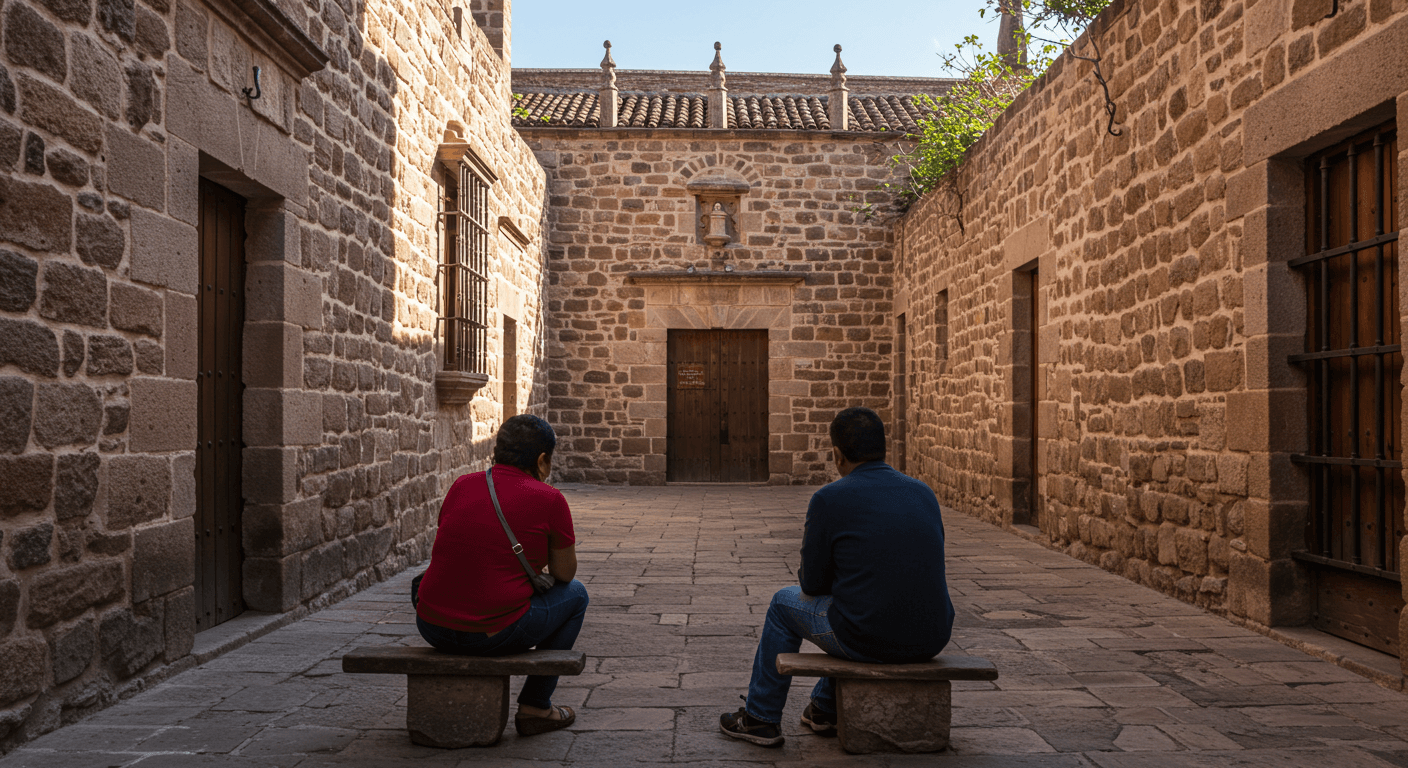
The current Casa España Puerto Rico building sits at Calle San Justo 119 in Old San Juan, a narrow, sun-dappled street just north of the iconic El Morro fortress. Constructed in the early 20th century, its neoclassical façade features wrought-iron balconies, tall arched windows, and a central coat-of-arms bearing the intertwined initials “CEPR,” not the Spanish royal crest.
This architectural choice matters. Unlike government buildings from the colonial era, which often bore imperial insignia or military motifs, Casa España Puerto Rico’s design reflects civic pride, not state power. Its interior layout reinforces this: a central salon for gatherings, a library with early 20th-century Spanish-language periodicals, and meeting rooms named after figures like Miguel de Unamuno and Federico García Lorca, thinkers celebrated for humanism, not hierarchy.
The location is deliberate. Situated within walking distance of the Cathedral of San Juan Bautista and the former Governor’s Palace, it occupies symbolic ground, not as a rival seat of authority, but as a neighbor in a layered, living historic district.
Cultural Mission Beyond Language
While Spanish language instruction remains central to Casa España Puerto Rico’s work, its cultural mission extends far beyond grammar drills and vocabulary lists. It hosts flamenco workshops led by visiting artists from Jerez, film series spotlighting Basque and Asturian cinema, and literary salons featuring Puerto Rican writers who trace linguistic roots to medieval Castilian.
What distinguishes it from other language schools or cultural centers is its intergenerational scaffolding. Teenagers learn guitar alongside retired educators. Grandparents and grandchildren co-author bilingual poetry chapbooks. Local historians lead walking tours interpreting Spanish-era street names, not as colonial artifacts, but as linguistic palimpsests.
This work counters cultural flattening. In a tourism-driven landscape where “Spanish colonial” often evokes generic balcony photos and souvenir swords, Casa España Puerto Rico cultivates specificity: the difference between a Galician muiñeira and an Andalusian soleá, the regional variations in vosotros usage, the culinary memory carried in recipes for cocido madrileño adapted with local yautía.
Evolution Through Political Transitions
Casa España Puerto Rico did not shutter in 1898. It did not dissolve in 1917, when the Jones Act granted U.S. citizenship to Puerto Ricans. It did not retreat during the mid-century rise of pro-statehood or independence movements. Instead, it adapted, quietly, consistently, by reaffirming its nonpartisan, nonideological identity.
Its records show no formal alignment with any political party, no endorsements of sovereignty status proposals, and no archival evidence of involvement in partisan rallies. Its annual reports reference “cultural dialogue,” “linguistic continuity,” and “transatlantic friendship”, terms that hold meaning across political spectrums.
This neutrality became a strength. When Puerto Rico’s public school system reduced Spanish instruction hours in the 1990s, Casa España Puerto Rico expanded its after-school programs. When the University of Puerto Rico faced budget cuts to its Department of Hispanic Studies, the center co-hosted public lectures with faculty, open to all, no enrollment required.
Its endurance reflects a subtle truth: cultural infrastructure often outlives political frameworks, not because it ignores power, but because it operates on a different timeline.
Preservation in Practice: Archives, Art, and Oral History
Casa España Puerto Rico maintains one of the island’s most underrecognized archival collections: over 1,200 personal letters, 370+ membership ledgers, and 86 years of handwritten minutes, all in Spanish, many in elegant copperplate script. These documents trace not grand events, but daily life: disputes over dues, debates about library acquisitions, notes on which members brought tortilla española to the 1947 Christmas gathering.
What makes this collection vital is its granularity. Unlike official colonial records, which often omit women, laborers, and non-elite voices, these materials include correspondence from seamstresses, shopkeepers, and teachers. A 1932 letter from a Galician baker describes adapting pulpo a la gallega using local octopus and imported paprika, a small act of resilience, preserved.
The center also commissions oral histories. Since 2010, it has recorded over 220 interviews with Puerto Ricans whose grandparents arrived from Spain between 1880 and 1930. These are not polished documentaries, but unedited, hour-long conversations, recorded in homes, kitchens, and back patios, where memory lives in pauses, laughter, and sudden switches between Spanish and English.
Modern Programming and Community Role
Today, Casa España Puerto Rico operates as both anchor and adapter. Its weekly offerings include:
- Tertulias Literarias: informal readings where participants bring a poem, original or translated, and discuss it without academic jargon.
- Cine y Café: bilingual film screenings followed by moderated talks with directors, scholars, and community members, no ticket required.
- Jóvenes y Español: a mentorship program pairing high school students with bilingual professionals for resume writing, interview practice, and cross-cultural communication coaching.
It also serves as an unofficial hub for Puerto Ricans reconnecting with Spanish ancestry, whether through genealogy workshops, passport application guidance for those pursuing dual citizenship, or translation support for documents submitted to Spain’s Ministry of Justice.
Crucially, it does not position itself as a gatekeeper of “authentic” Spanishness. Staff emphasize that fluency, accent, or birthplace do not determine belonging. One longtime program coordinator told a local newspaper in 2022: “We don’t teach how to be Spanish. We teach how to listen, in Spanish, to each other.”
Photography and Visual Storytelling at Cultural Landmarks
Capturing places like Casa España Puerto Rico demands more than technical precision, it requires narrative intelligence. That’s where methodology matters. At Candid Studios, we approach historic spaces not as backdrops, but as protagonists.
Our Story-First Shoot begins with a 15-minute conversation, not about shutter speed, but about why this place matters. Is it the quiet pride in a third-generation member’s voice? The way afternoon light slants across 1920s tilework in the library? The handwritten note taped to a bulletin board announcing a canceled event due to power outages, then re-announced, in the same handwriting, one week later?
We apply Natural Light Mastery deliberately: no harsh strobes in the reading room, no artificial fill in the courtyard. Instead, we arrive at golden hour to watch how light pools in the fountain, or wait for open shade on Calle San Justo to photograph members greeting each other, faces relaxed, gestures unhurried.
In post-production, our Candid Edit Framework honors imperfection as evidence of life. A smudge on a century-old window? Left in. A flyer for a past event still taped to the door? Kept. We adjust color to reflect the warmth of aged plaster, not the sterility of a showroom. The result isn’t a brochure image, it’s a visual document that feels true.
This approach aligns with how institutions like Casa España Puerto Rico understand themselves: not as polished monuments, but as living rooms where history breathes.
Frequently Asked Questions
Q: ¿Cuál es la historia de la Casa de España en Puerto Rico?
A: Founded in 1890 by Spanish immigrants in San Juan, Casa España Puerto Rico began as a mutual aid society and cultural center. It has operated continuously since, adapting through sovereignty changes, economic shifts, and natural disasters, always focused on language, heritage, and community, never as a government entity.
Q: ¿Qué es la Casa de España en San Juan?
A: It is a private, nonprofit cultural institution located in Old San Juan. It offers Spanish language instruction, arts programming, archival access, and civic engagement, rooted in the traditions of Spanish immigrant communities but open to all Puerto Ricans and visitors.
Q: ¿Cuándo España vendió a Puerto Rico?
A: Spain did not “sell” Puerto Rico. Under the 1898 Treaty of Paris, which ended the Spanish-American War, Spain ceded Puerto Rico, along with Guam and the Philippines, to the United States. The transfer was part of a broader geopolitical settlement, not a commercial transaction.
Q: Is Casa España Puerto Rico affiliated with the Spanish government?
A: No. While it maintains cultural ties with Spain, including occasional collaboration with the Instituto Cervantes and Spain’s Ministry of Culture, it is an independent Puerto Rican institution governed by its own board and funded through membership, donations, and program fees.
Q: Can non-Spanish speakers participate in programs at Casa España Puerto Rico?
A: Yes. Many programs welcome beginners and bilingual participants. Language classes start at foundational levels, and cultural events, like film screenings and art exhibits, include English translations, bilingual facilitators, and contextual guides for newcomers.
Contact Candid Studios today for a free consultation.