Planning a destination wedding isn't just about picking a pretty spot on a map. It's about laying a solid foundation for the entire experience. This means getting real about your vision, your budget, and your top priorities before you do anything else. When you tackle these big-picture items first, you’re creating a roadmap that makes every other decision down the line infinitely easier.
First Steps in Destination Wedding Planning
Before you get swept away by dreamy photos of sandy beaches or historic castles, the very first thing you need to do is sit down with your partner for a real, honest-to-goodness chat. This is where you anchor your dream in reality. A destination wedding is so much more than a ceremony; it’s a multi-day adventure for you and your guests, and its success really hinges on starting with a strong, shared vision.
This initial conversation is all about getting aligned. Are you both picturing an intimate gathering of 20 close friends and family, or are you thinking of a bigger party for 100? Do you want a chill, barefoot-on-the-beach vibe, or is the formal elegance of a European chateau more your style? Getting on the same page now will save you from a world of miscommunication and stress later.
Define Your Vision and Priorities
Start by asking yourselves, "Why?" Why a destination wedding? Are you trying to escape tradition, create an unforgettable vacation for your loved ones, or maybe return to a place that’s special to you both? Your "why" becomes your North Star, the thing that guides you when you start to feel overwhelmed by all the choices.
Once you know your core motivation, it's time to list your non-negotiables. These are the elements you absolutely won't compromise on.
- Guest Experience: Maybe making sure your elderly grandparents can travel comfortably is a top priority. That would immediately rule out remote locations with tricky logistics.
- Vibe and Atmosphere: If you're dead-set on a vibrant, party-centric atmosphere, an all-inclusive resort might be a much better fit than a quiet, private villa.
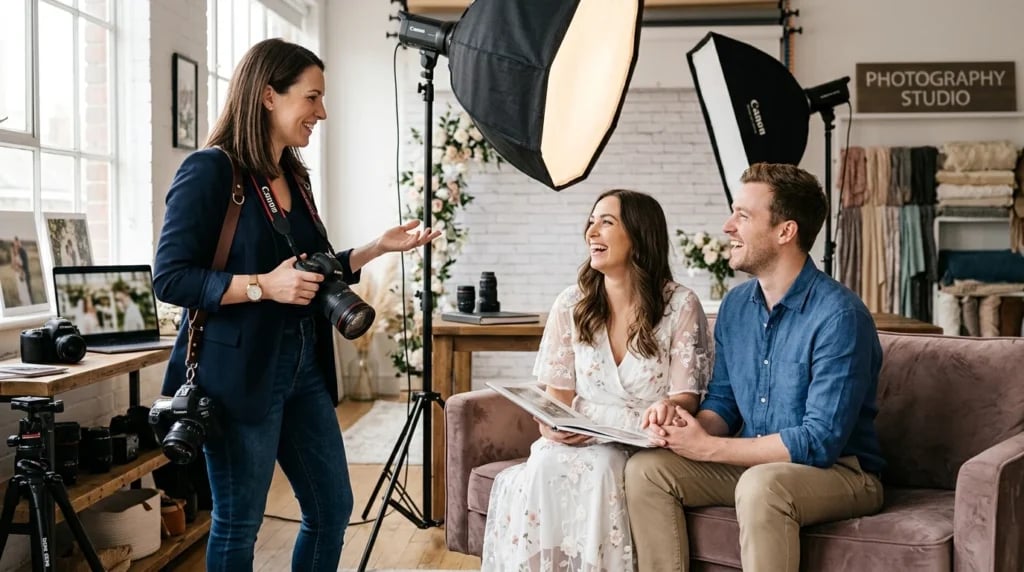
- Photography: If breathtaking, epic photos are a must-have, you’ll want to prioritize a location with dramatic landscapes. Understanding how to choose a wedding photographer who can capture that vision is a huge piece of the puzzle, so start that research early.
- Exclusivity: Do you need the entire venue to yourselves, or are you okay sharing the space with other hotel guests?
This isn't about limiting your options; it's about focusing your energy. By defining what truly matters, you make the whole process of planning a destination wedding so much more manageable.
Create a Preliminary Budget
Budgeting for a wedding abroad is a different beast entirely. You have to think about costs that don't come up with a local wedding, like vendor travel fees, currency exchange rates, and maybe even shipping costs for personal items. A frank financial conversation is non-negotiable. You need to land on a realistic total figure that you're both completely comfortable with.
A classic rookie mistake is underestimating the "hidden" costs. It's easy to budget for the venue and food, but don't forget about welcome bags for guests, pre-wedding events like a welcome dinner, and local taxes or service charges, which can climb as high as 20-30% in some countries.
This infographic really breaks down the flow of these first crucial steps—starting with your core idea, moving to the financial framework, and then to scouting locations.
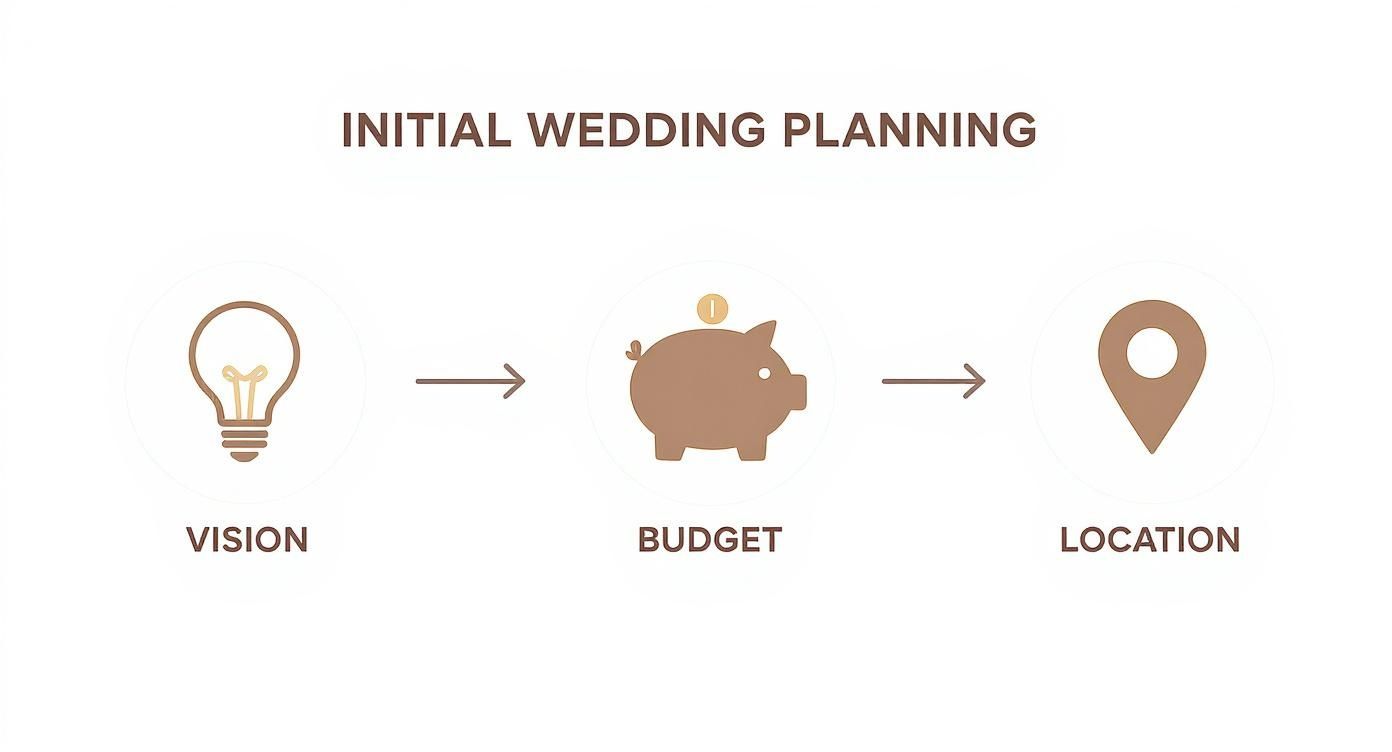
As you can see, your vision and budget have to be locked in before you can even begin to pick a destination that fits both your dreams and your wallet.
Narrow Down Your Location Options
Okay, now for the fun part! With your vision, priorities, and budget in hand, you can finally start exploring locations. But instead of just mindlessly scrolling through Instagram, take a more structured approach. Use your list of non-negotiables as a filter.
For instance, if your budget is $20,000, a lavish wedding in the South of France might be a stretch, but a stunning celebration in Mexico or Costa Rica could be absolutely perfect. If making travel easy for your guests is the top priority, start by looking for destinations with direct flights from their home cities. Nailing these foundational elements from the get-go is the real secret to a smooth and enjoyable planning process.
Choosing Your Perfect Destination and Venue
This is where the real fun begins—where your daydreams start to look like an actual plan. Picking the right spot for your destination wedding is so much more than just finding a gorgeous backdrop. It's about finding a place that clicks with your style, your budget, and the kind of experience you want to give your guests.
You've got a world of options. You could go for a sun-soaked, all-inclusive resort in the Caribbean where the party never stops, or maybe a private villa in Tuscany for something more intimate and romantic. Each has its own vibe and its own set of practical pros and cons. The trick is to figure out your non-negotiables and find that sweet spot between beautiful and doable.
Look Beyond the Pretty Pictures
It’s incredibly easy to fall in love with a place you see on Instagram, but the real work is in the details. That stunning beachfront you’re eyeing? It might be smack in the middle of hurricane season during your chosen month. That charming European village? It could have some seriously complicated legal marriage requirements for non-residents.
Before you get too attached, it’s time to do some less-than-glamorous—but absolutely critical—homework on your top contenders.
- Weather Patterns: A quick search for historical weather data can be a lifesaver. You’ll want to steer clear of rainy seasons, brutal heatwaves, or any other natural events that could throw a major wrench in your plans.
- Guest Travel: Seriously, how easy is it for your crew to get there? Look for spots with direct flights from major cities. A location that requires three connecting flights and a two-hour drive is a big ask and might mean fewer of your loved ones can make it.
- Local Costs: Think about what your guests will be spending on the ground. A destination with affordable food, transportation, and fun activities makes the whole trip more relaxed and enjoyable for everyone.
Getting this right is what separates a good wedding from an unforgettable one. It ensures the place you pick is perfect in reality, not just in the photos.
A destination wedding is also a vacation for your guests. Choosing a location that offers more than just the wedding itself—think snorkeling, hiking trails, or cool local markets to explore—adds so much value to their trip and makes the whole experience one they'll talk about for years.
Getting married abroad has never been more popular. In fact, destination weddings now make up 17% of all weddings globally. The market is valued at a staggering €42.8 billion and is only expected to grow. Of course, costs can be all over the map. For example, the average wedding in France will set you back about €30,800, while a similar celebration in Colombia averages just €4,597. Getting a handle on these numbers is key. For a deeper look, these destination wedding statistics offer a fascinating glimpse into how different regions stack up.
Vetting Venues from Miles Away
So, you've zeroed in on a country or region. Now you have to find the venue, likely without ever stepping foot in it beforehand. Thankfully, technology is your best friend here. Get on the phone—or better yet, a video call—and schedule virtual tours with your top choices. Just be sure to show up with a solid list of questions.
Treat that virtual tour just like you would an in-person one. Have the coordinator walk you through every single space you'll be using, from the ceremony spot and reception hall all the way to the guest bathrooms. Keep an eye out for the general condition of the place and how the different areas flow together.
Here are a few must-ask questions for your virtual walkthrough:
- What's your Plan B for bad weather? This is a big one. Ask to see the indoor backup space. Is it just as beautiful, or is it a sad, forgotten ballroom?
- Do I have to use your vendors? Some venues lock you into their preferred vendor list. This isn't always a bad thing, but it can limit your options and your control over the budget.
- What are the hidden fees? Get specific. Ask about service charges, local taxes, cake-cutting fees, and overtime costs that might not be in the initial proposal.
- Can you show me photos from a recent wedding? Styled shoots are beautiful, but you want to see what the space looks like during a real event, with real people.
When it's time to sign a contract—especially an international one—read every last word. If something feels unclear or just a bit off, don't be shy about asking for clarification. You can even have a lawyer look it over. Spotting any red flags early on will give you the peace of mind to lock in a venue that you know has your back.
For those dreaming of a vibrant and easy-to-plan celebration, checking out a beautiful wedding venue in Mexico could be a perfect fit, offering that ideal mix of stunning scenery and all-inclusive convenience.
Taming the Budget, Vendors, and Legalities
You've picked the spot. Now it’s time to move from dreaming about the "where" to nailing down the "how." This is the part where we get into the nitty-gritty: the money, your professional dream team, and all that official paperwork. Getting a handle on these three things right from the start is your ticket to a smooth, surprise-free planning experience.
This is where your vision really starts taking shape, but it demands a sharp eye for detail. From building a budget that accounts for international quirks to navigating foreign legal systems, getting this right is everything.
Crafting a Realistic Destination Budget
Budgeting for a wedding abroad isn't quite like planning one at home. You've got a whole different set of variables to consider that go way beyond the usual venue and catering costs.
Your first move? Create a detailed spending plan and track everything. I mean everything.
- Currency Conversion: Remember, you'll likely be paying international vendors in their local currency. Since exchange rates can be unpredictable, it's smart to build a small buffer of 5-10% into your budget just in case.
- Local Taxes and Fees: Watch out for service charges, VAT, or other local taxes. They can sneak up on you. Always ask vendors for an "all-in" price that includes every last fee so there are no shocks later.
- Shipping and Travel: Are you flying in your favorite photographer or shipping custom decor? Don't forget to budget for their travel and accommodation, or for the cost of getting your items safely to the destination.
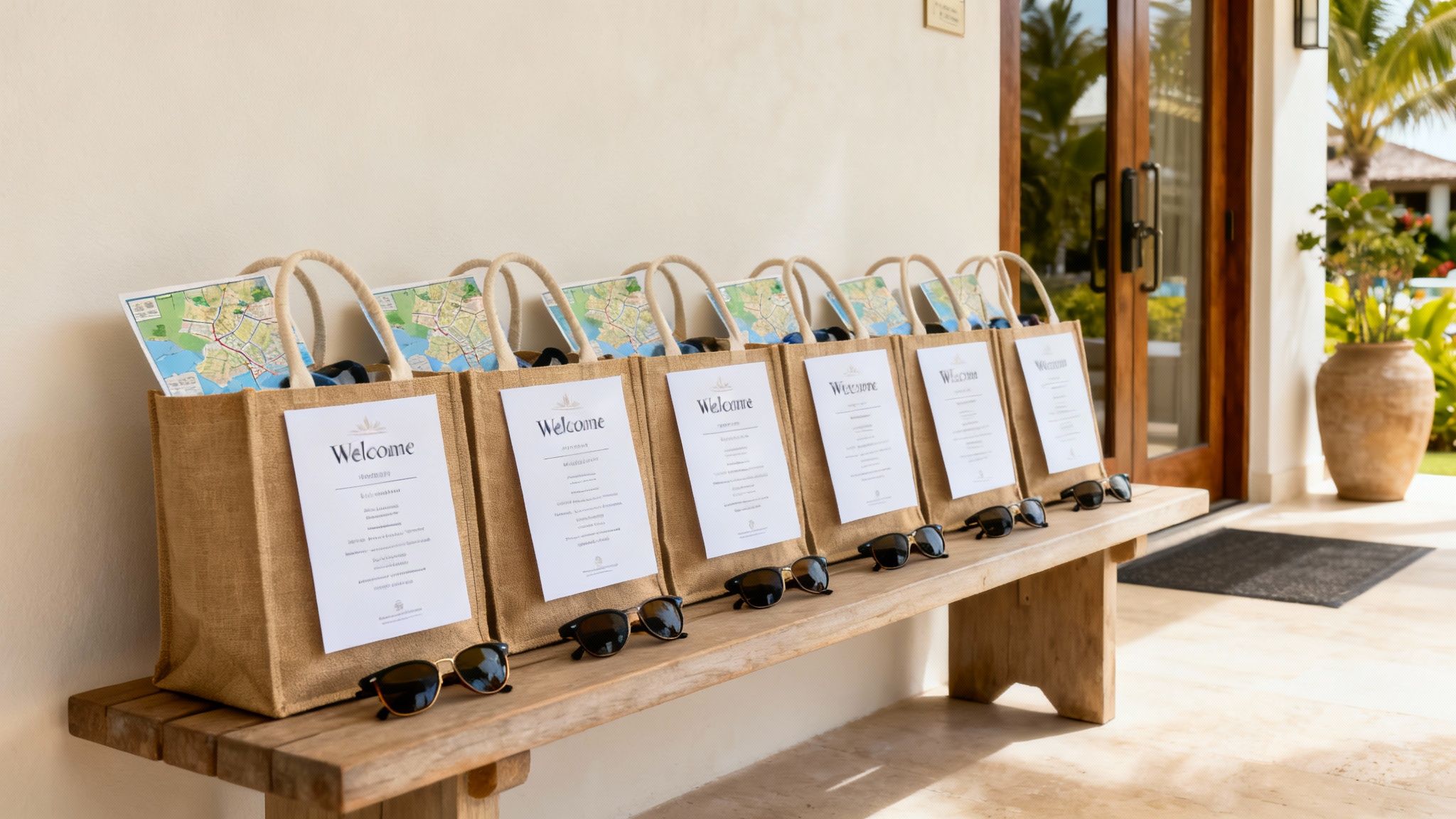
One thing I see couples forget all the time is the smaller, guest-focused details. Things like filling welcome bags, arranging group shuttles, or hosting a casual welcome dinner can add up, but they make a world of difference for your guests' experience.
To give you a sense of scale, about 350,000 destination weddings happen each year, making up roughly 25% of all weddings. The average couple spends around $1,300 on their airfare alone, and the planning process usually takes between 9 and 12 months. This just goes to show how crucial early, detailed financial planning is.
Given the investment, looking into Cancel For Any Reason (CFAR) travel insurance is a wise move for financial peace of mind. To make sure your numbers are in the right ballpark, it's also helpful to see how Destination Wedding Costs On Average to keep your budget grounded in reality.
Before diving into the numbers, it's helpful to see where the money typically goes. This isn't a hard-and-fast rule, but rather a guide to help you allocate funds based on what matters most to you.
Sample Destination Wedding Budget Breakdown
| Expense Category | Average Percentage of Budget | Key Considerations |
|---|---|---|
| Venue, Food & Drink | 45-55% | This is the biggest chunk. Includes rental fees, catering, bar service, and cake. |
| Travel & Accommodation | 10-15% | Your flights, hotel stay, and potentially subsidizing rooms for key family members. |
| Photography & Videography | 10-12% | Capturing the memories. Rates may include travel fees for non-local professionals. |
| Attire & Rings | 5-10% | The dress, suit, accessories, and wedding bands. |
| Flowers & Decor | 5-8% | Depends heavily on your vision. Local, in-season flowers can help manage costs. |
| Entertainment | 5-7% | DJ, live band, or local performers. Don't forget ceremony and cocktail hour music. |
| Wedding Planner | 10-15% | Often a separate line item, but their value in saving you time, stress, and money is huge. |
| Miscellaneous | 5% | Buffer for welcome bags, guest favors, stationery, and unexpected costs. |
This table should give you a solid starting point for building out your own personalized budget.
Assembling Your International Vendor Team
Trying to find and hire vendors from thousands of miles away can feel like a huge challenge, but it's one of the most critical steps. These people are your on-the-ground team, and the right crew makes all the difference.
This is where a local wedding planner is worth their weight in gold. A planner based in your destination already has a network of the best florists, caterers, and musicians. They’ll handle language barriers, cultural nuances, and contract negotiations for you. Honestly, their expertise is priceless.
If you’re going it alone, always schedule video calls. It’s the best way to get a feel for their personality and see how well you communicate. Ask to see a full gallery from a recent wedding they did at your venue—not just the highlight reel. And of course, digging into reviews and asking for references is an absolute must.
Demystifying the Legal Requirements
Alright, let's talk about the legal stuff. The process of getting legally married abroad can range from surprisingly simple to incredibly complex, all depending on the country. You have to research the specific marriage laws for your destination as soon as you've booked your venue.
Here are a few common hurdles you might encounter:
- Residency Requirements: Some countries, like France, insist you live there for a period of time (40 days, for example) before you can legally tie the knot.
- Required Documents: You'll almost certainly need passports, birth certificates, and an official document proving you're single. These often have to be translated and certified with something called an apostille.
- Witnesses: Most legal ceremonies require a certain number of witnesses, and sometimes they have to be local citizens.
Because of these potential headaches, a lot of couples opt for a much simpler route: they do the legal part at home in a quick civil ceremony before or after their trip. Then, they have a beautiful, symbolic ceremony at their destination.
This approach gives you the best of both worlds—a legally sound marriage without the bureaucratic nightmare, plus the unforgettable destination celebration you've been dreaming of.
Creating an Unforgettable Guest Experience
A destination wedding isn't just a ceremony—it's a mini-vacation you're asking your favorite people to join. The secret to making it truly unforgettable is ensuring they feel valued, informed, and genuinely excited from the moment they hear the news. Great hosting starts long before anyone packs a bag; it begins with thoughtful, clear communication.
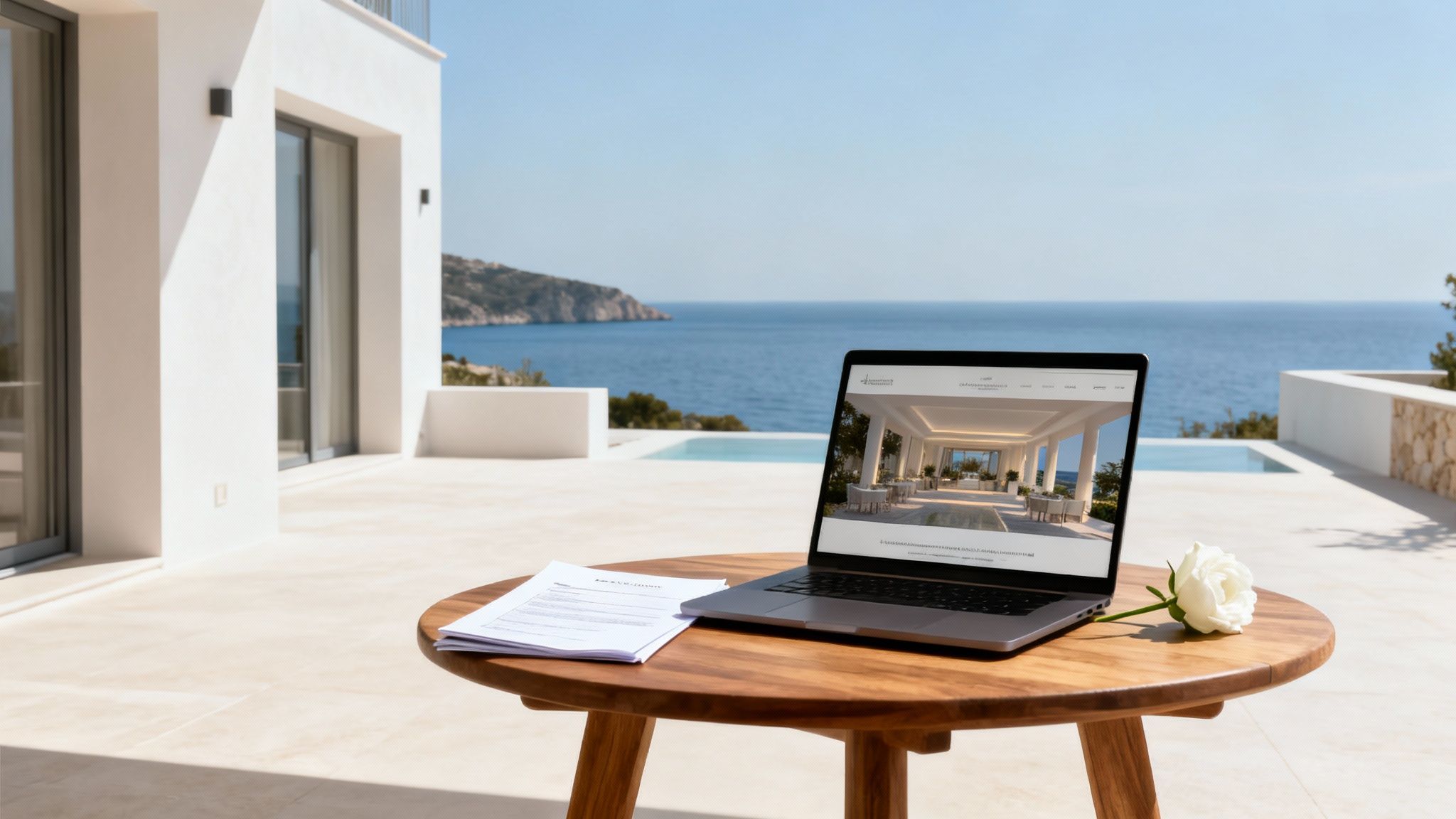
The absolute cornerstone of a fantastic guest experience is your wedding website. This isn't just a cute add-on; it's an essential command center that will save you from answering the same questions a hundred times. Think of it as your single source of truth for everything from travel logistics to the weekend's schedule.
Your Digital Information Hub
Your wedding website is basically a digital concierge for your guests. It needs to be comprehensive, a breeze to navigate, and kept up-to-date as you lock in details.
Make sure it has these essential pages:
- Travel & Accommodation: Spell out the nearest airports, suggest specific flights if you can, and provide direct links for your hotel blocks or nearby rental options.
- The Weekend Itinerary: Don't just list the wedding. Include everything from the welcome cocktails to the farewell brunch, complete with times, locations, and dress codes.
- Local Recommendations: This is your chance to shine! Share your favorite local coffee shops, must-try restaurants, and cool spots to see. Help them love the destination as much as you do.
- Frequently Asked Questions: Get ahead of the curve. Answer common questions about transportation, local currency, what the weather will be like, and your take on gifts.
This central hub empowers your guests to plan their trip with confidence. More importantly, it shows you've been thinking about their needs from the very beginning.
Remember, your guests are investing serious time and money to celebrate with you. The more information and support you provide, the smoother and more enjoyable their trip will be. A well-organized website is the first and best way to show your gratitude.
Perfecting Your Communication Timeline
When you're asking people to travel across the country or the world, timing is everything. You absolutely have to give them as much notice as possible so they can sort out time off, find good deals on flights, and start getting excited.
Here’s a realistic timeline that works:
- Save-the-Dates (9-12 Months Out): The second your date and location are set in stone, get these out. This initial heads-up gives everyone a generous amount of time to start planning.
- Official Invitations (4-6 Months Out): This is a big departure from a traditional wedding. Destination invites need to go out much earlier. This timing gives guests a clear RSVP deadline and pushes them to book their travel while good deals are still available.
This extended timeline isn't just a suggestion—it's a common courtesy. It acknowledges the huge commitment they're making and drastically increases the odds that they'll actually be able to come.
Simplifying Guest Logistics
Beyond just providing information, actively helping with logistics is the mark of a truly thoughtful host. Your goal is to eliminate as many travel-related headaches as you can, so your guests can just show up and have a great time.
Organizing a group hotel block is one of the most helpful things you can do. By negotiating a discounted rate for a set number of rooms at one or two hotels, you make booking a no-brainer. It also keeps your crew together, which really amps up the fun, communal vibe.
Arranging airport transfers can be a total game-changer, too. After a long flight, nobody wants to haggle with a taxi driver or figure out an unfamiliar train system. You can make their arrival completely stress-free by providing clear info on transport from the airport, like these Lisbon Airport transfer options.
Finally, plan some low-pressure group events, like a welcome cocktail hour. It’s the perfect way for everyone to meet and mingle casually, setting a relaxed, festive tone for the whole weekend. This can be as simple as drinks by the pool or appetizers at a cool local bar. You can find some great wedding theme ideas to get your own creative juices flowing. These small, thoughtful touches are what transform a simple trip into a cherished memory.
Finalizing Your Wedding Day Logistics
As your wedding date gets closer, your focus will naturally shift from the big picture to the tiny details. These final months are all about locking everything down so your wedding weekend is seamless. It’s time to tie up all the loose ends, allowing you to show up at your destination feeling present, relaxed, and truly ready to celebrate.
The destination wedding market is booming for a reason. Projections show it hitting USD 36.8 billion by 2025 and an incredible USD 68.2 billion by 2035. This trend, highlighted by research on Future Market Insights, shows just how many couples are craving more intimate, experience-rich celebrations. And with that, smooth logistics become absolutely critical.
Crafting Your Day-Of Timeline
If there’s one document that will save your sanity in the final weeks, it’s a detailed day-of timeline. This is your master plan, the one thing that keeps everyone from your photographer to your glam squad perfectly in sync. I’m not just talking about the ceremony start time; this schedule needs to be granular, mapping out every moment from your morning coffee to the last song of the night.
Think about all the moving parts. Your timeline should include things like:
- Vendor Arrivals: The exact time each professional is scheduled to arrive, from hair and makeup to the cake delivery.
- Getting Ready Moments: Blocking out specific time slots for hair, makeup, getting into your outfits, and any pre-ceremony photos with your wedding party.
- Travel Buffers: Always, always build in extra time for getting from one place to another. You never know what local traffic will be like.
Once you have a solid draft, get it in front of all your key vendors. Their feedback is gold. Your photographer might suggest adjusting the schedule to catch the perfect "golden hour" light, or your caterer might have specific timing needs for their setup. Finalizing this document with their input ensures everyone is working from the same script. Using a wedding reception timeline template can be a fantastic starting point for getting all these details organized.
Managing Final Payments and Packing
With the timeline locked in, it's time to tackle the last of the admin and start thinking about packing. Create a master checklist of all your final payments, noting their due dates and how each vendor prefers to be paid. It's common for international vendors to require wire transfers or even cash, so you'll want to sort that out well in advance to avoid any last-minute stress. A great tip is to prepare labeled envelopes with tips for your on-site team—it’s a small detail that goes a long way.
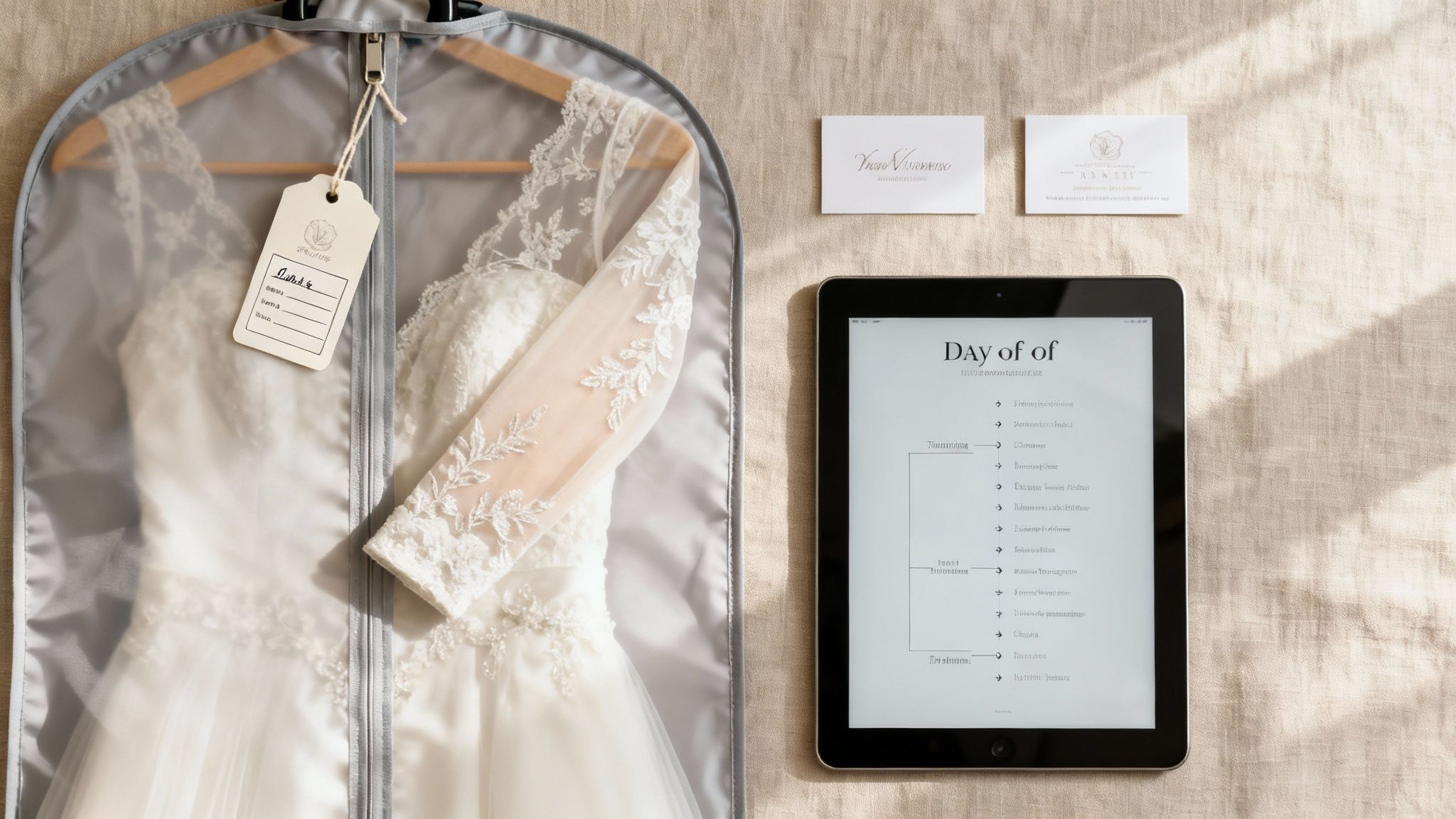
Here's a pro-tip I share with all my clients: When traveling with your wedding attire, never put it in a checked bag. Carry your dress or suit onto the plane in a garment bag and politely ask a flight attendant if there’s a closet where they can hang it. It's the best way to minimize wrinkles.
Packing for a destination wedding is a whole different ballgame. Beyond your vacation wardrobe, you’ll want to put together a dedicated wedding-day kit.
Your Destination Wedding Essentials Checklist:
- A small medical kit with basics like pain relievers, allergy meds, and bandages.
- A portable steamer or a good wrinkle-release spray for your outfits.
- Hard copies of all vendor contracts and, of course, your master timeline.
- Those pre-labeled envelopes for vendor tips.
- Extra phone chargers and a portable power bank are non-negotiable.
Another lifesaver can be shipping any personal décor items ahead of time. Just be sure to check with your venue or planner about their policies for receiving and storing packages. Getting these little tasks done beforehand means you can focus on sipping that welcome cocktail instead of managing logistics when you arrive.
Answering Your Top Destination Wedding Questions
As you get into the thick of planning, you'll find a few questions pop up again and again. These are the nitty-gritty details that can trip people up—the practical stuff that goes beyond picking a pretty location.
I've been there, and I've seen it all. Let's tackle these common hurdles head-on so you can get back to the fun parts of planning your dream wedding.
When Should We Send the Invitations?
For a destination wedding, forget the traditional timeline. Your guests need a serious heads-up to sort out their travel, budget, and time off from work.
Think of it in two stages. First, send out your save-the-dates 9 to 12 months in advance. This isn't just a courtesy; it's absolutely essential. It plants the flag on the calendar and gives everyone the two most important details: where and when.
Your formal invitations should land in mailboxes four to six months before the wedding. This gives guests a friendly but firm nudge to book their flights and hotels while prices are still sane and availability is good.
Are Destination Weddings Actually Cheaper?
This is the big one, isn't it? The honest answer is: it depends, but they absolutely can be. While a destination wedding isn't automatically a bargain, the potential for savings comes from one major factor—a naturally smaller guest list.
Having fewer guests immediately cuts down your biggest expenses like catering and rentals. But you do have to account for new costs, like your own travel, accommodations, and maybe flying in a favorite photographer or planner.
The real secret is that a destination wedding gives you incredible control over your guest count, which is the number one driver of any wedding budget. An intimate affair for 30 of your closest friends in Mexico will almost always be lighter on the wallet than a 150-person party back home.
How Do We Handle Wedding Gifts?
This is a delicate topic. Your guests are already shelling out a good chunk of change to fly across the country (or the world!) to celebrate with you. Acknowledging that up front is key. Many couples simply say that having their loved ones there is the only gift they could ask for.
If you do decide to have a registry, keep it low-key. Your wedding website is the perfect place for this info, not the formal invitation.
Here are a few ways to approach it:
- Your Presence is the Present: A simple, heartfelt note on your website gets the message across perfectly. Something like, "Having you with us is the greatest gift. Please, no other gifts are necessary."
- Honeymoon or Experience Funds: These are a huge hit. Guests love contributing to a specific adventure or a honeymoon upgrade because it feels more personal than just writing a check.
- A Donation to Charity: For the couple who has everything, suggesting guests donate to a cause you love is a wonderfully meaningful option.
Whatever you choose, the golden rule is never to expect anyone to haul a physical gift to the wedding. It’s a logistical headache for them to pack and a nightmare for you to get home.
What’s the Safest Way to Get My Dress There?
The image of an airline losing your wedding dress is pure nightmare fuel. Let's make sure that never happens. There's one non-negotiable rule here: never, ever check your wedding dress. It has to fly with you as a carry-on.
Your first move should be to call the airline. Ask about their policy for wedding dresses specifically. Some larger planes have a little closet where the flight attendants might be able to hang your garment bag. If that’s not an option, your best bet is to gently fold the bag in half and lay it flat in an overhead bin, ideally on top of soft jackets.
Try to fly in a few days early. This gives the dress time to hang and let any wrinkles fall out. And trust me, a good portable steamer will be your absolute best friend.
At Candid Studios, we know that your wedding story is one-of-a-kind, and it deserves to be told with timeless beauty—no matter where you are in the world. From the beaches of Miami to the mountains of Colorado, we capture the real, unscripted moments of your day. We handle all the creative details, so you can just live in the moment.
Ready to see your story unfold? Explore our destination wedding photography and videography services.